Platform for Peace and Humanity

Weekly News Recap (29 December 2025 - 4 January 2026)

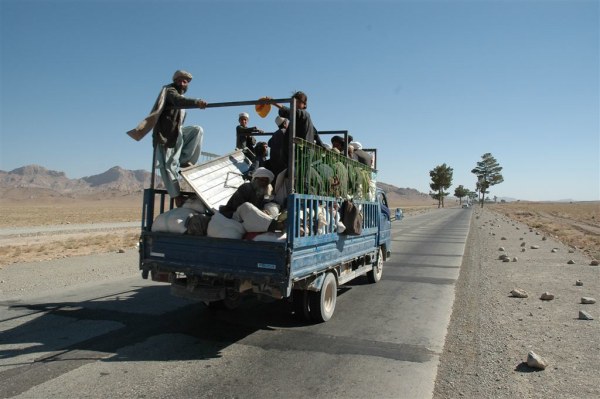
© Photo by Taymaz Valley via Flickr

International Justice Section

ECtHR: Six-Week Deadline Set for Third-Party Intervention in Kavala v. Türkiye (No. 2)


On 23 December 2025, the European Court of Human Rights (ECtHR) set a six-week deadline for the submission of requests for third-party intervention in Kavala v. Türkiye (No. 2), following the allocation of the case to the Grand Chamber earlier in December. The Registrar’s communication established the procedural timetable governing external participation in the proceedings, marking a further step in the Court’s examination of the case at Grand Chamber level. The application concerned allegations that Türkiye had continued to violate the Convention through the prolonged detention of Osman Kavala, notwithstanding the Court’s earlier judgments ordering his release. The Grand Chamber referral followed a Chamber judgment finding new violations arising from Kavala’s continued deprivation of liberty after the execution phase of the original Kavala v. Türkiye judgment. The setting of a defined intervention deadline clarified the procedural framework for states and other authorised actors seeking to submit observations on issues of Convention compliance, execution of judgments, and the scope of obligations under Article 46. The procedural step did not address the merits of the application but structured the next phase of Grand Chamber consideration. The case remained pending before the Court following the expiry of the intervention period, with further procedural steps to follow in accordance with the Convention and the Court’s Rules.


https://hudoc.echr.coe.int/eng-press?i=003-8420063-11915360

IRMCT: Rejects Kayishema’s Request to Revoke Referral to Rwanda


On 24 December 2025, the International Residual Mechanism for Criminal Tribunals (IRMCT) rejected a request by genocide suspect Fulgence Kayishema seeking revocation of the referral of his case to the Rwandan judiciary. Kayishema had argued that circumstances had materially changed since the original referral order and that renewed concerns relating to fair-trial guarantees, defence rights, and witness protection justified the return of the case to international jurisdiction. The Mechanism examined the submissions in light of its established post-referral oversight framework and assessed whether the threshold for revocation had been met. In its decision, the Mechanism held that the applicant had failed to demonstrate a material change in circumstances capable of undermining the basis on which the referral had originally been granted. The Chamber found no persuasive evidence that conditions in Rwanda had deteriorated or that the national authorities were unable or unwilling to conduct proceedings in accordance with the standards previously evaluated by the tribunal. The decision reaffirmed that the referral regime was premised on continued monitoring rather than automatic reassertion of international jurisdiction in response to generalised allegations. As a result, the referral order remained in force and jurisdiction over the case continued to rest with the Rwandan courts. The ruling took immediate effect and confirmed that further challenges would require substantiated new developments rather than repetition of previously considered claims.


https://ucr.irmct.org/LegalRef/CMSDocStore/Public/English/Decision/NotIndexable/MICT-12-23-R14%231/MSC54421R0000665599.pdf

Syria: Authorities Open Criminal Investigation into Assad-Era Mass Grave


On 29 December 2025, it was reported that Syrian authorities have secured a mass grave dating back to the Assad era and initiated a formal criminal investigation. The grave is located in the Dhumair desert east of Damascus, at a site that previously functioned as a military weapons facility and was cleared in 2018 as part of “Operation Move Earth.” This clandestine operation reportedly involved the exhumation of thousands of bodies from a burial site near Qutayfah and their transfer to the remote desert location to obscure crimes committed under Bashar al-Assad’s rule. The site was reportedly left unprotected throughout the summer of 2025 and was visited by multiple journalists, including Reuters reporters, who identified the mass grave. Following the change in government, Syrian authorities ordered soldiers to secure the area to prevent interference and preserve potential evidence. A police investigation, opened in November 2025, is currently ongoing, with investigators documenting and surveying the site and conducting witness interviews, including with an individual who allegedly worked on trucks used to transport bodies during the operation. In parallel, the National Commission for Missing Persons has begun preparations for future exhumations planned for 2027, including training personnel and developing facilities in line with international forensic standards. Prosecutors are also cross-referencing suspect lists with documents obtained after the fall of the Assad regime to advance the case. The securing of the site and the launch of investigative measures represent an important step toward accountability for past human rights violations.


https://www.reuters.com/world/middle-east/syria-secures-assad-era-mass-grave-revealed-by-reuters-opens-criminal-2025-12-29/

KSC: Dismisses Jakup Krasniqi’s Protection of Legality Request in Detention Case


On 29 December 2025, the Supreme Court Chamber of the Kosovo Specialist Chambers (KSC) dismissed a protection-of-legality request filed by the Defence of Jakup Krasniqi challenging a prior appellate ruling on detention and provisional release. The request sought extraordinary review of the Court of Appeals Panel’s decision on Krasniqi’s appeal against a consolidated ruling addressing both a request for provisional release and a periodic review of detention. The Defence argued that the appellate decision contained violations of criminal law and procedural safeguards sufficient to justify intervention under the protection-of-legality mechanism. In its decision, the Supreme Court Chamber examined the scope of protection of legality review within the Specialist Chambers’ legal framework and reiterated that the mechanism was reserved for correcting fundamental legal errors rather than re-litigating issues already assessed on appeal. The Chamber held that the challenged appellate decision did not disclose any misapplication of the law or procedural defect meeting the high threshold required for extraordinary review. It further found that the appellate panel had acted within its authority and had provided reasoned justification for maintaining detention. As a result, the protection of legality request was dismissed and the appellate decision concerning Krasniqi’s detention and provisional release remained in force.


https://www.legal-tools.org/doc/gi8hzau6/pdf/

KSC: Judges Assigned to Constitutional Court Panel on Hashim Thaçi Fundamental-Rights Referral


On 30 December 2025, the President of the Kosovo Specialist Chambers issued a decision assigning judges to a Constitutional Court Panel to rule on a referral filed by Hashim Thaçi alleging violations of fundamental rights in proceedings before the Specialist Chambers. The decision followed the submission of a referral dated 29 December 2025, which was distributed to the parties the following day, and concerned alleged infringements arising from judicial actions taken within the context of the criminal proceedings against Thaçi. Acting pursuant to the Specialist Chambers Law and the Rules governing the assignment of judges, the President designated three judges to constitute the Constitutional Court Panel competent to examine the referral. The decision did not address the admissibility or merits of the constitutional claims but represented a necessary procedural step enabling constitutional review to proceed within the Specialist Chambers’ legal framework. The constitution of the panel activated a distinct judicial track separate from the trial and appellate processes, allowing for examination of alleged violations of rights guaranteed under the applicable constitutional order. The panel was thereby empowered to assess whether the challenged judicial acts complied with fundamental-rights protections and to determine the appropriate legal consequences, if any, in accordance with the governing law and rules. Further procedural steps were to follow before the panel in due course.


https://www.legal-tools.org/doc/pnwty0jl/pdf/

IACHR: Submits Case to IACtHR Over Illegal Detention and Extrajudicial Killing in Ecuador


On 31 December 2025, the Inter-American Commission on Human Rights (IACHR) announced that it had submitted Case 12.764 to the Inter-American Court of Human Rights (IACtHR) concerning Ecuador on 19 November 2025. The case originates from a petition filed with the IACHR in March 2005 and involves the arrest, torture, and extrajudicial execution of Juan Carlos Jaguaco Asimbaya in March 2001 in Quito by state agents, as well as the subsequent impunity surrounding the events. Jaguaco Asimbaya was unlawfully detained on 24 March 2001, and his detention was neither communicated to authorities nor justified by a formal complaint. Two days later, his body was discovered with signs of torture and severe injuries. The case was handled by the local police and closed with the acquittal of the officers allegedly involved. The IACHR reported numerous inconsistencies in the investigations, including the absence of documentation of the detention, lack of evidence for the alleged robbery that justified the arrest, and failure to bring the victim before a competent authority. The Commission concluded that the State of Ecuador violated the rights to life, personal integrity, personal liberty, judicial guarantees, and judicial protection under the American Convention on Human Rights and the Inter-American Convention to Prevent and Punish Torture. The IACHR has requested that the Court order comprehensive reparations, including compensation, a thorough investigation, and guarantees of non-repetition, such as police training on use of force, accountability measures, and strengthened investigative capacity.


https://www.oas.org/en/IACHR/jsForm/?File=/es/cidh/prensa/comunicados/2026/002.asp&utm_content=country-ecu&utm_term=class-corteidh

Brazil: Court Denies Bolsonaro’s Request for House Arrest


On 2 January 2026, it was reported former Brazilian president Jair Bolsonaro’s request for house arrest was denied by the Supreme Court. Bolsonaro was granted release to undergo hernia surgery in hospital a week ago. Supreme Court Justice Alexandre de Moraes denied Bolsonaro’s request for house arrest after his hospital stay and ordered his return to prison where he is serving a 27-year sentence for an attempted coup. In September, Bolsonaro and several allies were convicted by the Supreme Court of attempting to overturn his 2022 election defeat. The plot included plans to kill President Luiz Inacio Lula da Silva, Vice President Geraldo Alckmin, and de Moraes. Bolsonaro was also convicted of leading an armed criminal organisation and planning to abolish the country’s democratic rule of law.  


https://www.france24.com/en/americas/20260101-bolsonaro-leaves-hospital-returns-to-prison

Czech Republic: Criminal Complaint Filed Against Israeli Soldier for Genocide and War Crimes in Gaza


On 2 January 2026, Hind Rajab Foundation (HRF) submitted a criminal complaint before the High Public Prosecutor’s office in Prague against Hagay Monsonego, an Israeli soldier who is accused of committing acts of genocide, war crimes, and persecution of civilians in Gaza. The complaint was filed after it was confirmed that Monsonego is currently in the Czech Republic, triggering its duties under international and domestic law. The HRF investigation alleges that Monsonego served as a soldier in Gaza between December 2023 and November 2025 and links him to serious crimes carried out in Gaza, including an attack on a medical facility, the siege of civilians, mass detention, and mistreatment of Palestinian civilians. The complaint is the third submitted by HRF in the Czech Republic related to crimes committed in Gaza.


https://www.middleeastmonitor.com/20260102-complaint-filed-in-czech-republic-against-israeli-soldier-for-genocide-war-crimes/

International Peace & Security Section

Saudi Arabia: Bombs Yemen Port as Tensions Escalate with UAE


On 30 December 2025, Saudi Arabia carried out air strikes on the Yemeni port city of Mukalla after a shipment of weapons arrived from the United Arab Emirates (UAE) for separatist forces, sharply escalating tensions between the two Gulf allies. Riyadh said the strike targeted weapons and military vehicles unloaded from vessels that had disabled their tracking systems, warning that Emirati actions posed an “extremely dangerous” threat to regional stability. The bombing came amid advances by the UAE-backed Southern Transitional Council (STC), whose recent seizure of territory has strained the anti-Houthi coalition. The UAE denied shipping weapons but acknowledged sending military vehicles for its forces operating in Yemen, insisting Saudi Arabia had been informed in advance. Shortly after, Abu Dhabi announced it would withdraw its remaining troops from the country, though it remained unclear whether the STC would relinquish control of the areas it has captured. Yemen’s non-separatist anti-Houthi forces declared a state of emergency and cut cooperation with the UAE, raising fears that allies fighting the Iranian-backed Houthi rebels could turn against one another. The confrontation threatens to open a new front in Yemen’s decade-long war and marks the most serious clash between Saudi Arabia and the UAE in decades. The United Nations warned that any disruption to Mukalla’s port risks worsening Yemen’s already dire humanitarian crisis, as fighting intensifies in a country devastated by conflict that has killed more than 150,000 people.


https://apnews.com/article/saudi-arabia-bomb-yemen-mukalla-weapons-uae-9fc56e4678a12f56d61b1ecf855d4a4e

Israel: To Suspend Dozens of Aid Groups Operating in Gaza


On 30 December 2025, Israel said it would suspend more than three dozen humanitarian organisations working in the Gaza Strip, including Doctors Without Borders (MSF), for failing to comply with new registration and reporting requirements. Israeli authorities said the affected groups did not meet rules on sharing information about staff, funding and operations, with suspensions due to take effect from Thursday. Other organisations facing bans include the Norwegian Refugee Council, CARE International, the International Rescue Committee, as well as branches of Oxfam and Caritas. Israel accused MSF of failing to clarify the roles of some staff members and alleged cooperation with Hamas, claims the organisation strongly denied, warning the move would have a devastating impact on healthcare in Gaza, where much of the health system has already been destroyed. The decision has drawn sharp criticism from humanitarian groups and international partners, who say it will further restrict life-saving assistance at a time of extreme need. It comes as Israeli strikes continue across Gaza despite a ceasefire, while heavy winter rains have flooded displacement camps, leaving hundreds of thousands of Palestinians without adequate shelter, clean water or medical care.


https://www.aljazeera.com/news/2025/12/30/israel-says-it-will-halt-operations-of-several-ngos-in-gaza

https://www.aljazeera.com/news/2025/12/30/israeli-strikes-on-gaza-are-relentless-as-displaced-endure-flooded-camps

Israel: Family of Palestinian-Brazilian Teen Who Died in Israeli Prison Renew Calls for Accountability


On 30 December 2025, the family of Walid Ahmad, a 17-year-old Palestinian-Brazilian who starved to death in an Israeli prison, announced they will seek justice through international mechanisms. Walid was arrested during a night raid in September 2024, allegedly without legal justification, and held in custody without charges or trial. Six months later, he died of starvation, as confirmed by his autopsy. An Israeli court officially closed investigations into his death on 4 December 2025, while his body remains withheld by the Israeli military. Walid’s father stated that his son was healthy when arrested, accusing Israel of refusing accountability. The family intends to seek accountability through the Brazilian government and the International Criminal Court. Human rights organisations report that at least 100 Palestinian political prisoners have died in Israeli detention facilities since the Israel-Gaza conflict began, with torture, beatings, starvation, and denial of medical care cited as contributing factors. At a press conference on 30 December 2025, Abdullah Zighari of the Palestinian Prisoners Society said detainees’ bodies show signs of execution and organ removal, adding that “the genocide is not limited to Gaza; it extends to the prisoners too.” Since the war began, Israeli forces have arrested over 21,000 Palestinians, currently holding at least 9,300. Israel’s parliament has also passed a first reading of a bill that would permit the execution of Palestinian prisoners, raising international concerns over escalating human rights violations.


https://www.youtube.com/watch?v=OhKYHM9cYY4

https://www.theguardian.com/world/2025/apr/01/palestinian-teenager-walid-ahmad-dies-in-israeli-detention-in-west-bank

Guinea: Coup Leader Doumbouya Declared Winner of Presidential Election


On 31 December 2025, Guinea’s military leader Mamady Doumbouya was declared the winner of the country’s first presidential election since the 2021 coup, according to provisional results. Doumbouya secured more than 86% of the vote in the 28 December poll, an outright majority that avoided a run-off. The Supreme Court is expected to validate the results in the coming days. The election is widely seen as an attempt to formalise Doumbouya’s grip on power four years after he overthrew former president Alpha Condé. Civil society groups say the political landscape was tightly controlled, with opposition organising and press freedom restricted and key figures, including Condé and longtime opposition leader Cellou Dalein Diallo, living in exile. Doumbouya had initially pledged that neither he nor other military officers would contest elections, but constitutional changes approved in a September referendum allowed officers to run and extended the presidential term from five to seven years. Human rights groups and the United Nations have raised concerns about the conduct of the vote, reporting intimidation of opposition actors, limits on media freedom, and allegations of electoral fraud.


https://www.theguardian.com/world/2025/dec/31/guinea-junta-chief-mamady-doumbouya-elected-president-after-opposition-boycott

https://www.aljazeera.com/news/2025/12/30/guinea-coup-leader-mamdi-doumbouya-wins-presidential-election

Türkiye: 357 Suspected of Links to Islamic State Arrested Across 21 Provinces


On 31 December 2025, it was reported Turkish security forces detained 357 individuals suspected of involvement with the Islamic State (IS) in a widespread counter‑terror operation. The coordinated actions by the police, prosecution, and intelligence units took place simultaneously in 21 provinces, including Istanbul and Ankara. Authorities reported that 41 of those arrested had connections to militants linked to a recent deadly incident in Yalova province and were allegedly planning similar attacks in Istanbul during New Year’s festivities. The Ankara Chief Public Prosecutor’s Office also issued detention orders for 17 suspects, among them 11 foreign nationals accused of having ties to extremist networks. Officials emphasised that the suspects are believed to have maintained contact with IS fighters in conflict zones or been involved in supporting the group’s activities.


https://www.aa.com.tr/en/turkiye/over-350-isis-terror-suspects-arrested-across-turkiye-interior-minister/3784566

https://www.jurist.org/news/2025/12/turkey-detains-357-isis-suspects-in-nationwide-police-raids/

Iran: At Least Two Killed as Nationwide Protests Escalate


On 1 January 2026, at least two people were reportedly killed in Iran during the country’s largest protests in three years, according to state-affiliated media. Human rights organisations have warned of an escalating crackdown on the protests as security forces respond with live ammunition against demonstrators. The two deaths were reported in Lordegan, a city in southwestern Iran. Video footage circulating on social media appears to show security forces firing at protesters, with injured individuals seen being carried away. Iran’s Tasnim news agency said authorities in Tehran had arrested at least 30 people on charges related to public order offences. The protests began in Tehran on Sunday, triggered by the collapse of the national currency, and have since spread nationwide. Demonstrators are demanding economic justice and an end to the regime. The protests follow a year marked by a record number of executions in Iran, with more than 1,500 people put to death in 2025. Human rights groups say the authorities have increasingly used the death penalty to instil fear and crush dissent.


https://www.theguardian.com/global-development/2026/jan/01/two-people-dead-iran-economic-crisis-protests-battlefield

https://www.nytimes.com/2026/01/01/world/middleeast/iran-protests-deaths.html

Gambia: Seven Confirmed Dead after Migrant Boat Capsizes


On 3 January 2026, it was reported that a migrant boat with over 200 people aboard capsized in Gambia’s North Bank Region as it was on its way to Europe on Wednesday. The route on the Atlantic coast is known as one of the most dangerous migration paths in the world, passing through West African countries including Gambia, Senegal, and Mauritania before reaching Spain via the Canary Islands. Gambian President Adama Barrow stated that seven bodies were recovered and approximately 102 rescued, with many requiring immediate medical care. Emergency services, fishermen, and volunteers continue the search as many remain missing. Gambia’s Ministry of Defence stated the boat was discovered “grounded on a sandbank,” although it is still unclear how the disaster occurred. The government also announced the national emergency plan has been activated with sufficient resources and assistance. Additionally, President Barrow pledged a full investigation into the tragedy and promised to create safer prospects for young people in the future.


https://apnews.com/article/gambia-boat-migrants-capsizing-atlantic-7058d8af4f362eb299a685709d0b693a

Weekly News Recap (9 – 15 March 2026)

Weekly News Recap (9 – 15 March 2026) © Photo by Koldo via FlickrInternational Justice SectionUK: Former Syrian Colonel Charged with Crimes Against Humanity and Torture Linked to 2011 Damascus ProtestsTürkiye: Istanbul Mayor Ekrem İmamoğlu Faces Trial in Large-Scale Corruption CaseUS: Federal Court Blocks Rule Allowing Fast-Track Dismissals of Immigration
Read More »

Weekly News Recap (2 – 8 March 2026)

Weekly News Recap (2 – 8 March 2026) © Photo by Paul Keller via Flickr International Justice Section ECtHR: Finds Norway Did Not Violate Property Rights in Indigenous Grazing Rights Case Kosovo: Court Orders Pre-Trial Detention of Four Kosovo Serbs in 1998 War Crimes Investigation UK: Supreme Court Rules Spain

Read More »

Weekly News Recap (23 February – 1 March 2026)

Weekly News Recap (23 February – 1 March 2026) © Photo by Babak Fakhamzadeh via Flickr International Justice Section IACtHR: Finds Brazil Responsible for Racial Discrimination and Negligence in Case of Police Killing of Black Youth Ukraine: First War Crimes Charges Announced Over Russian Atrocities in Ukraine Cyprus: Court Approves

Read More »