Platform for Peace and Humanity

Weekly News Recap (2 - 8 March 2026)

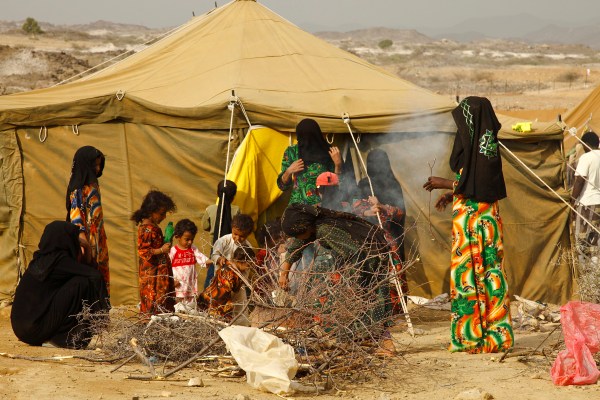
© Photo by Paul Keller via Flickr

International Justice Section

ECtHR: Finds Norway Did Not Violate Property Rights in Indigenous Grazing Rights Case


On 3 March 2026, the European Court of Human Rights (ECtHR) delivered judgment in Saarivuoma Sami Village v. Norway, holding that Norway did not violate Article 1 of Protocol No. 1 to the European Convention on Human Rights, which protects the right to peaceful enjoyment of possessions. The applicant, a Swedish Sámi reindeer-herding community, claimed that Norwegian regulations prevented the community from exercising traditional grazing rights in northern Norway for approximately 50 years. The case concerned cross-border reindeer husbandry arrangements between Norway and Sweden, and the regulation of grazing areas used by Sámi communities. The applicant argued that the prolonged inability to access these grazing lands amounted to an unjustified interference with property rights protected under Article 1 of Protocol No. 1. The ECtHR accepted that the grazing rights in question constituted possessions within the meaning of the Convention. However, the Court characterised the interference as a control of the use of property rather than a deprivation of property. The Court concluded that the restrictions pursued legitimate aims relating to land management and the regulation of reindeer husbandry. The ECtHR further held that the measures struck a fair balance between the interests of the community and the broader regulatory framework governing land use and Indigenous reindeer grazing in the region. The Court therefore unanimously found no violation of Article 1 of Protocol No. 1.


https://hudoc.echr.coe.int/eng?i=001-248836

https://www.echrcaselaw.com/en/echr-decisions/ecthr-saarivuoma-sami-village-v-norway-inability-of-a-swedish-sami-community-to-exercise-reindeer-grazing-rights-for-50-years-non-violation-of-the-right-to-respect-for-property

Kosovo: Court Orders Pre-Trial Detention of Four Kosovo Serbs in 1998 War Crimes Investigation


On 4 March 2026, a court in Kosovo ordered one month of pre-trial detention for four Kosovo Serbs suspected of war crimes for their involvement in the killing of six ethnic Albanian civilians during the 1998 conflict in Kosovo. The suspects were arrested in a police operation conducted by the Kosovo authorities and are accused of participating in the killings in the village of Syrigane/Suvo Grlo in central Kosovo. Following the arrests, the Basic Court in Pristina approved a request by the Kosovo Special Prosecution for detention while the investigation continues, a procedural measure commonly used where courts consider that suspects may flee, interfere with witnesses, or obstruct the investigation. Kosovo institutions continue to pursue criminal accountability for conflict-era crimes more than two decades after the end of the war, including cases involving killings, enforced disappearances, and other alleged violations of international humanitarian law. The court’s ruling allows prosecutors to continue gathering evidence and questioning witnesses while the suspects remain in custody as the investigation proceeds.


https://balkaninsight.com/2026/03/04/kosovo-detains-four-serbs-suspected-of-wartime-killings

UK: Supreme Court Rules Spain Cannot Claim State Immunity in Renewable Energy Arbitration Case


On 4 March 2026, the United Kingdom Supreme Court ruled that Spain could not rely on state immunity to prevent the registration in Britain of a €101 million arbitration award issued to investors in a dispute over cuts to renewable-energy subsidies. The case arose after Infrastructure Services Luxembourg and Energia Termosolar initiated arbitration against Spain under the Energy Charter Treaty following reductions to incentive schemes for renewable-energy projects. An arbitral tribunal at the World Bank’s International Centre for Settlement of Investment Disputes (ICSID) awarded the investors €101 million in compensation. Spain subsequently challenged the attempt to register the award in the UK, arguing that sovereign immunity prevented domestic courts from recognising or enforcing the award. The UK Supreme Court rejected that argument, holding that Spain could not invoke state immunity to block the award’s registration, thereby allowing investors to pursue enforcement proceedings in the UK. However, the Court clarified that sovereign immunity could still apply at the stage of enforcing an award against a state’s property. The ruling limits the scope of state immunity in proceedings relating to the recognition of investor-state arbitration awards and forms part of ongoing litigation across several jurisdictions concerning enforcement of Energy Charter Treaty awards against Spain following its renewable-energy policy reforms.


https://www.reuters.com/sustainability/boards-policy-regulation/spain-cannot-claim-state-immunity-uk-renewable-energy-incentives-dispute-2026-03-04

Greece: Appeals Court Upholds Ruling Designating Far-Right Party as a Criminal Organisation


On 4 March 2026, the Criminal Appeal Court in Athens, Greece, upheld the 2020 convictions of senior members of the far-right Golden Dawn party and confirmed the party’s designation as a criminal organisation. A panel of five judges confirmed the convictions of all 42 defendants, including party leader Nikos Michaloliakos, who received a 13-year prison sentence but was granted parole last year due to health issues. Founded in the 1980s as a neo-Nazi group, Golden Dawn gained traction during the financial crisis, combining anti-establishment discourse and ultranationalism with anti-immigration stances. The party was active in parliament from 2012 to 2019 and was found responsible for attacks on immigrants and activists, including the 2013 murder of Pavlos Fyssas. Sentencing arguments are scheduled to commence on Thursday.


https://apnews.com/article/greece-politics-golden-dawn-court-crime-52c2af8ddb635a5f902d9cecc3ec5671

CJEU: Rules Portugal Failed to Comply with Judgment Under Habitats Directive


On 5 March 2026, the Court of Justice of the European Union (CJEU) ruled in Case C-613/24, Commission v. Portugal, finding that Portugal had failed to comply with a prior CJEU judgment concerning obligations under the Habitats Directive (Council Directive 92/43/EEC) and imposing financial penalties. The case concerned Portugal’s obligations to designate and protect special areas of conservation (SACs) forming part of the EU’s Natura 2000 network, which aims to ensure the long-term survival of threatened species and habitats across the European Union. Under the Directive, Member States must designate sites of Community importance as SACs and adopt conservation measures necessary to maintain or restore protected habitats and species at a favourable conservation status. In a judgment delivered on 5 September 2019, the CJEU held that Portugal had breached these obligations by failing to designate 61 sites as SACs within the required timeframe and by not adopting appropriate conservation measures. The European Commission subsequently brought a second action after concluding that Portugal had still not implemented the measures required by the Court’s earlier ruling. The CJEU held that the previous judgment had not been complied with. The Court therefore ordered Portugal to pay a lump sum of €10 million and imposed a daily penalty payment of €41,250 until full compliance with the 2019 judgment is achieved.


https://curia.europa.eu/site/upload/docs/application/pdf/2026-03/cp260030en.pdf

ECtHR: Finds Moldova Violated Prisoner Rights in Abuse and Forced Labour Case


On 5 March 2026, the European Court of Human Rights (ECtHR) delivered judgment in Petrov v. Moldova, holding unanimously that Moldova violated Article 3 of the European Convention on Human Rights (prohibition of degrading treatment) taken together with Article 14 (prohibition of discrimination) and Article 4 §2 (prohibition of forced labour). The case concerned an informal “caste” hierarchy operating within Moldovan prisons, under which certain prisoners were categorised as “outcasts” and subjected to degrading treatment and coercive labour. The applicant, who served a prison sentence between 2006 and 2021, alleged that he had been placed in the lowest category of the hierarchy and was consequently segregated from other prisoners, denied access to facilities and services, and compelled to perform menial tasks imposed by other inmates. The Court found that the applicant had endured humiliating treatment over a period of years, including social and physical segregation, restrictions on access to prison activities, and assignment to arduous labour, and concluded that the treatment exceeded the unavoidable level of suffering inherent in detention. The ECtHR further held that the prison authorities had been fully aware of the existence of the hierarchy and of the applicant’s position within it but had failed to take effective measures to protect him, amounting to tolerance or condoning of discriminatory treatment. The Court also found that work imposed on the applicant under threat of retaliation constituted forced labour within the meaning of Article 4 §2 and identified the informal prisoner hierarchy as a structural problem requiring systemic measures under Article 46 of the Convention.


https://hudoc.echr.coe.int/eng-press?i=003-8475030-12011493

https://www.echr.coe.int/w/judgment-concerning-the-republic-of-moldova-6

US: Appeals Court Blocks President Trump’s Attempt to End Protections for Haitians


On 7 March 2026, the US Court of Appeals for the District of Columbia Circuit ruled against the administration of US President Donald Trump and its efforts to end protection status for more than 350,000 Haitians in the US. In a 2-1 decision, the court rejected the administration’s bid to pause a February 2 ruling that blocked the US Department of Homeland ​Security from ending Haiti’s Temporary Protected Status (TPS), which allows migrants to live and work in the US and protects them from deportation. The Trump administration has attempted to end the protection as part of its strict immigration policy to increase deportations. The district court judge found that the move likely violated TPS termination procedures and the Constitution’s Fifth Amendment, which guarantees equal protection. The administration argued that the US Supreme Court had previously allowed TPS termination for Venezuelans, but the appeals court ruled that Haitians could face violence if returned to Haiti. Haitians were first granted TPS in 2010 following an earthquake disaster, and protection status has been repeatedly extended due to ongoing gang violence in the country. The Trump administration is appealing against the decision as part of its broader effort to scale back the TPS programme.


https://www.reuters.com/world/us/trump-cannot-end-protections-350000-haitians-us-appeals-court-rules-2026-03-07/

https://apnews.com/article/appeals-court-immigration-tps-haiti-trump-131aefcc1d9a0bd23ecd376fc7fe8b07

International Peace & Security Section

West Africa: ECOWAS Deploys Regional Force to Combat Sahel Insurgency


On 2 March 2026, West African states moved forward with plans to deploy a regional army to address the deteriorating security situation in the Sahel. This mobilisation occurs as thousands of soldiers are tasked with countering armed groups linked to al-Qaeda and ISIL, who have increasingly utilised advanced tactics like drone strikes to target military positions. The deployment represents a major regional effort to restore stability in a landscape plagued by persistent violence and transnational organised crime. However, the mission faces significant diplomatic obstacles. The “strained ties” between the Economic Community of West African States (ECOWAS) and the military-led governments of Mali, Niger, and Burkina Faso, who have formally exited the bloc, threaten to undermine the force’s effectiveness. Because these nations sit at the epicentre of the conflict, their absence from the new regional command raises questions about cross-border cooperation. While ECOWAS leaders see the force as a necessary response to the rising terrorist threat, the success of the mission likely depends on navigating the complex political rift between the bloc and its neighbours.


https://www.aljazeera.com/news/2026/3/2/west-african-regional-army-why-thousands-of-soldiers-are-deploying

South Sudan: Nearly 170 People Killed in Armed Youth Attack in Ruweng


On 2 March 2026, it was reported that at least 169 people were killed following a brutal attack by dozens of armed men in South Sudan’s Ruweng Administrative Area. According to James Monyluak Mijok, the area’s information minister, unidentified youths from Mayom County in neighbouring Unity state stormed Abiemnhom County on Sunday. The massacre, which lasted three to four hours before the army intervened, claimed the lives of around 90 civilians, including children, women, and the elderly, including the county commissioner and executive director, while 79 government soldiers were also killed in the attack. Health officials confirmed that all victims were buried in a mass grave on Monday. The Ruweng government has condemned the assault as “barbaric” and a “policy of extermination,” calling for the perpetrators to be brought to justice. Meanwhile, the United Nations Mission in South Sudan (UNMISS) has begun sheltering over 1,000 civilians at its base to provide emergency medical care and protection. The violence highlights a year of deepening instability since the arrest of former First Vice President Riek Machar. While President Salva Kiir and Machar signed a 2018 peace deal to end a civil war that killed 400,000 people, implementation has been slow, and disagreements over power-sharing have led to frequent clashes. Additionally, medical charity MSF reported that 26 humanitarian staff remain missing following separate recent clashes in Jonglei state, highlighting the broader security collapse across the country.


https://www.aljazeera.com/news/2026/3/2/nearly-170-people-killed-in-attack-in-south-sudans-ruweng-officials-says

US-Ecuador: Launches Joint Military Operation Against Alleged Narco-Terrorists


On 4 March 2026, the US announced joint military operations with Ecuadorian forces targeting what it described as “designated terrorist organisations” in Ecuador. US Southern Command, the military unit overseeing operations in Central and South America, said the operation began on 3 March, with the US providing logistical and intelligence support to Ecuadorian troops. The announcement follows a visit by US Southern Command commander General Francis Donovan to Quito on 2 March, where he met President Daniel Noboa and defence officials. Noboa said the cooperation marked a “new phase” in Ecuador’s fight against drug trafficking and illegal mining. The operation appears to be part of US President Donald Trump’s broader militarised campaign against criminal networks in Latin America. His administration has labelled several cartels as “foreign terrorist organisations” and has carried out dozens of strikes on suspected drug-trafficking vessels in the Caribbean and eastern Pacific, killing about 150 people in total. Critics warn that the growing use of military force against drug trafficking raises legal concerns, noting that drug trafficking is treated as criminal activity under international law, and that some US maritime strikes have been described by legal experts and UN officials as potential extrajudicial killings.


https://www.aljazeera.com/news/2026/3/4/trump-administration-launches-us-military-operation-in-ecuador

DRC: Over 200 People Killed in Landslide at Rubaya Mine


On 4 March 2026, the Democratic Republic of Congo’s (DRC) Ministry of Mines announced that more than 200 people, including approximately 70 children, were killed in a landslide at the Rubaya coltan mine. The disaster, which authorities attributed to heavy rains, occurred in a North Kivu mining zone controlled by the AFC/M23 rebel group since 2024. While the government reported over 200 deaths and organised evacuations of the injured to Goma, M23 officials have publicly disputed these figures. Fanny Kaj, a senior M23 official, denied that a landslide had occurred, asserting instead that the deaths, which she numbered at only five, were the result of “bombings.” However, another official from the Rwanda-backed rebel group acknowledged that “heavy rains of the last few days” caused the incident at a site where operations had supposedly been discouraged. Eyewitness accounts from miners support the higher death toll, with one reporting the recovery of over 200 bodies. The Rubaya site, responsible for 15% of global coltan production, was recently offered to the US under a mineral cooperation framework, further complicating the geopolitical stakes of the tragedy.


https://www.aljazeera.com/news/2026/3/4/more-than-200-killed-in-landslide-at-drc-coltan-mine

Cuba: President Trump Renews Threats to Topple Cuban Government Amid Deepening Humanitarian Crisis


On 5 March 2026, US President Donald Trump renewed threats to topple the Cuban government, saying action could follow the administration’s ongoing war against Iran. Speaking at the White House, Trump praised Secretary of State Marco Rubio for implementing measures intended to tighten sanctions on Cuba, which he said were aimed at weakening the island’s economy. He highlighted previous US operations in Venezuela and against alleged drug-trafficking vessels in Latin America, noting their success and signalling the use of overwhelming military force in support of US objectives. As a result, the island’s humanitarian situation has deteriorated sharply. Since the US suspended Venezuelan oil shipments to Cuba in January, essential services have faltered. Rolling blackouts now last over 20 hours, food and water scarcity is widespread, and healthcare and public services are under severe strain. Chronic issues caused by long-standing US sanctions, mismanagement, and repression have left Cubans heavily reliant on remittances and local community networks to survive. Civil society and diaspora initiatives, such as Red D Ayuda Humanitaria, have mobilised volunteers and resources to provide food, medicines, and hygiene supplies to vulnerable populations, but limited legal and logistical support constrains their reach. International aid has been minimal, and many Cubans see leaving the island as the only viable option.


https://www.aljazeera.com/news/2026/3/5/trump-says-regime-change-in-cuba-is-question-of-time-after-iran

https://www.thenewhumanitarian.org/news-feature/2026/03/03/cuba-relentless-us-pressure-human-suffering

Lebanon: Over 200 Killed in Israeli Attacks Amid Forced Evacuation Orders


On 6 March 2026, Lebanon’s Ministry of Public Health reported that over 200 people have been killed and nearly 800 wounded in a series of Israeli airstrikes that have been continuous since 2 March, targeting southern Lebanon, the Bekaa Valley, and Beirut’s southern suburbs. The attacks represent a continuation of repeated violations of the November 2024 ceasefire, against which Lebanese authorities filed a complaint to the UN in January documenting over 2,000 breaches. Israeli strikes have hit towns across southern Lebanon and eastern regions, causing widespread destruction, and the Israeli military has ordered the forced evacuation of a large part of southern Lebanon, affecting more than 100 towns and villages. In addition, Israel has issued a forced evacuation order for Beirut’s southern suburb of Dahiyeh, home to more than 400,000 people, including residents of the Palestinian camps of Sabra and Chatila, and Burj al-Barajneh. Far-right Israeli Finance Minister Bezalel Smotrich warned the area could become “like Khan Younis”, a city in southern Gaza that has been decimated during Israel’s war against Palestinians, widely described as genocidal. Tens of thousands of displaced families have sought shelter on beaches and in temporary facilities, while most flights at Beirut-Rafic Hariri International Airport were suspended amid the threat of further attacks. Humanitarian organisations have raised serious concerns about the legality of the strikes and the forced displacement, highlighting the risks to civilians in densely populated areas. The situation has left tens of thousands of Lebanese and Palestinian residents without adequate shelter, basic services, or safe routes for evacuation.


https://www.aljazeera.com/news/2026/3/6/death-toll-in-israels-lebanon-attacks-over-120-as-beirut-south-east-hit

https://www.aljazeera.com/news/2026/3/5/israels-smotrich-threatens-beirut-suburbs-amid-evacuation-orders

https://www.ohchr.org/en/press-briefing-notes/2026/03/lebanon-israeli-blanket-displacement-orders-bring-more-misery

Middle East: President Trump Demands Iran’s “Unconditional Surrender” as War Expands Across the Region


On 6 March 2026, US President Donald Trump stated that negotiations with Iran would only occur following the country’s “unconditional surrender,” as the war between Iran, Israel, and the US intensified into its seventh day. Israeli airstrikes targeted Tehran and Beirut, including heavy bombardment of Beirut’s southern suburbs causing the displacement of more than 95,000 residents from southern Lebanon. The war began with coordinated US and Israeli strikes on Iranian military infrastructure, leadership, and nuclear facilities, including the killing of Supreme Leader Ali Khamenei. Iran has retaliated with missile and drone attacks against Israel and several Gulf states hosting US military bases, including Qatar, Saudi Arabia, Kuwait, and Bahrain. The US also reported striking an Iranian drone carrier in the Gulf and sinking an Iranian frigate near Sri Lanka. While Washington has stated the objective is to degrade Iran’s military capacity, Trump has also suggested regime change, openly calling on Iranians to “take back” their country and indicating that the US should have a role in selecting Iran’s next leader. Iranian authorities meanwhile confirmed that discussions have begun on convening the Assembly of Experts to appoint a new supreme leader. The conflict has already spread beyond its immediate battlegrounds, affecting more than a dozen countries and disrupting global energy markets. Iran’s strategy has included strikes against infrastructure and military sites across the Persian Gulf, raising concerns about the security of vital oil and gas exports. Officials in Qatar warned that sustained disruptions to Gulf energy production could send oil prices soaring and trigger severe economic consequences worldwide. Casualty figures reported currently stand at more than 1,200 deaths in Iran, over 120 in Lebanon, and a dozen in Israel, alongside six US soldiers killed since the conflict began.


https://apnews.com/article/iran-israel-us-march-6-2026-6108249f19c4bc162eacd7847976c174

https://www.aljazeera.com/news/2026/3/6/iran-war-what-is-happening-on-day-seven-of-us-israel-attacks

US-Venezuela: Move to Restore Diplomatic Relations After Maduro’s Ouster


On 6 March 2026, the US and Venezuela announced plans to restore diplomatic and consular relations, marking a significant shift in ties following the capture of former president Nicolás Maduro by US forces in January. Washington said renewed engagement aims to support Venezuela’s economic recovery and political transition, while interim president Delcy Rodríguez described the move as the start of a new phase of dialogue and cooperation between the two countries. The announcement coincided with a visit to Caracas by US Interior Secretary Doug Burgum, who held talks with Rodríguez and discussed expanding foreign investment in Venezuela’s energy and mining sectors. US officials said multiple companies are considering investment, as Washington seeks greater access to the country’s vast oil reserves and mineral resources, including gold and coltan. The diplomatic thaw followed the US operation in January that captured Nicolás Maduro and enabled former vice-president Delcy Rodríguez to assume the role of interim leader. The Trump administration has since signalled that its support for the transitional government is tied to expanded access to Venezuela’s natural resources, particularly oil and strategic minerals. Washington has also indicated that Rodríguez’s continued leadership depends in part on allowing US involvement in the country’s energy and mining sectors.


https://www.theguardian.com/us-news/2026/mar/06/us-venezuela-diplomatic-ties-relations-delcy-rodriguez

Weekly News Recap (25 – 31 May 2026)

Weekly News Recap (25 – 31 May 2026) © Photo by USAID U.S. Agency for International Development via FlickrInternational Justice SectionTunisia: Court Sentences Presidential Critic Sonia Dahmani to New Two-Year Prison TermCambodia: Opposition Leader Kem Sokha Granted Royal Pardon by King Norodom Sihamoni for Treason SentenceFrance: Appeals Court Orders Release

Read More »

Weekly News Recap (18 – 24 May 2026)

Weekly News Recap (18 – 24 May 2026) © Photo by Aerous via Wikimedia Commons International Justice Section Yemen: Court Sentences 19 to Death for Alleged Collaboration with Saudi-Led Coalition Bahrain: Court Sentences Man to Life Imprisonment for Alleged Links to IRGC and Hezbollah South Korea: Former Defence Minister Sentenced

Read More »

Weekly News Recap (11 – 17 May 2026)

Weekly News Recap (11 – 17 May 2026) © Photo by Climate Centre via Flickr International Justice Section ICC: Unseals Arrest Warrant for Senator Ronald Dela Rosa Over Duterte Drug War Killings Philippines: Senator Ronald Dela Rosa Files Urgent Supreme Court Appeal Against ICC Arrest Warrant Bosnia and Herzegovina: Criminal

Read More »