Platform for Peace and Humanity

Weekly News Recap (26 January - 1 February 2026)

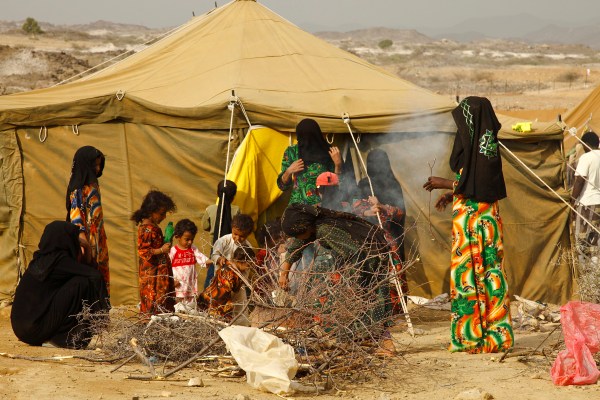
© Photo by Lewin Bormann via Flickr

International Justice Section

International Peace & Security Section

International Justice Section

ICC: Pre-Trial Chamber Rules Duterte Fit to Stand Trial


On 26 January 2026, the International Criminal Court (ICC) ruled that former Philippine President Rodrigo Duterte, now 80 years old, is fit to participate in pre-trial proceedings, despite earlier defence claims regarding his health. This decision followed an assessment by an independent medical panel, which concluded that Duterte is capable of understanding and engaging with the legal process. As a result, he is permitted to participate in the confirmation of charges hearing scheduled for 23 February 2026. Duterte was arrested in March 2025 under an ICC warrant that accuses him of crimes against humanity linked to his controversial “war on drugs,” which has been associated with thousands of extrajudicial killings. His legal team has indicated its intention to appeal the medical assessment, contending that it was not provided with a sufficient opportunity to dispute the findings.


https://www.reuters.com/world/asia-pacific/former-philippines-president-duterte-fit-pre-trial-hearings-icc-judges-rule-2026-01-26/

https://www.icc-cpi.int/news/situation-philippines-rodrigo-roa-duterte-fit-take-part-pre-trial-proceedings-confirmation

ICC: Pre-Trial Chamber Refers Italy’s Non-Compliance in the Libya Situation to the ASP


On 26 January 2026, the International Criminal Court (ICC) Pre-Trial Chamber issued a decision referring to Italy’s non-compliance with a request for cooperation to the Assembly of States Parties (ASP). The decision arose in the context of the ICC’s Situation in Libya and concerned Italy’s failure to cooperate with requests to arrest, surrender, and search a suspect in the Libya situation, which are obligations as a State Party under Part 9 of the Rome Statute. The Chamber concluded that the matter warranted escalation beyond the judicial phase, triggering the Court’s formal compliance mechanism. While the decision did not address criminal responsibility for crimes committed in Libya, it constituted a concrete judicial determination on state cooperation, identifying a failure to comply with an ICC request and formally transmitting that finding to the ASP for consideration. Referral decisions of this kind are significant because they sit at the intersection of judicial authority and political oversight within the ICC system. They may prompt diplomatic engagement or collective measures by States Parties aimed at restoring compliance and safeguarding the Court’s ability to carry out its mandate.


https://www.icc-cpi.int/sites/default/files/CourtRecords/0902ebd180d97892.pdf

Netherlands: Court Sentences Eritrean Human Trafficker to 20 Years’ Imprisonment


On 27 January 2026, the District Court in Zwolle sentenced an Eritrean man to 20 years in prison for operating a violent human-trafficking and extortion network linked to abuses against migrants along the Libya route. The court found that the convicted individual played a central role in an organised criminal enterprise that subjected migrants to severe violence, including torture, while extorting money from their families. Evidence before the court demonstrated that the crimes were systematic and transnational, exploiting vulnerable people fleeing conflict and persecution. The sentencing represented a completed domestic criminal adjudication addressing serious abuses against migrants along migration routes outside Europe’s borders. Dutch prosecutors characterised the case as one of the most severe human-smuggling prosecutions in the country, and the court imposed a custodial sentence reflecting the gravity of the offences.


https://www.justiceinfo.net/en/154797-without-any-humanity.html

https://nos.nl/artikel/2599889-20-jaar-cel-voor-gewelddadige-eritrese-mensensmokkelaar

ECtHR: Rules Prosecution of Journalist for “Illegal Entrepreneurship” Violated ECHR Rights


On 27 January 2026, the European Court of Human Rights (ECtHR) delivered its judgment in Khadija Ismayilova v. Azerbaijan (No. 4), concerning the criminal prosecution of investigative journalist Khadija Ismayilova. The Court examined convictions for “illegal entrepreneurship” and tax evasion arising from her journalistic activities for foreign media outlets without accreditation. It found a violation of Article 7 of the European Convention on Human Rights (ECHR), holding that the domestic courts’ interpretation of the criminal law was unforeseeable and arbitrary. The Court also found a violation of Article 6 § 1, concluding that the proceedings failed to meet fair-trial standards. By majority, it further held that Azerbaijan violated Article 10 on freedom of expression, and Article 18 taken in conjunction with Article 10, determining that the criminal prosecution pursued an ulterior purpose of silencing and punishing the applicant for her journalistic work. The judgment ordered compensation for non-pecuniary damage and costs.


https://www.echrcaselaw.com/en/echr-decisions/ecthr-khadija-ismayilova-v-azerbaijan-no-4-criminal-prosecution-of-journalist-for-illegal-entrepreneurship-due-to-journalistic-work-violation-of-articles-7-6-%C2%A7-1-10-and-18-echr

https://hudoc.echr.coe.int/?i=001-248090

Uganda: Court Grants Bail to Human Rights Activist Sarah Bireete


On 28 January 2026, the Buganda Road Magistrates Court in Uganda granted bail to Sarah Bireete, a prominent human rights lawyer and the Executive Director of the Centre for Constitutional Governance, who had been detained since late December 2025. Bireete faced charges related to the unlawful obtaining or disclosure of voter information in the lead-up to Uganda’s general election on 15 January. This period was marked by significant criticism from rights groups due to government crackdowns on dissent. Magistrate Winnie Nankya Jatiko set bail at one million Ugandan shillings and mandated non-cash sureties. Additionally, Bireete was required to surrender her passport and was prohibited from leaving the country without court permission while the legal proceedings are ongoing. Both international and domestic rights organisations, including Amnesty International and Human Rights Watch, advocated for her release, expressing concern that her prosecution was part of a broader pattern of constraints on civic space.


https://www.reuters.com/world/africa/uganda-court-releases-prominent-rights-activist-bail-2026-01-28/

https://allafrica.com/stories/202601290104.html

Netherlands: Court Rules Government Discriminated Against Bonaire Islanders Over Climate Adaptation


On 28 January 2026, a court in The Hague upheld its previous ruling that the government had discriminated against the residents of Bonaire (Caribbean Netherlands) by not providing adequate climate adaptation support compared to the European part of the Netherlands. The court determined that this differential treatment violated article 8 and 14 under the European Convention on Human Rights (ECHR), which protect the right to respect for private and family life and prohibit discrimination. The court emphasised that climate impacts and resilience measures fall within the scope of fundamental rights obligations. The judgment mandated the Dutch government to implement more equitable climate adaptation policies and to take definitive steps to address the disproportionate harm experienced by Bonaire residents, including challenges such as rising sea levels, extreme heat, and infrastructure vulnerability. Additionally, the court found that the Netherlands was not doing enough to reduce national greenhouse gas emissions. The court ordered the Dutch government to establish a comprehensive adaptation plan, and to provide transparent insight into emission capacity. The Netherlands has 18 months to set legally binding interim targets to reduce emission.


https://www.theguardian.com/environment/2026/jan/28/netherlands-government-discriminated-bonaire-islanders-caribbean-climate-crisis-adaptation

KSC: Appeal Against Reparation Order Denied in Pjetër Shala Case


On 29 January 2026, the Appeals Panel of the Kosovo Specialist Chambers (KSC) dismissed Pjetër Shala’s appeal against the Reparation Order issued by the Trial Panel on 29 November 2024. The challenged order required Shala to pay compensation to eight victims for physical, psychological, and material harm arising from war crimes committed in 1999, including arbitrary detention, torture, and murder. In his appeal, which was comprised of five grounds, Shala argued that the Trial Panel had erred in law and fact by failing to establish a sufficient causal link between his criminal conduct and the harm suffered by the victims. He further contended that the Trial Panel had improperly assessed evidence relating to material damage and had failed to adequately consider his personal financial circumstances when determining liability. Shala also submitted that the reparations proceedings were procedurally flawed because they were conducted while his appeal against conviction and sentence was still pending. The Appeals Panel rejected all grounds of appeal. It held that the Trial Panel had correctly applied the legal framework governing reparations before the KSC and had provided a reasoned and coherent assessment of causation and harm based on the evidentiary record. The Panel further found that Shala’s financial situation did not bar the imposition of a reparation order, and that the timing of the reparations proceedings did not infringe his fair trial rights. The dismissal of the appeal confirmed the Reparation Order in full and clarified the standard of appellate review applicable to reparations at the KSC.


https://www.scp-ks.org/en/pjeter-shalas-appeal-against-reparation-order-denied

https://repository.scp-ks.org/LW/Published/Filing/0b10c8e18053361a/Public%20Redacted%20Version%20of%20Decision%20on%20Defence%20Appeal%20Against%20Reparation%20Order.pdf

ICJ: Hearings Conclude in The Gambia’s Genocide Case Against Myanmar


On 29 January 2026, the International Court of Justice (ICJ) formally concluded the merits hearings in Application of the Convention on the Prevention and Punishment of the Crime of Genocide (The Gambia v. Myanmar), rendering the oral proceedings phase complete and moving the case into the deliberative stage pending eventual judgment. The hearings on the substance of the dispute had been scheduled at the Peace Palace in The Hague, constituting the first full merits hearing in a genocide case at the Court in more than a decade. During this period, The Gambia presented detailed claims that Myanmar’s security forces committed acts in 2016–2017 amounting to genocide against the Rohingya Muslim minority in Rakhine State, including allegations of mass killing, rape, and forced displacement in violation of Myanmar’s obligations under the 1948 Genocide Convention. Myanmar’s defence, presented in mid-January, categorically denied the genocide allegations, and asserted alternative characterisations of the underlying conduct, contesting the evidence and legal characterisation. With the hearings concluded, the case entered the ICJ’s judicial deliberation phase, during which the judges will consider the parties’ submissions before issuing a judgment.


https://www.hrw.org/news/2026/01/29/rohingya-genocide-case-moves-to-judgment

https://www.icj-cij.org/sites/default/files/case-related/178/178-20260127-ora-01-00-bi.pdf

International Peace & Security Section

South Sudan: UN Warns of Risk of Mass Violence as Government Launches Offensive in Jonglei State


On 26 January 2026, the United Nations warned of a heightened risk of mass violence against civilians in South Sudan’s Jonglei state, citing “inflammatory rhetoric” by senior military figures and escalating hostilities that have displaced more than 180,000 people. The warning follows the launch of a major military operation by South Sudan’s army to recapture areas recently seized by opposition forces. Authorities ordered civilians to evacuate several counties and instructed aid organisations to leave within 48 hours, raising concerns over civilian protection amid active fighting. The offensive comes after territorial losses to opposition groups, including forces linked to suspended First Vice President Riek Machar, who remains a central political figure despite being under house arrest and facing treason charges. Concerns intensified after a senior army commander was filmed urging troops to “spare no lives” during operations in Jonglei. The UN Commission on Human Rights said such language is “profoundly dangerous” and warned that leaders who incite violence or fail to control their forces may be held criminally responsible under international law. UN officials said the escalation reflects continued violations of the 2018 peace agreement that ended South Sudan’s civil war, urging leaders to halt hostilities and return to political dialogue to prevent civilians from again bearing the brunt of the conflict.


https://www.aljazeera.com/news/2026/1/28/south-sudan-launches-offensive-against-opposition-forces-what-to-know

https://news.un.org/en/story/2026/01/1166831

Iraq: US Threatens to End Support Over Possible Return of Former Prime Minister Al-Maliki


On 27 January 2026, former Iraqi Prime Minister Nouri al-Maliki accused the US of violating Iraq’s sovereignty after President Donald Trump warned Washington would end its support for Iraq if al-Maliki returns to office. Al-Maliki, who served as prime minister from 2006 to 2014, remains a key political figure despite a tenure marked by deep political divisions, intercommunal tensions, and persistent instability. Trump issued the warning days after the Coordination Framework, the largest Shia bloc in parliament, nominated al-Maliki as its candidate, calling such a choice a “very bad decision” and accusing the former leader of presiding over chaos during his previous term. In response, al-Maliki rejected what he called “blatant American interference in Iraq’s internal affairs” and confirmed he would not withdraw his candidacy, stressing that international dialogue should be based on negotiation rather than threats. This episode highlights a broader pattern of political intervention by the Trump administration in Iraq and beyond, aimed at limiting the influence of Iran-aligned actors. It also underscores the leverage Washington retains over Baghdad, including control of Iraq’s oil revenues held at the US Federal Reserve, a mechanism established following the 2003 US invasion. This influence remains significant as Iraq navigates its delicate balance between ties to the US and Iran.


https://www.aljazeera.com/news/2026/1/27/trump-says-us-will-end-support-for-iraq-if-al-maliki-reinstated-as-pm

Israel: 11 Countries Condemn Israel’s Demolition of UNRWA East Jerusalem Headquarters


On 28 January 2026, 11 countries, including the UK, France, and Canada, condemned Israel’s demolition of the East Jerusalem headquarters of the United Nations Relief and Works Agency (UNRWA), calling it an “unprecedented act” and urging Israel to halt demolitions and allow the agency to operate freely. The demolitions come amid Israel’s campaign to restrict UNRWA, which provides essential services and humanitarian aid to Palestinian refugees, particularly in Gaza. UNRWA Chief Philippe Lazzarini said the actions violate international law, citing a 2025 International Court of Justice ruling obliging Israel to facilitate the agency’s operations. The 11 countries emphasised UNRWA’s vital role in delivering healthcare, education, and humanitarian assistance to millions of Palestinians, particularly in Gaza, where at least 71,660 people have been killed since October 2023. Despite a US-brokered ceasefire agreement guaranteeing daily aid deliveries, Israel has not respected these commitments, with at least 492 Palestinians killed since the ceasefire began. In Gaza, humanitarian conditions are further deteriorated by the cold winter conditions and heavy rains, with hundreds of thousands of displaced people living in tents or partially destroyed buildings, and widespread malnutrition. At least 10 children have already died from hypothermia, while many more suffer from hunger and disease due to restricted access to food, water, and medical care. The ministers urged Israel to ensure the protection of civilians and to allow humanitarian aid to reach those in need.


https://www.aljazeera.com/news/2026/1/28/uk-france-canada-among-11-countries-condemning-israels-unrwa-demolitions

https://edition.cnn.com/2026/01/24/middleeast/gaza-malnutrition-cold-winter-victims-intl

Sudan: RSF Drone Attacks Kill Dozens in South Kordofan


On 29 January 2026, dozens of people were reportedly killed in a drone attack by Sudan’s paramilitary Rapid Support Forces (RSF) on Dilling, a key town in South Kordofan. Suicide drones struck multiple locations, including the headquarters of the Sudanese army’s 54th Brigade and the central market. The assault came a day after the Sudanese Armed Forces (SAF) declared the end of nearly two-year RSF siege on the town and regained control of critical supply routes. Since the siege was lifted, Dilling has endured repeated drone attacks as the RSF attempts to reimpose its blockade, though the SAF continues to repel assaults in the area. The RSF and SAF have been engaged in a brutal civil war since April 2023, which has killed thousands and displaced millions. The Sudan Doctors Network called for an urgent humanitarian corridor to deliver food and medicine, highlighting severe shortages of health services and essential supplies, particularly intravenous fluids. The conflict has driven more than 65,000 people from the Kordofan region since October, while at its peak, some 14 million people were displaced internally or across borders. Thousands have fled to neighbouring Chad, which already hosts over 880,000 Sudanese refugees, many struggling amid declining humanitarian aid. The war in Sudan, marked by mass killings, rape, abductions, and looting, is now under International Criminal Court (ICC) investigation for alleged war crimes by both sides, while the UN describes the situation as the world’s largest displacement and hunger crisis.


https://www.aljazeera.com/news/2026/1/29/dozens-killed-in-rsf-drone-attack-in-war-torn-sudans-south-kordofan

Ukraine-Russia: War Casualties May Reach Two Million by Spring


On 29 January 2026, a report by the Center for Strategic and International Studies (CSIS) warned that Russian and Ukrainian military casualties may reach two million by spring, with Russia suffering the largest troop losses for any major power since World War II. CSIS reported that between February 2022 and December 2025, Russia suffered an estimated 1.2 million casualties, including up to 325,000 deaths, while Ukraine suffered 500,000 to 600,000 casualties, including up to 140,000 deaths. Neither government releases timely data, and both sides exaggerate the other’s losses. It was reported on Wednesday that Russian strikes killed two people near Kyiv and injured nine others in Odesa, Kryvyi Rih, and Zaporizhzhia. Ukraine’s air force said 103 of 146 Russian strike drones were intercepted, while Russia reported downing 75 Ukrainian drones. The report highlights the enormous human cost of the conflict as it enters its fourth year.


https://apnews.com/article/russia-ukraine-war-casualties-dd4fae88202ba92cafd59455da69dedc

EU: Council Sanctions Iranian Officials and IRGC-Linked Network Over Human Rights Violations


On 29 January 2026, the Council of the European Union broadened its restrictive measures against Iran by sanctioning a network of individuals and organisations linked to serious human rights violations and internet repression. This move also indicates a shift in policy toward designating the Islamic Revolutionary Guard Corps (IRGC) as a terrorist organisation. The sanctions package specifically targets 15 Iranian officials, including Eskandar Momeni, Iran’s Interior Minister and head of the National Security Council, Prosecutor General Mohammad Movahedi-Azad, presiding judge Iman Afshari, as well as several IRGC commanders and senior law enforcement officers, all of whom played roles in the violent crackdown on nationwide protests, characterized by arbitrary detentions, excessive force, and intimidation of political activists. Furthermore, the EU has added six entities to its sanctions list, including the Iranian Audio-Visual Media Regulatory Authority and various technology companies implicated in internet censorship, digital surveillance, and the obstruction of access to information, reflecting concerns over systematic tools of repression. These restrictive measures impose asset freezes, travel bans to the EU, and prohibitions on providing funds or economic resources to those listed, underscoring the bloc’s commitment to linking human rights abuses with tangible legal consequences in its foreign policy sanctions framework.


https://www.consilium.europa.eu/en/press/press-releases/2026/01/29/iran-council-adopts-new-sanctions-over-serious-human-rights-violations-and-iran-s-continued-support-to-russia-s-war-of-aggression-against-ukraine/

https://www.reuters.com/world/middle-east/eu-sanctions-irans-interior-minister-prosecutor-general-2026-01-29/

Niger: Military Ruler Vows Retaliation After Overnight Attack in Niamey


On 30 January 2026, it was reported security forces were deployed following heavy gunfire and explosions near Niamey’s airport. Niger’s military ruler, General Abdourahmane Tchiani, who seized power in a 2023 coup, accused France, Benin, and Côte d’Ivoire of involvement and vowed retaliation, while thanking Russian troops stationed at the base for their defence efforts. Authorities reported damage to civilian aircraft, though it remained unclear who carried out the attack or whether there were casualties. Observers indicated the strike was likely carried out by jihadist groups, including affiliates of Islamic State and al-Qaida, which have intensified attacks in Niger’s tri-border region with Mali and Burkina Faso. The incident comes amid growing instability in the Sahel, following Niger’s withdrawal from the Economic Community of West African States, alignment with Mali and Burkina Faso in the Alliance of Sahel States, and a broader pivot to Russian military support. Niger has also experienced the world’s highest increase in terrorism deaths in 2024, according to the Global Terrorism Index, highlighting ongoing security challenges under the junta.


https://www.theguardian.com/world/2026/jan/29/gunfire-blasts-heard-airport-niamey-niger-planes-hit-reports

Pakistan: 41 Fighters Killed in Military Operations in Balochistan


On 30 January 2026, it was reported Pakistan’s military killed at least 41 armed fighters during raids in the southwestern province of Balochistan. The region has long been affected by separatist violence. The military claimed, without providing evidence, that those killed were linked to India. According to official statements, 30 fighters were killed near Harnai district and 11 others in a separate operation in Panjgur district. No members of Pakistan’s military involved in the raids died, and authorities said weapons, ammunition, and money allegedly looted during a bank robbery were recovered. The military identified the fighters as members of groups it refers to as Fitna-al-Khawarij and Fitna-al-Hindustan, terms used to describe the banned Pakistan Taliban (TTP) and other militant factions. India has not commented on the allegations. The raids come amid a surge in violence in Balochistan, which Pakistan attributes to Baloch separatist groups and the TTP, and follow similar operations earlier this month, in which the military also accused India of backing militants.


https://www.aljazeera.com/news/2026/1/30/pakistan-military-raids-kill-41-armed-fighters-in-balochistan

Syria: SDF and Transitional Government Agree Historic Phased Integration Deal


On 30 January 2026, the Kurdish-led Syrian Democratic Forces (SDF) and the Syrian transitional government announced a comprehensive agreement to implement a permanent ceasefire and begin the phased integration of military and administrative structures into the state. The deal, reached after government forces under President Ahmed al-Sharaa reclaimed significant northern territory, mandates the withdrawal of SDF troops from front lines and the deployment of state security forces to Hasakah and Qamishli. Under the terms, three SDF brigades will be reorganised into a new military division, while the de facto autonomous administration’s civilian institutions will be merged into Syrian state ministries. The agreement also includes the formal recognition of Kurdish civil rights, following al-Sharaa’s decree establishing Kurdish as a national language. US Special Envoy Tom Barrack, who mediated the talks, described the deal as a “historic milestone” for reconciliation. However, analysts note the shift effectively ends the decade-long Kurdish autonomous project. While the move aims to stabilise the northeast, local observers remain cautious about the challenges of reasserting centralised authority over formerly semi-autonomous, oil-rich enclaves.


https://www.reuters.com/world/middle-east/syrian-kurdish-led-sdf-agree-ceasefire-phased-integration-deal-with-government-2026-01-30/

https://www.bbc.com/news/articles/cz0pj0n0yk3o

US-Russia: Expiry of New START Arms Control Treaty Raises Nuclear Risk


On 30 January 2026, international observers warned that the US and Russia are on the verge of an unregulated nuclear arms race as the New START treaty approaches its 5 February expiration. The pact, the final remaining pillar of bilateral arms control, currently restricts both nations to 1,550 deployed strategic warheads. While Russian President Vladimir Putin has proposed a one-year informal extension of these limits to facilitate further negotiations, the White House has yet to issue a formal response. President Donald Trump recently signalled a willingness to let the deal lapse, stating, “If it expires, it expires,” while emphasising his intent to eventually secure a “better agreement.” The potential collapse of the treaty comes amid heightened tensions over the conflict in Ukraine and China’s rapid nuclear expansion. Advocates for the treaty warn that without the transparency provided by data exchanges and inspections, already largely suspended by Moscow in 2023, both powers will be forced to plan based on worst-case assumptions. Conversely, some US officials argue that the 2010 limits are insufficient to counter the combined threat of a modernised Russian arsenal and a growing Chinese force. Experts suggest that if limits are abandoned, the US could eventually double its deployed warheads by tapping into reserve stockpiles, effectively ending five decades of strategic restraint.


https://www.reuters.com/business/aerospace-defense/barring-last-minute-nuclear-deal-us-russia-teeter-brink-new-arms-race-2026-01-30/

Venezuela: Approves Landmark Oil Reform Bill After US Pressure


On 30 January 2026, Venezuela’s acting President Delcy Rodríguez signed into law a sweeping overhaul of the nation’s energy sector, effectively dismantling the socialist oil model established by the late Hugo Chávez. The new legislation allows private companies to exercise direct “technical and operational management” over oil projects and permits the settlement of disputes through independent international arbitration, a key demand for foreign investors wary of the country’s judicial system. Furthermore, the bill grants the executive branch authority to slash royalty payments from 30% to zero for specific projects to incentivize rapid development. The move follows a period of extreme geopolitical shift, including the 3 January US capture of Nicolás Maduro and President Donald Trump’s subsequent pledge to unlock Venezuela’s oil reserves. While the White House simultaneously eased some sanctions to allow US firms to buy and refine Venezuelan crude, the administration maintains control over the country’s oil revenues. Analysts suggest that while the reform is a necessary step to lure back major oil giants, the lack of a clear democratic transition and the indefinite US control of oil exports leave long-term legal and political stability in question.


https://www.theguardian.com/world/2026/jan/30/venezuela-approves-bill-to-open-oil-sector-to-foreign-investment-after-us-pressure

https://www.ft.com/content/71faf4c0-6d76-47ca-a72e-59f0bf95aecf

Weekly News Recap (25 – 31 May 2026)

Weekly News Recap (25 – 31 May 2026) © Photo by USAID U.S. Agency for International Development via FlickrInternational Justice SectionTunisia: Court Sentences Presidential Critic Sonia Dahmani to New Two-Year Prison TermCambodia: Opposition Leader Kem Sokha Granted Royal Pardon by King Norodom Sihamoni for Treason SentenceFrance: Appeals Court Orders Release

Read More »

Weekly News Recap (18 – 24 May 2026)

Weekly News Recap (18 – 24 May 2026) © Photo by Aerous via Wikimedia Commons International Justice Section Yemen: Court Sentences 19 to Death for Alleged Collaboration with Saudi-Led Coalition Bahrain: Court Sentences Man to Life Imprisonment for Alleged Links to IRGC and Hezbollah South Korea: Former Defence Minister Sentenced

Read More »

Weekly News Recap (11 – 17 May 2026)

Weekly News Recap (11 – 17 May 2026) © Photo by Climate Centre via Flickr International Justice Section ICC: Unseals Arrest Warrant for Senator Ronald Dela Rosa Over Duterte Drug War Killings Philippines: Senator Ronald Dela Rosa Files Urgent Supreme Court Appeal Against ICC Arrest Warrant Bosnia and Herzegovina: Criminal

Read More »