Platform for Peace and Humanity

Weekly News Recap (16 - 22 March 2026)

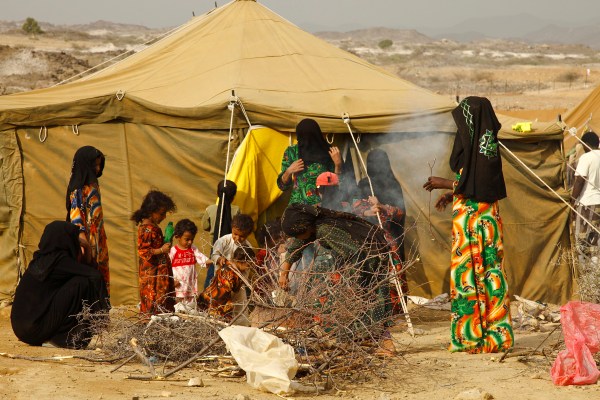
© Photo by Swiveler via Flickr

International Justice Section

PCA: Hearings Begin in Rwanda’s Arbitration Proceedings Against UK Over Cancelled Migration Agreement


On 18 March 2026, hearings began in Rwanda’s arbitration case against the UK, in which it seeks compensation of £100 million (US$134 million) following the cancellation of a bilateral migration agreement. The case is being heard at the Permanent Court of Arbitration (PCA) in The Hague, the Netherlands. The 2022 migrant agreement, signed by the previous government under Prime Minister Rishi Sunak, was scrapped by Prime Minister Keir Starmer after he took office in 2024. Under the terms of the agreement, migrants who arrived in the UK were sent to Rwanda, which would receive payments to cover costs. Kigali contends that it incurred high costs in preparation for implementing the arrangement, including investments in infrastructure and administration, and asserts that the UK breached its obligations by terminating the deal. In response, the UK has rejected any liability, arguing that subsequent agreements addressed the financial arrangements between the parties. The hearings are anticipated to continue for several days, with the tribunal expected to take months to arrive at a decision.


https://apnews.com/article/737aaa74d44983e8c2ca56c2ea76d470

https://www.infomigrants.net/en/post/70448/rwanda-seeks-over-100-million-pounds-from-uk-in-hague-court-over-ditched-migrant-deal

CJEU: Upholds Green Finance Classification for Bioenergy


On 18 March 2026, the Court of Justice of the European Union (CJEU) upheld the European Commission’s decision to classify specific bioenergy activities as environmentally sustainable within the EU’s green finance taxonomy. This case had been initiated by environmental groups challenging the inclusion of bioenergy in the framework designed to guide sustainable investment across the Union. In its ruling, the Court determined that the Commission acted within its discretion and adhered to the necessary legal procedures when adopting the classification. This decision is significant for both investors and policymakers, as the taxonomy plays a pivotal role in directing capital towards environmentally sustainable projects. Critics argue that the inclusion of bioenergy may undermine climate goals, while proponents contend that it supports essential energy transition strategies.


https://www.reuters.com/sustainability/boards-policy-regulation/court-upholds-eu-commission-green-finance-label-bioenergy-2026-03-18/

Belgium: Court Accepts Jurisdiction in Climate Case Against TotalEnergies


On 18 March 2026, a Belgian court determined that it has jurisdiction to hear a climate lawsuit filed against TotalEnergies by a farmer who alleges that the company’s global greenhouse gas emissions have caused harm. The court dismissed TotalEnergies’ claim that the Belgian court lacked jurisdiction to hear the case. This decision permits the case to advance to a consideration of its merits, although the court has deferred a final ruling on liability. The plaintiff contends that TotalEnergies’ activities have significantly contributed to climate-related impacts affecting agricultural production, prompting important questions about corporate responsibility for transnational environmental harm. This ruling reflects an increasing trend in climate litigation aimed at holding multinational corporations accountable in domestic courts and could have implications for similar cases across Europe concerning environmental responsibility and jurisdiction.


https://www.reuters.com/business/energy/belgian-court-postpones-ruling-totalenergies-climate-case-2026-03-18/

ICJ: Grants Guatemala Permission to Intervene in Belize v. Honduras Case


On 19 March 2026, the International Court of Justice (ICJ) issued its ruling on Guatemala’s application for permission to intervene in the case concerning Sovereignty over the Sapodilla Cayes/Cayos Zapotillos (Belize v. Honduras). The Court found that Guatemala has a legal interest in the case, and pursuant to Article 62 of the ICJ Statute, is permitted to intervene as a non-party. Guatemala’s participation is limited to issues concerning sovereignty over the Sapodilla Cayes and fishing rights in the surrounding waters. Belize did not object to Guatemala’s application to intervene. However, Honduras argued that the intervention was “redundant.” The Court’s decision does not affect the sovereignty dispute between Belize and Honduras and only permits each party’s claims to be presented in the proceedings. The Court has set 19 May 2026 as the deadline for Guatemala to submit its written statement and 20 July 2026 for Belize and Honduras to provide their written observations. This ruling allows Guatemala to participate in the case without affecting the legal rights or claims of the other parties.


https://www.icj-cij.org/sites/default/files/case-related/185/185-20260319-pre-01-00-en.pdf

https://www.pressoffice.gov.bz/icj-decision-on-guatemalas-application-to-intervene-in-belize-v-honduras-case/

Tunisia: Court Sentences Human Rights Activist to Eight Years in Prison


On 19 March 2026, a Tunisian court sentenced Saadia Mosbah, a human rights campaigner, to ​eight years in prison and a fine of US$35,000 (£26,000) on charges of money laundering and illicit enrichment. Mosbah is a prominent migrant rights activist and the leader of the anti-racism group Mnèmty. Mosbah and several other activists have been in detention since May 2024. Her son received a three-year prison sentence, while another activist was sentenced to two years. Mosbah’s lawyer, Hela Ben Salem, described the verdict as part of ​a wider attempt to “dismantle civil society groups” and ​transfer the responsibility for the state’s inability to manage the ⁠migrant issue onto these groups. Her legal team expressed their intention ‌to ⁠appeal the verdict. Tunisia has emerged as a key transit point for migrants seeking to reach Europe and is under growing pressure due to ​rising migration numbers ⁠from Africa. In ​response, Tunisian authorities ⁠have increased security measures and enacted tougher legal regulations targeting irregular migration networks. Human rights groups have warned ​that these actions may further hamper humanitarian efforts and restrict ​independent advocacy in the country.


https://www.reuters.com/sustainability/society-equity/tunisia-jails-prominent-migrant-rights-activist-saadia-mosbah-8-years-2026-03-19/

Bosnia and Herzegovina: Court Convicts Former Bosnian Serb Soldier of Crimes Against Humanity for Wartime Rape


On 19 March 2026, the Bosnian state court found Boro Ivanovic, a former Bosnian Serb army soldier, guilty of crimes against humanity for raping a woman several times in Foca during the war in 1992. The court sentenced him to ten years in prison. In its first-instance verdict, the court stated that two soldiers invited the woman to Ivanovic’s apartment. The woman’s husband had been detained, and she sought Ivanovic’s help in securing his release. Ivanovic assaulted and raped her, and subsequently raped her on six to seven further occasions. The defence argued that there were discrepancies in her testimony, but the court rejected this claim. Judge Lejla Konjic-Dragovic stated that the woman “did not have any doubts in any of her statements about who raped her.” In its sentencing decision, the court considered Ivanovic’s age, noting that he is 80 years old, as a mitigating factor, and added that the repetition of the sexual assault was considered an aggravating factor. The court extended Ivanovic’s travel ban, which was imposed during the proceedings.


https://balkaninsight.com/2026/03/19/bosnian-serb-army-ex-soldier-convicted-of-wartime-rape/btj/

Kosovo: Court Convicts Two Former Members of Serbian Armed Forces of War Crimes


On 19 March 2026, the Pristina Basic Court convicted Zoran Kostic and Dragan Milovic, two former members of the Serbian armed forces, on war crimes charges. They were sentenced to 15 and seven years respectively for atrocities committed in April 1999 in the Vushtrri/Vucitrn municipality. Kostic and Milovic have been in detention since September 2023. Judge Lutfi Shala stated that the time they have spent in custody will count towards their prison sentences. Kostic’s defence criticised the ruling and outlined their intention to appeal the verdict. Kosovo’s Special Prosecution accused Kostic of being part of Serbian army units that looted and burned Albanian houses and killed unarmed civilians in the village of Reznik. The prosecution accused Milovic of being part of the Serbian police and Yugoslav military who “mistreated, beat and tortured” civilians and forcibly expelled approximately 20,000 people from the Vushtrri/Vucitrn region.


https://balkaninsight.com/2026/03/18/kosovo-convicts-two-of-war-crime-charges/btj/

France: Court Convicts ISIS Member of Genocide and Crimes Against Humanity Against Yazidis


On 20 March 2026, a French member of Islamic State (ISIS), Sabri Essid, was found guilty of genocide and crimes against humanity in a Paris criminal court for atrocities committed against Yazidis. Essid, who was tried in absentia due to uncertainty about whether he is dead or alive, was found to have directly partaken in an organised system that killed, raped, and enslaved women and children of the Yazidis, an ethnic and religious minority in Iraq and Syria. Two Yazidi women provided evidence of their experience, one expressing she was sold to Essid, who made her his slave, raping her every day in front of her two-year-old daughter for over two years. The judge read distressing transcript records of online communications between ISIS members selling children as young as one to be sexual slaves. This is a landmark first conviction of genocide for a French national and the first time a French court has convicted an ISIS member for atrocities committed against the Yazidi minority.


https://www.theguardian.com/world/2026/mar/20/french-is-member-convicted-genocide-yazidis-crimes-against-humanity

https://www.fidh.org/en/region/europe-central-asia/france/french-isis-member-sabri-essid-convicted-of-genocide-and-crimes

International Peace & Security Section

UN: Security Council Extends Mission in Afghanistan for Three Months


On 16 March 2026, the UN Security Council unanimously voted to extend the mandate of the UN Assistance Mission in Afghanistan (UNAMA) for three months. The resolution was proposed by China and received support from all 15 members. UNAMA’s work includes monitoring human rights, promoting peace and stability, coordinating humanitarian efforts, and enabling international cooperation. China’s UN Ambassador Fu Cong stressed UNAMA plays an “indispensable role” in Afghanistan, noting that the country is facing ongoing challenges and emphasised the need for communication between Afghan officials and the international community to effectively tackle these issues. Afghanistan is experiencing an intensifying crisis as regional instability continues to rise. Tensions along Afghanistan’s border, including hostilities with Pakistan, are exacerbating the country’s fragile situation.


https://unama.unmissions.org/en/news/un-security-council-extends-unama-mandate-three-months

https://www.aa.com.tr/en/world/un-security-council-unanimously-extends-un-mission-in-afghanistan-for-3-months/3867154

UN: Report Finds Israeli Settlement Expansion in West Bank Displaced 36,000 Palestinians


On 17 March 2026, a report issued by the UN High Commissioner for Human Rights (OHCHR) found that between 1 November 2024 and 31 October 2025, Israeli settlement expansion and annexation has displaced more than 36,000 Palestinians in the occupied West Bank. The report outlined that settler violence persisted in a “coordinated, strategic and largely unchallenged manner” with Israeli authorities playing a key role in enabling the violence. It recorded 1,732 incidents that led to either casualties or property damage, including harassment, intimidation, as well as the demolition of Palestinian homes and agricultural land. The report noted a significant increase in attacks during olive harvest last October, documenting 42 settler attacks that injured 131 Palestinians, including 14 women and a child, marking the highest monthly total of incidents since 2006. The assaults occurred daily, perpetrated by armed settlers, Israeli soldiers, and “settler soldiers”, many armed and trained by the state, marking the worst harvest season in decades. The report stated that the displacement in Gaza and the West Bank appears to reflect a coordinated Israeli policy of large-scale forced transfers aimed at permanent displacement, raising concerns of ethnic cleansing. The forced transfer of people may constitute a war crime under international law.


https://www.ohchr.org/en/press-releases/2026/03/israels-settlement-expansion-drives-mass-displacement-west-bank-un-report

Nigeria: At Least 23 Dead and 100 Injured in Attacks in Borno State


On 17 March 2026, it was reported that at least 23 people had died and approximately 100 injured following a series of attacks in Maiduguri, the capital of Borno State in northeast Nigeria. According to the National Emergency Management Agency (NEMA) and local sources, the attacks were coordinated suicide bombings, allegedly targeting the University of Maiduguri Teaching Hospital, two commercial hubs, Post Office Market, and Monday Market, after evening prayers for Ramadan. A coordinator for NEMA stated that 169 victims had been hospitalised across three locations in Maiduguri. The attacks were allegedly committed by Boko Haram insurgents and have raised concerns about a possible rise in violence after insurgents attacked three military bases in Maiduguri last week. Governor Babagana Umara Zulum of Borno State said the attacks were “barbaric and inhumane” and has committed to strengthening security to protect its people. Investigations remain ongoing to identify the culprits of the attacks.


https://www.aa.com.tr/en/africa/renewed-boko-haram-attacks-leave-23-dead-over-100-injured-in-northeastern-nigeria/3867563

Argentina: Formally Exits from WHO Following Alignment with US Policy


On 17 March 2026, Argentina officially completed its withdrawal from the World Health Organisation (WHO), marking the end of a one-year notice period initiated by President Javier Milei. The move mirrors the recent exit of the US under President Donald Trump, reflecting a growing coalition of administrations challenging the authority of the UN’s primary health body. Foreign Minister Pablo Quirno confirmed the exit on social media, stating that the nation will now pivot towards bilateral agreements and regional frameworks to manage its health interests. The Milei administration has been a vocal critic of the WHO, labelling its recommendations during the COVID-19 pandemic as ineffective and driven by political interests rather than rigorous science. The government argues that the global body’s handling of the COVID-19 pandemic led to unnecessary economic damage and that the withdrawal is necessary to protect national sovereignty. While health experts express concern that the move will isolate the country from global disease-tracking networks, Buenos Aires maintains that it will continue to collaborate with international partners through more direct, independent channels.


https://www.aljazeera.com/news/2026/3/17/argentina-officially-withdraws-from-world-health-organization-following-us

Afghanistan: 143 Confirmed Dead in Pakistani Air Strike on Kabul Drug Rehabilitation Centre


On 17 March 2026, a Pakistani air strike destroyed the Omar Addiction Treatment Hospital in Kabul, killing at least 143 people and injuring an unspecified number, according to the UN Assistance Mission in Afghanistan (UNAMA). The strike, which razed large sections of the 2,000-bed facility and triggered fires, hit patients undergoing addiction treatment, including men and women, while rescue teams worked through the night to contain the destruction. The attack has deepened tensions between Afghanistan and Pakistan, with the Taliban administration claiming more than 400 deaths and approximately 265 injuries, while Pakistan denied targeting civilians, insisting its operations were aimed solely at military infrastructure and terrorist support sites. Afghan government officials called the strike a “crime against humanity.” The incident comes amid renewed cross-border clashes that began last month, after Pakistan accused the Taliban government of harbouring the Tehrik-i-Taliban Pakistan (TTP) and Baloch separatist groups responsible for attacks on Pakistani soil, claims Kabul has consistently denied. UNAMA highlighted the difficulty of verifying casualty figures amid conflicting accounts from the two governments. The attack has also exacerbated humanitarian needs, with the World Food Programme mobilising emergency food supplies for over 20,000 families uprooted by the fighting. Officials warn that the figure could rise further as the conflict shows no sign of abating.


https://www.bbc.com/news/articles/c4g8n7e0l40o

https://www.aljazeera.com/news/2026/3/18/un-revises-kabul-rehab-strike-toll-as-pakistan-denies-targeting-civilians

Cuba: Restores National Grid Following 29-Hour Blackout Linked to US Oil Blockade


On 18 March 2026, Cuban authorities announced that the national power grid had been fully re-established after a 29-hour total blackout left the island’s 10 million residents without electricity. The systemic failure was triggered by the shutdown of the Antonio Guiteras power plant, a primary energy source currently crippled by severe fuel shortages. Havana officials highlighted the ongoing fuel shortages, which have been worsened by US restrictions on oil imports, as a factor for the blackouts. US President Donald Trump has escalated tensions by suggesting he could “do anything he wanted” with the nation, while his administration dismissed the collapse as a sign of “regime incompetence.” In response to the outage, President Miguel Díaz-Canel condemned Washington’s “daily public threats,” accusing the US of orchestrating a strategy to “take over the country” by suffocating its economy. While the reconnection of the grid provides temporary relief, energy officials warned that the infrastructure remains unstable due to its antiquated state and lack of reserves. Despite the restoration, many residents, including those in the capital, continue to endure rolling blackouts of 16 hours or more. As domestic frustration grows and international shipping remains deterred by the threat of US tariffs, Cuba remains on the brink of a humanitarian crisis.


https://www.aljazeera.com/economy/2026/3/18/cuba-restores-power-after-29-hour-blackout-amid-us-oil-blockade

Gaza: Humanitarian Conditions Deteriorate Amid Ongoing Israeli Strikes and Aid Restrictions


On 18 March 2026, the UN Relief and Works Agency for Palestine Refugees (UNRWA) warned that humanitarian needs in Gaza are rising again, with families facing worsening hardship amid severe shortages of essential supplies. Many Palestinians remain in overcrowded shelters or damaged homes, while stocks of tents, bedding and basic goods are rapidly depleting. According to the UN Office for the Coordination of Humanitarian Affairs (OCHA), aid delivery is increasingly constrained by access restrictions, with the Kerem Shalom crossing remaining the only operational entry point for both humanitarian and commercial goods, creating an unsustainable bottleneck. Although Israel announced the reopening of the Rafah crossing, this has only resulted in very limited medical evacuations, with only a small number of wounded Palestinians allowed to leave the enclave, despite a ceasefire agreement reached in October 2025 that has been almost daily violated. The worsening humanitarian situation comes as Israel continues to carry out air strikes across Gaza. On 19 March, at least three Palestinians were killed in drone strikes in Gaza City, with additional injuries reported. These attacks come in the context of Israel’s ongoing genocide in Gaza, which has killed more than 72,000 people, although many experts believe the true death toll is significantly higher. UN officials have also warned of a growing erosion of international law. UNRWA chief Philippe Lazzarini described a “dangerous normalisation” of violations, warning that impunity and disproportionate actions risk becoming entrenched amid the ongoing wars in the region.


https://news.un.org/en/story/2026/03/1167159

https://www.aljazeera.com/news/2026/3/19/israel-continues-gaza-attacks-amid-regional-war-kills-several-palestinians

Chad: At Least 17 Killed in Cross-Border Drone Strike as Sudan War Spills Over


On 19 March 2026, Chadian authorities said a drone attack launched from Sudan killed at least 17 people in the border town of Tine, marking a serious escalation of the conflict’s regional spillover. The strike hit a residential area during a funeral, with local sources reporting that victims included mourners as well as children playing nearby. The Chadian government condemned the attack, noting it occurred despite repeated warnings to parties in the Sudan war and the recent closure of the border. It remains unclear who was responsible, with Sudan’s paramilitary Rapid Support Forces (RSF) denying involvement and blaming the Sudanese army. In response, President Mahamat Idriss Déby convened a security meeting and ordered the military to retaliate against any further attacks originating from Sudan. Authorities also said they have reinforced troop deployments along the eastern border and may consider operations on Sudanese territory. The incident highlights the growing regional impact of Sudan’s war, which began in April 2023 between the army and the RSF and has affected multiple regions across the country. Tens of thousands have been killed and more than 12 million displaced, including nearly one million who have fled to Chad. In Darfur, where the RSF now controls most of the territory, cross-border attacks have intensified due to the porous border and ongoing instability. The UN has accused the RSF of carrying out massacres in Darfur with “hallmarks of genocide”.


https://www.aljazeera.com/news/2026/3/19/drone-attack-from-sudan-kills-17-in-chad-as-conflict-spills-over

Weekly News Recap (1 – 7 June 2026)

Weekly News Recap (1 – 7 June 2026) © Photo by EU Civil Protection and Humanitarian Aid via FlickrInternational Justice SectionTunisia: Court Imposes Life Sentence on Ennahda Leader Rached GhannouchiCAS: Upholds FIFA Sanctions Against Mexican Football Federation Over Homophobic ChantsGabon: Court Rejects Appeal by Opposition Leader and Upholds DetentionPCA: Rejects

Read More »

Weekly News Recap (25 – 31 May 2026)

Weekly News Recap (25 – 31 May 2026) © Photo by USAID U.S. Agency for International Development via Flickr International Justice Section Tunisia: Court Sentences Presidential Critic Sonia Dahmani to New Two-Year Prison Term Cambodia: Opposition Leader Kem Sokha Granted Royal Pardon by King Norodom Sihamoni for Treason Sentence France:

Read More »

Weekly News Recap (18 – 24 May 2026)

Weekly News Recap (18 – 24 May 2026) © Photo by Aerous via Wikimedia Commons International Justice Section Yemen: Court Sentences 19 to Death for Alleged Collaboration with Saudi-Led Coalition Bahrain: Court Sentences Man to Life Imprisonment for Alleged Links to IRGC and Hezbollah South Korea: Former Defence Minister Sentenced

Read More »