
Through August and early September, Indonesia was gripped by widespread protests against the entrenched political and military elites. Sparked initially by the People’s Consultative Assembly granting its members a substantial housing allowance, protests escalated following the murder of a delivery driver by police on 28 August 2025.1 Emblematic of the youth-led nature of the uprising has been the use of the “straw-hat pirates” flag, from the hit manga and anime series One Piece, and which has spread via social media across boundaries to appear at protests in Nepal and the Philippines.2
These protests are continuing an already turbulent year for Indonesia, which saw outbursts of public unrest In February, March and July aimed at rising costs of living, controversial government policies, corruption, and a perceived ‘democratic backslide’.
Driving Factors
The heart of the protests is ultimately economic. As much as four out of every five jobs created in Indonesia are in the “informal sector”, with poor job security and precarious employment conditions.3 The increasing importance of the “gig economy”, labour arranged on an incidental basis through online services, to the lives of millions across Southeast Asia is starting to have political effects.4 The economic fallout from the COVID-19 pandemic, including lost jobs, declining consumption and stymied growth, have put considerable pressure on Indonesia’s working class, pushing more and more into precarious “gig work”.5 Particularly for younger people, the apparent decline of economic opportunities has brought corruption and extravagance at higher levels into an increasingly sharp focus. Emblematic of this People’s Consultative Assembly, Indonesia’s elected legislature, voted to substantially increase its members housing allowance at the same time as the Prabowo Government was implementing a “strict austerity” programme.6
In the lead up to the 2024 presidential election, Prabowo campaigned on a populist economic platform, promising welfare initiatives such as the now-infamous free-lunch

programme for schoolchildren, alongside major economic growth rates, attracting young voters who have since become disillusioned after his apparent failure to deliver.7
A number of regional governments, notably Pati Regency in central Java, have implemented sharp increases to property taxes, which triggered protests by a crowd of some 75,000 people on 13 August.8 These increases were in response to the reduction in public funding allocated to the Regencies by the central government, leading to Regency authorities turning to tax hikes in order to make up the shortfall.
A perceived “democratic backslide” underway in Indonesia is also seen as fuelling the protests, convincing even those beyond ‘activist’ sections of the population of a need to confront social and political elites ‘in the streets’. Although coming to the fore in the second half of 2025, the apparent erosion of liberal institutions and political norms is argued to extend back to at least the previous presidential administration under Joko Widodo, which wound back anti-corruption efforts and “manipulated” the constitution, “tainting” the 2024 elections.9 Combined with the economic pressure many people face, and the corruption and self-interest displayed by politicians and the well-connected, this drives a sense that ordinary people are ignored, disadvantaged and exploited by Indonesia’s ruling class.
The state’s repression of the protests, further detailed below, has also contributed to their growth. Police violence is cited by protest participants and organisers as further evidence of the government’s moral and functional incapacity.10 The death of Affan Kurniawan on 28 August was met with a wave of protest and riots which spread across the country from 29 to 31 August.11 These protests frequently involved ‘thousands’ of demonstrators, although a clear number is hard to establish, given the wide geographic spread of the reaction to Kurniawan’s death.
Security Response and Crackdown
According to reporting by Human Rights Watch, police and the Mobile Brigade paramilitary force utilised considerable force in their efforts to disperse protests, including tear gas, water-cannons, beatings and mass-arrests.12 Government leaders, including President Prabowo would use terms such as “violent”, “anarchic”, “treason and terrorism” to rhetorically castigate the protest movement and justify police violence towards participants.
While Affan Kurniawan is perhaps the most notable fatality caused by the police, a rickshaw driver also died of complications following exposure to tear gas in Solo on 29 August,13 and Rheza Sendy Pratama, a 21 year old student protestor, was beaten to death by police on 30 August in Yogyakarta.14 During the last days of August, 10 people in total lost their lives in relation to the protests, according to Indonesia’s National Commission on Human Rights (Komnas HAM).15
Part of the government’s response included cracking down on digital activity. Security services have pursued and arrested at least 40 people alleged to be “provocateurs” and “inciters” of protest actions and riots.16
Social media giant TikTok would notably be affected by this. Although TikTok actually shut down its livestream service during the height of the protests, it would have its status as an ‘electronic system provider’ suspended on 3 October after Bytedance (its Chinese parent company) failed to provide the full extent of data demanded. Supposedly, this was due to “online gambling” accounts monetising content during the protests.17 TikTok’s licence would be restored two days later after compliance with the Indonesian government’s demands.18 In the context of the ongoing investigation of social media accounts by Indonesian authorities, and considering the measures employed to coerce Bytedance, the claim that the data demanded by the government was only related to ‘online gambling’ is hard to believe. Although President Prabowo promised reforms and transparent investigations as part of his effort to calm the protest movement, Indonesia’s political class and security services have escaped popular outrage without repercussion in the past.19
Global Connections
The insurrection in Indonesia has been linked to a wave of similar protests across Southeast Asia and beyond. The August uprising in Indonesia was followed in September by mass demonstrations against corruption and wealth inequality in Nepal, the Philippines and Malaysia.20 Symbolically, these movements were linked through the “straw-hat pirates” flag, and a common narrative of “Gen-Z” youth-led political militancy.21
As in Indonesia, the initial stirrings of public anger in Nepal were focused on the political elite’s wealth and the exploitation of their power by family members. The popular criticism of so-called “nepo-babies”, the children of well-connected political and business figures, who exemplify the ever-widening wealth gap in Nepalese society.22 Spurred on by the Government’s attempts to push back against online activism by enforcing controls over social media, massive protests beginning 8 September led to the swift overthrow of the Government after just three days.
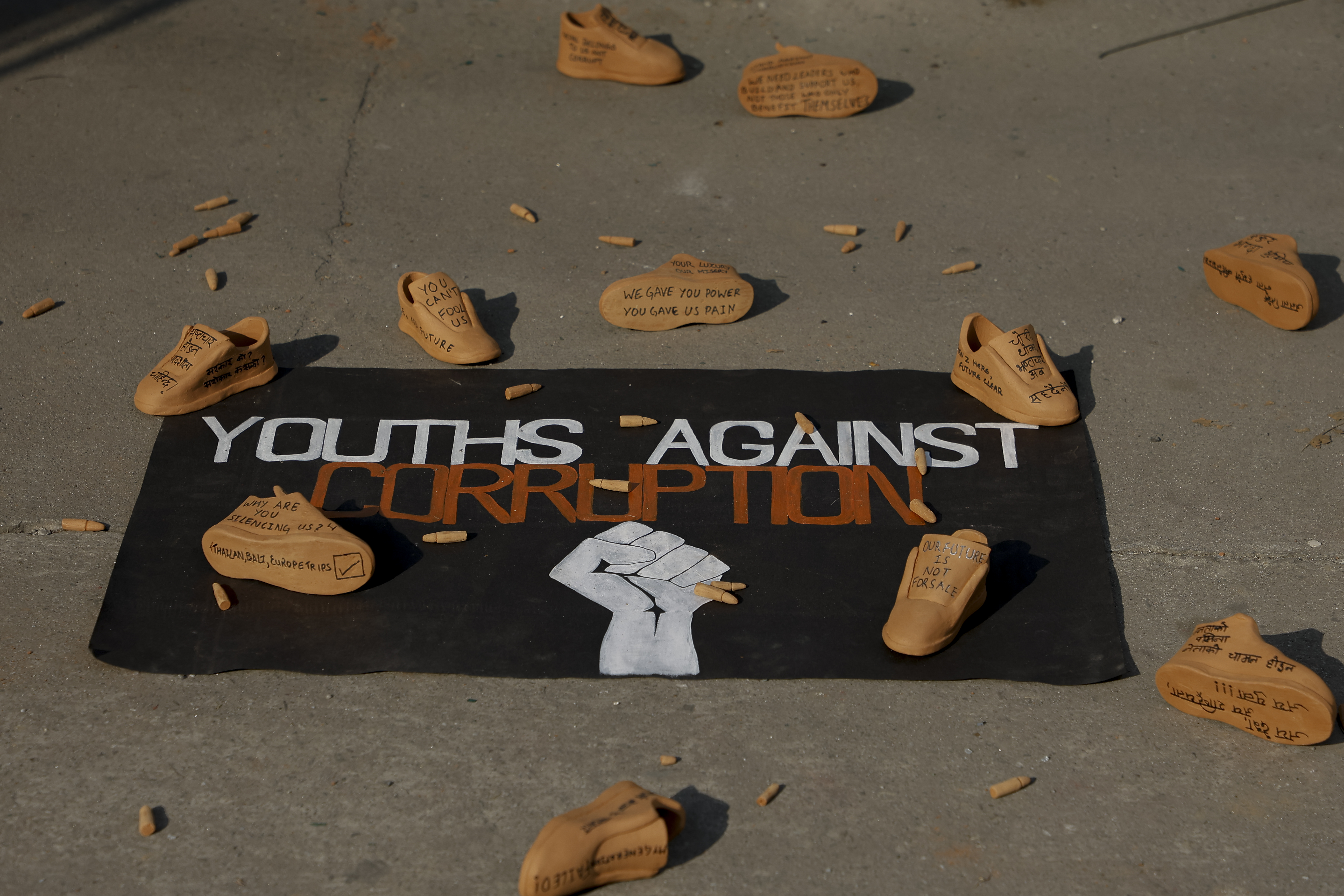
In the Philippines, protests initially began in response to a scandal involving the theft and misuse of public funds intended for flood control and prevention infrastructure, and like Nepal, also took on a vulgar class angle against “nepo-babies”.23
On one hand, the common foregrounding of young “Gen-Z” protestors in opposition to the political status quo is a reflection of the low median age of population across the region, around 30-32 in Southeast Asian countries.24
Power and economic prosperity appear to be hoarded by older generations and denied through corrupt means; “Gerontocracy”.25 This has produced a sharper sense of generational antagonism overlaying, or as a proxy for, economic and political antagonisms between classes. The greater online activity and interconnectedness of young people further contribute to the sense of transnational solidarity and the common political challenges faced by “Gen-Z”. On the other hand, the media attention given to “Gen-Z”, and the symbology associated with them, risks both over-focusing on the aesthetic qualities of the protests rather than the material basis for the unrest.26 This narrative flattens any examination of these protests as a social phenomenon, ignoring the participation of other sections of society and creating a simplified and emotional framework through which the protest wave can be presented without substantive challenge to existing power structures.27
The wave of protests examined in this article could also be compared to last year’s ‘July Revolution’ in Bangladesh, which saw the Awami League government overthrown by a similarly youth-led protest movement, perhaps the initial harbinger of the current wave of “Gen-Z Revolutions.” In the cases of both Nepal and Bangladesh, the ouster of leading political cliques was contingent on the defection of the armed forces from the side of the government. While a sufficient display of civil resistance or hostility could prompt such an eventuality, this does not mean that the military is necessarily defecting to the side of the protesters. The Military’s actions are just as likely to be motivated by opportunism or the intention to preserve the greater part of the established status quo against a potentially radical movement, and so safeguard its own interests. If the armed forces position themselves as custodians of any transitional government, the risk becomes that they turn this into a kingmaker position, either behind the scenes or simply through a direct coup d’etat. Especially in Indonesia, where the military is an expansive and deeply entrenched economic and political actor in its own right, democratic activists would be wise to be wary.
Conclusion
The protest wave which began in Indonesia in late August, and spread across Southeast Asia and beyond, is emblematic of a precarious developmental and political situation common to these nations. Large youth populations, with comparatively poor economic prospects, are increasingly viewing their elders has having monopolised political and economic power for themselves through corrupt means, and see confrontation with an entrenched or dictatorial political elite as serious recourse.
In Indonesia’s specific case, anti-government and anti-corruption protests have been a persistent feature of 2025, and these ongoing tensions bely the relative calm since early September. The Prabowo Government will be faced with the choice of serious reform or intensifying crackdowns on unrest when it does appear; with such crackdowns being just as likely to inflame violence as they are to restore order, as seen following the death of Affian Kurniawan.