

Weekly News Recap (16 – 22 February 2026) © Photo by Coast Guard News via Flickr International Justice Section Bosnia and Herzegovina: Court Upholds War-Crimes Convictions for Abuse of Prisoners...
Weekly News Recap (19 - 25 August 2024)
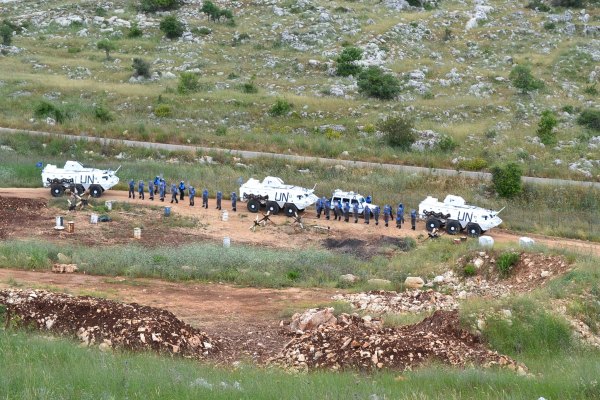
© Photo by United Nations Photo via Flickr
- ICJ: Court Announces Schedule of Public Hearings in Land and Maritime Sovereignty Case Between Gabon and Equatorial Guinea
- India: Supreme Court Rejects Petition Seeking Declaration of Unconstitutionality of Caste System
- Kenya: Supreme Court Suspends Ruling That Declared 2023 Finance Act Unconstitutional
- Germany: Federal Court Upholds Conviction of 99-Year-Old Former Nazi Concentration Camp Secretary
- Venezuela: Supreme Tribunal Confirms Maduro’s Re-Election Amidst Controversy Over Impartiality
- South Korea: Court Orders Japanese Company to Compensate Family of Forced Labour Victim during WWII
- France: Court Denies Appeal Against Prosecuting US Firms for Producing Agent Orange
- US: Lawsuit Filed Against Biden Administration in Texas District Court Over Policies Aiding Undocumented Immigrants
International Peace & Security Section
-
Sudan: Violence and Floods Prevent Delivery of 5,000 Tonnes of Food to Communities in Need
-
Lithuania: Construction of Military Base for German Soldiers Begins in Lithuania Near Russian Border
-
Gaza: Civilians Pushed Closer to Frontline Due to Repeated Evacuation Orders
-
Ukraine: Ukrainian Parliament Officially Ratifies the ICC Rome Statute
-
Denmark-Sweden: Announce Joint Measures to Crack Down on Organised Criminal Gangs
-
India: Protests Continue in Response to Alleged Murder and Rape of Medic in Kolkota
-
West Bank: Israeli Military Undertaking Near-Daily Raid on Palestinian West Bank
-
Gaza: School Shelters Hit in More Strikes Amidst Lack of Water and Sanitation Facilities
- Serbia: At Least 8 Dead After Migrant Boat Capsizes in Drina River Between Serbia and Bosnia-Herzegovina
International Justice Section
ICJ: Court Announces Schedule of Public Hearings in Land and Maritime Sovereignty Case Between Gabon and Equatorial Guinea
On 19 August 2024, the International Court of Justice (ICJ) announced that it will hold public hearings from 30 September to 4 October 2024, on the merits of the case between Gabon and Equatorial Guinea concerning land and maritime boundaries, as well as sovereignty over several islands. The dispute involves the islands of Mbanié/Mbañe, Cocotiers/Cocoteros, and Conga. The case was initiated in March 2021 under a Special Agreement signed in 2016 and ratified in 2020. The parties have asked the ICJ to determine the legal status of relevant treaties and agreements regarding their shared borders. Written submissions, including Memorials and Counter-Memorials, were filed on time, as directed by the Court’s orders.
https://www.icj-cij.org/sites/default/files/case-related/179/179-20240819-pre-01-00-en.pdf
India: Supreme Court Rejects Petition Seeking Declaration of Unconstitutionality of Caste System
On 20 August 2024, the Supreme Court of India rejected a petition seeking to declare the country’s traditional caste system unconstitutional. The petition, filed under Article 32 by Wazir Singh Poonia, argued that the caste system violates fundamental rights, particularly the right to equality. However, a bench led by Chief Justice D.Y. Chandrachud, along with Justices J.B. Pardiwala and Manoj Misra, disagreed with the claim. The court noted that the Indian Constitution explicitly acknowledges the caste system through provisions addressing socially and educationally backward classes and recognizing Scheduled Castes (SCs) and Scheduled Tribes (STs). The petition was dismissed as the court found no breach of fundamental rights, concluding that there was no basis for judicial intervention.
Kenya: Supreme Court Suspends Ruling That Declared 2023 Finance Act Unconstitutional
On 20 August 2024, the Supreme Court of Kenya issued a stay order that temporarily halts a Court of Appeal ruling which had declared the Kenyan Finance Act 2023 unconstitutional. The decision was made by a seven-judge bench on the grounds of public interest and the significance of the case. The court evaluated whether the appeal met conditions for granting a stay, using principles from the Gatirau Munya case. The judges determined that the appeal was not frivolous and had substantial implications, particularly since the Court of Appeal’s ruling nullified the entire Finance Act 2023, unlike a previous High Court decision that only struck down certain sections. The Supreme Court also emphasised that denying the stay would undermine the appeal, as the revenue implications and administrative burden of reverting to the Finance Act 2022 were significant. The government argued that a loss of 214 billion Kenyan shillings in revenue could result from the nullification, and adapting tax collection systems to the previous act would be time-consuming. Additionally, tax refunds under the 2023 Act would be challenging since no funds were set aside for such refunds. This ruling follows a wave of public dissent, particularly from Gen Z, leading to the withdrawal of the 2024 Finance Bill after the president declined to sign it. The Court of Appeal’s earlier ruling declared the 2023 Finance Act unconstitutional due to inadequate public participation, thus reinstating the Finance Act 2022 as the legal tax framework.
Germany: Federal Court Upholds Conviction of 99-Year-Old Former Nazi Concentration Camp Secretary
On 21 August 2024, the Federal Court of Justice in Germany upheld the conviction of Irmgard Furchner, a 99-year-old former Nazi concentration camp secretary, rejecting her appeal against the earlier verdict. Furchner was employed as a stenographer in the commandant’s office of the Stutthof concentration camp near the Polish city of Gdansk, where over 60,000 people were killed during her tenure from 1943 to 1945. Initially convicted in 2022 by the Itzehoe Regional Court for “aiding and abetting murder in 10,505 cases and attempted murder in five cases,” she received a suspended youth sentence of two years due to her age at the time of the crimes—18 to 19 years old. The regional court found her administrative work crucial to the camp’s operation, facilitating the systematic killing of prisoners through various means, including gassing, creating hostile conditions, orchestrating death marches, and transporting prisoners to Auschwitz-Birkenau extermination camp. The Federal Court’s decision to uphold Furchner’s conviction underscores a significant legal precedent in Germany, following the cases of other former Nazi personnel like John Demjanjuk and Oskar Gröning. This precedent has expanded the scope of accountability to include not only those who physically perpetrated the killings but also those whose administrative and supportive roles enabled the Nazi genocide. This approach reaffirms Germany’s ongoing commitment to addressing its historical atrocities and ensuring justice for Holocaust victims, even as the number of survivors and perpetrators dwindles.
Venezuela: Supreme Tribunal Confirms Maduro’s Re-Election Amidst Controversy Over Impartiality
On 22 August 2024, the Supreme Tribunal of Justice (TSJ) in Venezuela officially confirmed Nicolás Maduro’s re-election as president. This decision comes despite significant controversy and allegations of partiality, as the tribunal endorsed the results announced by the National Electoral Council (CNE) that declared Maduro the winner for another term (2025-2031). The validation occurred during a live session nearly a month after the elections, with the TSJ dismissing concerns over its authority and impartiality. However, this decision has been met with strong opposition from key figures such as Edmundo González and María Corina Machado, who have labelled the process as fraudulent and vowed to seek international support to challenge the results. The tribunal’s assertion of competence, referencing judicial precedents in other countries, alongside accusations against opposition leaders for alleged electoral crimes, has intensified the political divide. This turmoil coincides with a cyber attack reported during the election, adding to the complexity of the situation. Internationally, the TSJ’s actions have been criticised, with various regional leaders and human rights organisations questioning the legitimacy of the electoral process and the independence of Venezuela’s judicial system. The ongoing situation has sparked global protests, reflecting widespread dissent among the Venezuelan diaspora and international observers regarding the fairness of the electoral process.
South Korea: Court Orders Japanese Company to Compensate Family of Forced Labour Victim during WWII
On 22 August 2024, Seoul’s Central District Court ordered Nippon Steel, a Japanese steel milling company, to pay 100 million won to the four children of a Korean citizen in an appeal decision. The Korean national was confirmed to be a victim of forced labour in Japan during World War II, between 1940 and 1942. The previous ruling by the trial division of the Court rejected the victim’s family’s request for compensation, citing that their right to claim compensation had expired, which was overturned. From 1910 to 1945, South Korea was a Japanese colony, and during World War II, Japanese factories and mines used Korean forced labour in the hundreds of thousands to support the Japanese economy. Although the 1965 Treaty on Basic Relations Between Japan and the Republic of Korea supposedly denied any compensation claims from South Koreans in exchange for 500 million USD in economic aid from Japan to South Korea, South Korean courts nonetheless confirm their citizens’ right to compensation.
France: Court Denies Appeal Against Prosecuting US Firms for Producing Agent Orange
On 22 August 2024, the Paris Court of Appeals rejected an appeal to prosecute fifteen agrochemical firms that produced Agent Orange for US armed forces during the Vietnam War. Agent Orange is a mixture of two herbicides containing the highly toxic dioxin that causes major health issues upon contact, particularly affecting children. The plaintiff, Tran To Nga, Vietnam-born French citizen, was exposed to Agent Orange during the Vietnam War, which gives this case legal standing in front of French courts, as France recognises extraterritorial passive personality jurisdiction. The plaintiff alleges that medical examination records show that the dioxin concentration in her blood is abnormally high, and that her children all suffer from heart and bone defects. She also alleges that she suffered from five out of seventeen diseases that the US recognises as caused by Agent Orange. This is her second appeal that has failed. The Vietnamese Ministry of Foreign Affairs expressed its support for Ms Nga via a press statement by its spokesperson, Pham Thu Hang, and called for more corporate accountability for firms that supplied Agent Orange to US military forces. Ms Nga has vowed to appeal this decision and take the case up to France’s highest court, the Court de Cassation.
US: Lawsuit Filed Against Biden Administration in Texas District Court Over Policies Aiding Undocumented Immigrants
On 23 August 2024, a coalition led by the Texas Attorney General, joined by 14 other Republican-led states, filed a lawsuit against the Biden administration and the Department of Homeland Security over recent changes to immigration policy. Texas Attorney General Ken Paxton argues that the administration’s policies undermine national borders and law, accusing it of attempting to create a “nation without borders.” The lawsuit was also supported by America First Legal, which described the changes as part of a “lawless” strategy worsening the ongoing immigration crisis. The new policies in question include programs allowing undocumented spouses of US citizens and certain undocumented immigrants, such as DACA recipients and US college graduates, to remain in the country while applying for lawful residence and work visas. Previously, these individuals would have faced deportation while their applications were processed. The Biden administration has faced criticism from both conservatives and liberals. On one side, the administration is accused of weakening border security, while liberal groups have condemned a recent executive order imposing stricter asylum limits. The changes reflect a broader effort by Biden to keep immigrant families together by allowing them to stay in the US during legal processes, as long as they meet certain criteria, such as being married to a US citizen and having resided in the country for over a decade. The backdrop includes the Deferred Action for Childhood Arrivals (DACA) program, which protected young undocumented immigrants from deportation. However, a Texas court ruling in 2023 found DACA illegal, stopping new applications while allowing existing beneficiaries to maintain their status and access the new immigration options.
International Peace & Security Section
Sudan: Violence and Floods Prevent Delivery of 5,000 Tonnes of Food to Communities in Need
On 19 August 2024, the UN confirmed that truckloads of food and supplies have been approved to cross the border from Chad through the Adre crossing, to Sudan. This route is vital to millions for humanitarian aid, and 131 trucks are now approved to carry food and aid relief across the border. This aid will assist hundreds of thousands of people and is expected to last through Sudan’s lean season of August and September. Unfortunately, 50 of these trucks, carrying 5,000 tonnes of food and nutritional assistance, became stranded in various locations across Sudan due to flooding and degrading roads. Additionally, increased fighting and violence have further restricted aid access to communities in conflict zones. The World Food Programme needs all border crossings in Sudan to open to guarantee the urgent delivery of aid relief.
Lithuania: Construction of Military Base for German Soldiers Begins in Lithuania Near Russian Border
On 19 August 2024, it was reported that Lithuania began construction of a military base in Rudninkai. Once constructed, the base will accommodate up to 4,000 German soldiers. This will be the first permanent deployment of the German military on foreign soil since World War II. Last year, Germany committed to deploy troops in Lithuania, which borders Russia. According to Lithuanian Defence Chief, Raimundas Vaiksnoras, the country will spend more than 1 billion euro over the next three years to construct the base, in one of the largest construction projects in its history. Vaiksnoras added the deployment will work as deterrence to keep the Russians out. The base will not only accommodate troops but will also provide storage and maintenance for tanks and other equipment, as well as shooting ranges. However, only about a fifth of the facility’s buildings in Rudninkai have been contracted for construction, intensifying fears it will not be finished in time. The German government has asked parliament for 2.93 billion euro to supply the Lithuanian base with tanks and military equipment. However, infighting within Germany’s fractious coalition is jeopardising their promise to upgrade its military. This year, Lithuania has increased its defence spending to 3% of gross domestic product (GDP). The government has upped taxes to cover the costs of defence and security needs, such as the new military base.
Gaza: Civilians Pushed Closer to Frontline Due to Repeated Evacuation Orders
On 21 August, 2024, the UN reported that repeated evacuation orders in Gaza by the Israeli military threaten the already vulnerable people in the enclave with further forced displacement, leaving them dangerously close to the frontline. More than ten months into the war, nearly all Gazans have been displaced at least once – often multiple times – both by evacuation orders and bombings. Spokesperson for the UN agency for Palestine refugees notes that Gazans are never more than a few blocks away from the frontline now that areas that used to be humanitarian zones have now turned into the frontline.
https://news.un.org/en/story/2024/08/1153406
Ukraine: Ukrainian Parliament Officially Ratifies the ICC Rome Statute
On 21 August 2024, the Ukraine Parliament officially ratified the Rome Statute, making Ukraine the 125th Member State to the International Criminal Court. Of the 282 parliamentarians, 281 voted for the ratification and only one voted against. This bill was part of a package of legislation proposed by President Zelenskyy on 17 August 2024 to allow Ukraine to be fully compliant with the Rome Statute’s obligations for its Member States. Previously, the ICC had jurisdiction over crimes committed in Ukraine’s territory due to a special declaration under Article 12(3) of the Statute. However, as a full member of the Rome Statute, Ukraine has consented to being subjected under the ICC’s jurisdiction for crimes committed by its nationals and/or on its national territory from 2002 onwards, in addition to acquiring State obligations to cooperate with ICC proceedings. The Foreign Minister of Ukraine, Dmytro Kuleba, claims that this move demonstrates Ukraine’s commitment to international justice and a crucial step towards fulfilling the requirements to join the European Union.
https://www.jurist.org/news/2024/08/ukraine-parliament-ratifies-rome-statute-of-the-icc/
Denmark-Sweden: Announce Joint Measures to Crack Down on Organised Criminal Gangs
On 21 August 2024, the Danish Justice Minister, Peter Hummelgaard, and Swedish counterpart, Gunnar Strommer announced joint measures to crack down on organised criminal gangs following a series of violent incidents in Denmark, which also involved Swedish youth according to reports. During the press conference, Hummelgaard stated the response to the violence must be “strong and coordinated.” Under the agreement both countries will enhance information-sharing mechanisms that will aim to prevent recruitment of young people into criminal gangs. They have also agreed to strengthen their coordination with third countries to extradite gang leaders back to Denmark and Sweden, so that criminals must “face the consequences of their actions.” Strommer stated Sweden will clamp down on serious violence using Denmark’s anti-gang legislation as a blueprint. Strommer said this will involve clamping down on violence, stripping the criminals of their economies and ending recruitment of children into criminal gangs. Strommer also noted that Sweden did not sufficiently deal with criminal gangs in recent years.
https://www.aa.com.tr/en/europe/denmark-sweden-announce-joint-crackdown-on-gang-crime/3309570
India: Protests Continue in Response to Alleged Murder and Rape of Medic in Kolkota
On 22 August 2024, it was reported that protects were continuing in response to the recent discovery of a trainee doctor’s dead body with bruises and evidence of sexual assault in a government teaching hospital in Kolkata. The incident has sent shockwaves through the country and attracted global attention, sparking demonstrations and protests, especially among the medical community, demanding justice and greater measures for healthcare workers. Indian doctors have resumed work after a brief strike, but protests continue over the case. The ongoing protests highlight concerns about the safety of women and the need for systemic change in India to address gender-based violence. Despite the resumption of work, the unrest shows no signs of abating as demands for justice persist.
Indonesia: Riots Erupt Over Newly Proposed Election Law
On 22 August 2024, protests erupted in cities across Indonesia over a newly proposed election law. The Indonesian Constitutional Court (MK) granted part of a petition from Partai Buruh and Partai Gelora, lowering the threshold rules for regional head dominations in the 2024 Jakarta Pilkada. Before, the political parties needed at least 20% of seats in the Regional House of Representatives (DPRD) or 25% of the popular vote to nominate candidates, in which parties have to make a coalition. Now, only 7.5% of the popular vote is needed to nominate candidates. Moreover, the law states that the minimum age for regional head candidates is 30 years of age, upon their registration as a candidate. Critics argue that this new law would benefit powerful political elites and weaken democracy. The law suggests returning to a closed-list proportional representation system, where voters would only select parties rather than individual candidates. Protesters are now demanding to uphold the current open-list system to ensure fairer representation in the upcoming elections.
https://edition.cnn.com/2024/08/22/asia/indonesia-protests-election-law-intl/index.html
West Bank: Israeli Military Undertaking Near-Daily Raid on Palestinian West Bank
On 22 August 2024, three Palestinians were killed in a drone strike by the Israeli military. Experts reported that Israel is undertaking near-daily raids in Tulkarem, a city and refugee camp in the occupied West Bank to displace and scare its population. During the raid on Thursday, the Israeli troops clashed with fighters from the Qassam Brigades, the military wing of Hamas. During the raid, Israeli soldiers were deployed on rooftops and sent bulldozers into the refugee camp to destroy large residential areas, according to news reports. The Israeli troops also reportedly set fire to people’s homes and prevented local aid workers from putting the fires out. According to Israel, the reason why they are attacking a refugee camp is to conduct “counter-terrorism” operations. But activists and experts have previously reported that Israel is playing up the threat of “terrorism” to justify the mass displacement of Palestinians and the expansion of illegal settlements. News reports claim that refugee camps across the West Bank tend to harbour Palestinian fighters that are loosely affiliated with Hamas, Palestinian Islamic Jihad or Fatah. These fighters say they are protecting their camps and cities from Israeli raids that aim to uproot civilians from their homes and lands. The reason why Israel chose Tulkarem is because of the fertile agricultural land thanks to its abundance of natural water, activists and rights groups say.
https://www.aljazeera.com/news/2024/8/22/what-is-israel-doing-to-palestinians-in-tulkarem
Gaza: School Shelters Hit in More Strikes Amidst Lack of Water and Sanitation Facilities
On 22 August, 2024, the UN reported that Gaza is running out of chlorine supplies that are essential for purifying water, while new strikes continue on schools sheltering people displaced by the war. The chlorine reserve could last just one month if used sparsely, while double the amount of chlorine is needed to be effective now. Children are particularly at risk of waterborne diseases and the danger rises during winter months if Gazans continue to be forced to live in overcrowded shelters lacking water and sanitation facilities. Additionally, hand soap, laundry detergent, shampoo, disinfectants, etc. continue to be of acute shortage and can allow diseases to spread easily. Moreover, the UN has reported more and more strikes on schools and school-turned-shelters in Gaza, killing, injuring and even burning children to death. Seven UNRWA schools have been hit, 500 people reported killed and over 1,700 people reported injured despite being protected under international humanitarian law.
Serbia: At Least 8 Dead After Migrant Boat Capsizes in Drina River Between Serbia and Bosnia-Herzegovina
On 22 August 2024, Serbia’s Interior Minister, Ivica Dacic, confirmed reports that a boat carrying 30 migrants capsized while attempting to cross the Drina River from Serbia to Bosnia-Herzegovina. At least eight people are confirmed dead, with more still missing. 18 managed to reach the shore at Bosnia. The migrants were believed to be from Syria and Egypt. Bosnian and Serbian police, firefighters, and civil defence rescue teams have been deployed to search for survivors on the riverbanks. Every year, thousands of migrants attempt to reach Europe via the Balkan land route. They come to Serbia from Bulgaria or North Macedonia before moving on to Hungary, Croatia or Bosnia. To reach Europe, migrants often turn to smugglers to take them across the borders without approval.

Weekly News Recap (9 – 15 February 2026) © Photo by DW Akademie – Africa via Flickr International Justice Section KSC: Closing Statements Begin in Thaçi’s Trial Hong Kong: High...
Weekly News Recap (2 – 8 February 2026) © Photo by Óglaigh na hÉireann via Flickr International Justice Section France: Judges Issue Criminal Summonses in Gaza Aid Blockade Investigation Libya:...

Weekly News Recap (26 January – 1 February 2026) © Photo by Lewin Bormann via Flickr International Justice Section ICC: Pre-Trial Chamber Rules Duterte Fit to Stand Trial ICC: Pre-Trial...