Platform for Peace and Humanity

Weekly News Recap (24 - 30 March 2025)

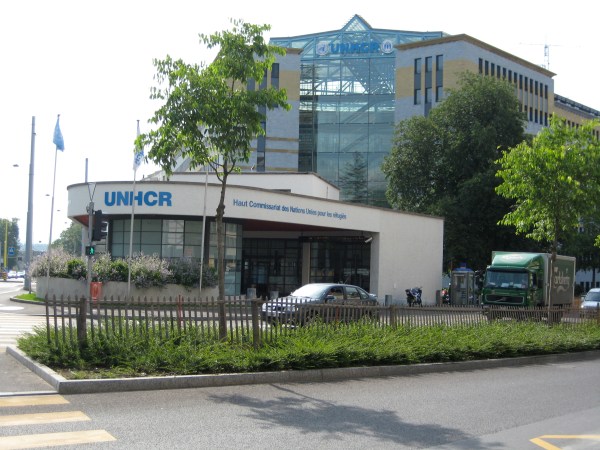
© Photo by UN Geneva via Flickr

International Justice Section

International Peace & Security Section

International Justice Section

Sri Lanka: UK Imposes Sanctions on Four Alleged Sri Lankan War Criminals


On 24 March 2025, the United Kingdom (UK) imposed sanctions on four individuals for alleged human rights atrocities during Sri Lanka’s civil war, which concluded in 2009. The sanctioned individuals are Shavendra Silva (former Chief of Staff of the Sri Lankan Armed Forces); Wasantha Karannagoda (former Commander of the Sri Lankan Navy); Jagath Jayasuriya (former Commander of the Sri Lankan Army) and Vinayagamoorthy Muralitharan alias Karuna Amman (former commander in the Liberation Tigers of Tamil Eelam (LTTE) who later led a paramilitary group aligned with the Sri Lankan Army). The sanctions entail travel bans and asset freezes, reflecting the UK’s commitment to addressing past human rights abuses. These measures respond to allegations of extrajudicial killings, torture, and sexual violence committed during the 26-year conflict, which resulted in an estimated 80,000 to 100,000 deaths. ​This action aligns with international efforts to promote accountability for wartime atrocities. Notably, in December 2024, the International Truth and Justice Project (ITJP) submitted over 60 sanction requests targeting Sri Lankan officials and former Indian Peacekeeping Force officers for their roles in human rights violations. ​The Sri Lankan government criticised the UK’s unilateral sanctions, arguing that such measures complicate national reconciliation efforts. Sri Lanka maintains that historical allegations should be addressed through domestic accountability mechanisms and emphasises its ongoing work to strengthen these frameworks. ​These developments underscore the international community’s ongoing efforts to seek justice for victims of the Sri Lankan civil war while highlighting tensions between external accountability measures and national reconciliation processes.


https://www.hrw.org/news/2025/03/26/uk-imposes-sanctions-four-sri-lankans-alleged-war-crimes

Syria: Rights Group Warns of Executive Overreach in New Transitional Constitution


On 25 March 2025, Human Rights Watch (HRW) released a statement expressing significant concerns over Syria’s new transitional constitution, which was recently ratified to guide the country’s transitional phase. HRW is particularly alarmed by the concentration of power in the executive branch, fearing it could jeopardise judicial independence and democratic principles long sought by many Syrians. Central to HRW’s concerns is the substantial authority granted to the transitional leader, Ahmed al-Sharaa, who can appoint all seven judges of the Higher Constitutional Court. This power significantly undermines the judiciary’s role in checking executive actions and safeguarding human rights. Adam Coogle, Middle East director at HRW, emphasised the need for stronger safeguards and independent oversight to prevent executive dominance over fundamental freedoms. Additionally, the president’s power extends to the legislative branch, where he appoints one-third of the parliament members and selects the committee responsible for choosing the remaining two-thirds. This arrangement poses a threat to parliamentary independence and mirrors past authoritarian practices, casting doubts on Syria’s path toward genuine democratic reform. While the constitutional declaration includes positive steps like repealing oppressive laws from Assad’s regime and establishing mechanisms for transitional justice, HRW cautions that these efforts require robust independent oversight to ensure effectiveness. Concerns also rise from the significant influence of Islamic law in the new constitution, which has been criticised for not representing all societal and political factions, potentially deepening sectarian tensions. The UN Special Envoy for Syria, Geir Pedersen, acknowledged the ongoing efforts to draft a more inclusive constitution, stressing the importance of representation for all Syrian groups in these critical discussions.


https://www.newarab.com/news/hrw-warns-syrias-constitution-could-entrench-authoritarianism

ICC: Hearing Date on Reparations Order Fixed in Ongwen Case


On 25 March 2025, the Appeals Chamber of the International Criminal Court (ICC) issued an order scheduling a hearing on 7 April 2025 to deliver its judgment on Dominic Ongwen’s appeal against the reparations order issued by Trial Chamber IX. In February 2024, the Trial Chamber had set Ongwen’s financial liability at €52.4 million and ordered collective community-based reparations, including rehabilitation programs and symbolic awards for victims. Ongwen, a former commander of the Lord’s Resistance Army, was found guilty in 2021 of 61 crimes, including war crimes and crimes against humanity, committed in Northern Uganda. He was sentenced to 25 years in prison, a decision upheld on appeal in 2022. He is currently serving his sentence in Norway.


https://www.icc-cpi.int/news/ongwen-case-icc-appeals-chamber-issue-its-judgment-reparations-7-april-2025

Romania: ICJP Files Criminal Complaint against Israeli Soldier for War Crimes


On 25 March 2025, the International Centre of Justice for Palestinians (ICJP) filed a criminal complaint with Romanian authorities, seeking the investigation and arrest of an Israeli soldier currently in Romania. The soldier is suspected of participating in actions during Israel’s military operations in Gaza that may constitute war crimes under both Romanian and international law. The complaint includes photographic evidence depicting the soldier in Gaza alongside another individual wearing clothing belonging to Palestinian civilians. This action is part of ICJP’s “Global 195” initiative, aimed at pursuing legal accountability for individuals involved in alleged war crimes across various jurisdictions. The complaint references the International Criminal Court’s arrest warrants issued for Israeli Prime Minister Benjamin Netanyahu and former Defence Minister Yoav Gallant, urging Romania to fulfil its obligations under the Rome Statute, to which it is a signatory. ICJP’s legal team has requested that Romanian authorities detain the soldier, seize relevant electronic devices for forensic examination, and initiate a comprehensive criminal investigation. Tayab Ali, director of ICJP, emphasised that individuals suspected of international crimes should not be able to travel with impunity, stating that Romania has a legal and moral duty to act in accordance with its international commitments.


https://www.middleeastmonitor.com/20250326-icjp-submits-complaint-in-romania-calling-for-arrest-of-israel-soldier-over-gaza-war-crimes/

Ukraine: Hasty Peace Deal Could Overlook Accountability for International Crimes


On 26 March 2025, it was reported that the US, under President Donald Trump, is intensifying efforts to broker a swift peace deal between Ukraine and Russia. Recent meetings in Saudi Arabia involved US, Russian, and Ukrainian delegations, aiming to expedite negotiations. However, Ukrainian officials expressed concern that the urgency for a resolution may lead to concessions that overlook Russia’s accountability for alleged war crimes. They fear that the US approach has shifted from allyship to a more neutral stance, potentially favouring Russia and pressuring Ukraine to compromise on critical issues such as territorial integrity and justice for wartime atrocities. Ukrainian President Volodymyr Zelenskyy has voiced apprehensions about the US strategy, suggesting that Russian influence may be affecting White House decisions. He emphasises that a just and sustainable peace requires holding perpetrators accountable and warns that a hasty agreement could undermine Ukraine’s sovereignty and the broader principles of international law. Oleksandra Matviichuk, head of the Nobel Peace Prize-winning Center for Civil Liberties, underscores the necessity of justice in achieving lasting peace. She advocates for addressing war crimes as a fundamental component of any peace process, cautioning that neglecting this aspect could set a dangerous precedent for global conflicts. These developments highlight the complex dynamics at play in the pursuit of peace in Ukraine, balancing the urgency of ending hostilities with the imperative of upholding justice and international norms.​


https://www.politico.eu/article/us-ukraine-peace-deal-war-crimes-russia-donald-trump-kyiv-volodymyr-zelenskyy-time-magazine/

Yemen: Renewed Calls for Accountability for International Crimes


On 27 March 2025, a decade after initiating military operations in Yemen, the Saudi/UAE-led coalition faced renewed calls for accountability over extensive civilian harm. Mwatana for Human Rights reports over 1,500 violations by the coalition, including 1,070 airstrikes and 137 ground attacks, resulting in at least 3,859 civilian deaths—1,294 of whom were children—and over 4,300 injuries. Targeted civilian infrastructure comprises hospitals, markets, water stations, and homes. Despite a reduction in airstrikes over the past two years, millions of Yemenis continue to suffer from the compounded effects of war and the absence of a comprehensive peace. Mwatana emphasises that responsibility persists until full peace and stability are restored. The organisation also criticises Western support, particularly from the United States and United Kingdom, for enabling coalition operations through arms sales and logistical backing, linking these to civilian casualties and infrastructure damage. The coalition’s intervention began on 26 March 2015, aiming to reverse the Houthi takeover of Sanaa. A decade later, Yemen remains deeply fragmented, with no side victorious and the country left in ruins. Democracy for the Arab World Now (DAWN) states that the intervention failed in its mission, instead exacerbating Yemeni divisions and humanitarian suffering. These developments underscore the urgent need for accountability and a reassessment of foreign involvement in the Yemen conflict.


https://www.middleeastmonitor.com/20250327-saudi-uae-led-coalition-urged-to-face-accountability-for-yemen-war-crimes/

US: Judge Prevents Detention of Columbia Student Over Pro-Palestine Protests


On 27 March 2025, a federal judge in New York issued a temporary restraining order to halt the deportation of Yunseo Chung, a 21-year-old Columbia University student arrested following her participation in pro-Palestinian protests. District Judge Naomi Reice Buchwald blocked any attempts by US immigration officials to arrest or deport Chung, citing potential violations of First Amendment rights. Chung’s legal team accused the government of a “shocking overreach” aimed at silencing political dissent, particularly criticising the Trump administration’s use of immigration enforcement as a punitive measure against noncitizen activists. The dispute arises from a series of protests at Columbia University, where Chung has been vocal against Israel’s military actions in Gaza. Her arrest by the NYPD on 5 March 2025 for obstructing governmental administration has escalated to threats of deportation, despite her status as a lawful permanent resident since childhood. The decision comes amidst broader accusations of the Trump administration targeting students for their participation in demonstrations deemed supportive of violence and terrorism, claims bolstered by Homeland Security Secretary Kristi Noem. Legal efforts continue to secure Chung’s rights and presence in the US.


https://www.reuters.com/legal/judge-rules-pro-palestinian-student-permanent-us-resident-cannot-be-detained-2025-03-25/


ICJ: Public Hearing Date Set To Consider Request for Provisional Measures In Sudan’s Case against UAE


On 28 March 2025, the International Court of Justice (ICJ) announced that it will hold public hearings on 10 April 2025 regarding Sudan’s case against the United Arab Emirates (UAE). Sudan initiated proceedings on 5 March 2025, alleging that the UAE violated its obligations under the Genocide Convention concerning the Masalit group in West Darfur, Sudan. The hearings will focus on Sudan’s request for provisional measures, which aim to prevent further harm while the case is being decided.


https://www.icj-cij.org/sites/default/files/case-related/197/197-20250328-pre-01-00-en.pdf

International Peace & Security Section

Bangladesh: UN and Partners Appeal for Nearly US$1 Billion in Aid for Rohingya Refugees in Bangladesh


On 24 March 2025, the International Organization for Migration (IOM), the UN Refugee Agency, and partners announced they are seeking US$934.5 million to support Rohingya refugees and their host communities in Bangladesh. The appeal comes amid rising insecurity in Myanmar and the forced displacement of Rohingya people. A decline in financial resources and competing global crises have left the Rohingya refugees reliant on humanitarian aid in a precarious position, meaning it is essential for the international community to step up and enhance support for Rohingya refugees. The 2025-26 Joint Response Plan (JRP) for the Rohingya Humanitarian Crisis is being jointly launched by the IOM and UNHCR under the leadership of the Bangladesh Government. It is being introduced to donors in Geneva by Amy Pope, IOM Director General; Filippo Grandi, UN High Commissioner for Refugees; and H.E. Mr. Khalilur Rahman, High Representative to the Chief Adviser of Bangladesh on Rohingya Issues and Priority Affairs. The multi-year funding appeal aims to secure US$934.5 million in its first year to assist about 1.48 million people including Rohingya refugees and host communities. The Rohingya humanitarian crisis has been ongoing for eight years and requires urgent attention. Over half of the population residing in refugee camps are women and girls who are at an increased risk of gender-based violence and exploitation. One in three Rohingya refugees in Bangladesh are aged between 10 and 24, who face a lack of access to education and skills development leaving their future opportunities uncertain. Funding shortfalls in essential areas such as food assistance, fuel, and shelter could result in the most vulnerable being forced to undertake dangerous boat journeys in search of safety. It is critical the international community continues to fund life-saving assistance to Rohingya refugees until peace is restored in Myanmar’s Rakhine State, allowing Rohingya people to safely and voluntarily return.


https://www.iom.int/news/un-and-partners-seek-usd-9345m-life-saving-aid-15-million-rohingya-refugees-and-their-hosts-bangladesh

US-Philippines: Joint Army Drills Commence Focusing on Territorial Defence


On 24 March 2025, the Philippine army announced it had begun three-weeks of joint military drills with the US army, focusing on territorial defence and commanding large-scale deployment of forces. The exercises will involve around 5,000 soldiers from the Philippine Army and the US Army Pacific, where they will focus on warfighting and the exchange of expertise. This is the first phase of military exercises for this year, with a second phase scheduled for later this year. It is expected US Defence Secretary, Pete Hegseth, will visit Manila this week to meet Philippine leaders and army personnel. ‘Exercise Salaknib’ which first began in 2016 is an annual engagement between the US and the Philippine and is part of the broader training drills known as Balikatan or ‘shoulder-to-shoulder’. Philippine President, Ferdinand Marcos Jr., has developed closer relations with the US and has increased security engagements between the two countries. Marco has worked to defend the Philippines’ sovereign rights in the South China Sea and has clashed with China over its activities in the contested waters. Hegseth is the first Cabinet official from the new administration to visit Manila since President Donald Trump took office in January. Lloyd Austin, Defence Secretary under former US President Joe Biden, stated the partnership between the US and the Philippines would continue despite a change in leadership. In January, the Philippines secured an exemption from Trump’s 90-day funding freeze, allowing it to receive US$336 million to enhance its security forces.


https://www.reuters.com/world/us-philippines-launch-joint-army-drills-with-5000-soldiers-2025-03-24/

Angola: Ends Role as Mediator in the Congo Conflict


On 24 March 2025, Angola announced its decision to end its role as mediator in the conflict involving Congo, M23 rebels, and Rwanda, following a series of unsuccessful peace talks and external influences. In a statement, the Angolan president’s office stated President Joao Laurencio’s role as chairperson of the African Union, which he took over two months ago, will now be his main focus, in an effort to work on broader continental priorities, including peace, infrastructure, economic development and justice for Africans. The statement added they will work with the African Union to find a new head of state to lead the mediation efforts. Angola’s mediation efforts were met with challenges, and just last week M23 rebels refused to attend negotiations citing sanctions imposed by the EU on several of their leaders as a barrier to participation. This was followed by surprise talks held in Doha between Congolese President Felix Tshisekedi and Rwanda’s President Paul Kagame mediated by Qatar, their first meeting since the conflict intensified this year after the M23 rebels captured key towns in North and South Kivu provinces. Angola’s withdrawal as mediator in the conflict leaves the future of the peace process uncertain.


https://www.africanews.com/2025/03/24/angola-ends-mediation-role-in-the-drc-rwanda-conflict-amid-failed-talk/


https://www.aa.com.tr/en/africa/angola-ends-role-as-african-union-mediator-in-dr-congo-conflict/3518626

Sudan: At Least 54 People Killed in an Airstrike by Sudanese Army in Darfur


On 26 March 2025, it was reported at least 54 people were killed in an airstrike by the Sudanese Army on a market in the village of Tora in Darfur. Adam Rejal, spokesperson for the General Coordination, a local group assisting displaced people in Darfur, reported that the strike ignited a huge fire, destroying a large part of the weekly market in Tora, which is situated 80 km (50 miles) from the city of el-Fasher, the capital of North Darfur province. Brig. Gen. Nabil Abdullah, a spokesperson for the Sudanese army, said civilians had not been targeted, and asserted the allegations were “incorrect” and “are raised whenever our forces exercise their constitutional and legal right to deal with hostile targets.” According to a list of casualties provided by Rejal, more than half of those killed were women. Rejal condemned the airstrike and said it was “a crime against humanity and a clear violation of all international and humanitarian laws and conventions.” The Sudanese army controls the city of el-Fasher, despite near-daily attacks by the Rapid Support Forces (RSF). The war in Sudan began in 2023, when tensions between the Sudanese army and the RSF erupted into warfare throughout the country. At least 28,000 people have been killed in the conflict and millions displaced. In recent months, the Sudanese army has made some gains against the RSF in Khartoum and other locations in the country. This month, the army regained control of key government buildings in the capital, including the Republican Palace, the pre-war government building. 


https://apnews.com/article/sudan-strike-darfur-market-military-aa7debef292a35b2fac9b73f1670c791

France: Announces €2 Billion in Additional Military Aid for Ukraine


On 26 March 2025, French President, Emmanuel Macron, announced France will provide €2 billion of extra military aid to Ukraine. Macron made the announcement in Paris alongside Ukrainian President, Volodymyr Zelenskiy, after the two leaders held bilateral talks. Macron stated the funding will provide Ukraine with new military equipment including missiles, armoured vehicles, drones, as well as more Mirage fighter jets. The announcement was made ahead of a summit for over 30 world leaders on Thursday, which will focus on supporting Ukraine, the limited ceasefires, and Europe’s role in preventing future Russian attacks after a deal is negotiated. Macron was critical of Russia’s commitment to ceasefires, stating “Russia’s will is to rewrite and reinterpret what was discussed and agreed by listing new conditions.” Macron added that Ukraine agreed to a ceasefire without conditions, and the same is expected from Russia. He also said it was too early to lift European sanctions on Russia.


https://www.reuters.com/world/europe/france-provide-2-bln-euros-extra-military-aid-ukraine-macron-says-2025-03-26/


Colombia: HRW Report Indicates Rebel Groups Committed Abuses Against Civilians in Disputed Catatumbo Region


On 26 March 2025, Human Rights Watch (HRW) issued a report which outlined rebel groups in Colombia had committed “grave abuses” against civilians in Catatumbo, a contested region rich in resources on the Colombia-Venezuela border. In the report, HRW accused the rebels of executing unarmed farmers and forcing numerous children to join their group. HRW urgently called on the Colombian government to investigate homicides in Catatumbo following the deaths of at least 78 people in January and February 2025. Juanita Goebertus, Americas Director for HRW, said the research indicates “widespread abuse against ordinary people.” Since 16 January, an estimated 56,000 people have been displaced in the Catatumbo region after the National Liberation Army (ELN) began a violent assault to strengthen their control of the area. HRW reported that in some villages the rebels forcibly removed people from their homes and shot them if they were thought to be associated with rival group FARC-EMC. HRW called on Colombia’s Attorney General to increase the number of prosecutors and investigators in the Catatumbo region, and to ensure they are protected, so they are safe to investigate these crimes further. On 20 January 2025, the Colombian government ended peace negotiations with the ELN when it emerged the rebels had attacked several villages in Catatumbo. Colombian President, Gustavo Petro, a member of a rebel group during his youth, condemned the ELN, accusing them of becoming “greedy” drug traffickers and of abandoning their revolutionary principles. In 2016, the rate of violence in Colombia decreased following a peace agreement with the country’s largest rebel group, FARC, with over 13,000 fighters surrendering their weapons. However, some areas have experienced a rise in homicides, extortion and forced displacement, as smaller rebel groups compete for control of territories left vacant after the FARC withdrawal.


https://apnews.com/article/colombia-rebel-abuses-catatumbo-human-rights-watch-c895c0911f298349d73c7a74ed9ca838

Poland: Asylum Rights Temporarily Suspended for Migrants from Belarus


On 27 March 2025, Poland’s Council of Ministers enacted a regulation that temporarily suspends asylum applications for migrants coming from Belarus, imposing a 60-day ban effective immediately. Prime Minister Donald Tusk stated that the measure aims to address what is described as exploitative migration facilitated by Belarus in collaboration with Russia and international criminal networks. This orchestrated effort allegedly involves coaching migrants on exploiting entry procedures into Poland and the EU, with recent reports citing 1,400 illegal crossing attempts in March 2025 alone. This regulatory change has sparked widespread criticism, drawing attention from international bodies and human rights organisations. The United Nations has been vocal about the humanitarian crisis at the Polish-Belarusian border since 2021, urging Poland to reconsider its approach to migration legislation. Human Rights Watch (HRW) and other advocacy groups like the Polish Helsinki Foundation for Human Rights have highlighted the regulation’s conflict with international legal standards, urging Poland to abandon the bill. Further concerns have been raised about Poland’s treatment of migrants. HRW has documented instances of Polish border guards engaging in violent pushbacks, denying migrants access to asylum procedures, and allegations of physical abuse and confiscation of belongings. The European Court of Human Rights recently held a hearing on these pushback practices, with a decision pending. The suspension of asylum rights has also faced condemnation from over 40 human rights organisations, which have criticised the Polish government’s approach as contrary to international law. This controversy follows previous criticisms of Poland’s decision last July to authorise border guards to use firearms against migrants attempting illegal crossings from Belarus, which also received international backlash.


https://www.bbc.com/news/articles/c8719dl587zo

US: Funding Cuts Threaten Extreme Hunger and Starvation Across the Globe


On 28 March 2025, the World Food Programme warned that the sharply declining aid from United States donors could force tens of millions across the globe who rely on food aid into extreme hunger and starvation. The US has cut its usual donations to the UN required to sustain its operations by 40 per cent, and according to the WFP assistant executive director, these funding cuts have life-threatening consequences. These drastic cuts are threatening the organisation’s global programs in 28 regions, including Gaza, Sudan, Syria and the DRC. Rain seasons and disease outbreaks can likewise worsen the situations across the 28 regions and an estimated 12.7 million people could threaten even more extreme hunger and starvation. 


https://news.un.org/en/story/2025/03/1161676

Myanmar: Human Rights Group Calls on Government to Facilitate Humanitarian Aid Access for Earthquake Survivors


On 28 March 2025, Amnesty International urged Myanmar’s military authorities to allow unrestricted humanitarian aid following a 7.7-magnitude earthquake in central Myanmar. The organisation called for the removal of administrative barriers and an end to the military’s practice of denying aid to areas controlled by resistance groups.  The Myanmar government has requested international assistance, with the UN World Food Programme (WFP) and Myanmar Red Cross preparing emergency aid. The UN has warned of worsening food insecurity, and additional relief funds may be activated if necessary.  The earthquake, Myanmar’s strongest in 186 years, has left many civilians sleeping outdoors due to aftershock risks. The disaster caused fires, highway damage, and collapsed buildings, but rescue operations remain limited due to a lack of proper equipment.  Amnesty International’s Joe Freeman noted that this disaster worsens an already dire humanitarian crisis, with over three million displaced since Myanmar’s 2021 military coup. Aid efforts are further strained by US aid cuts and reduced global funding, forcing many relief operations to scale down or shut down entirely.


https://www.jurist.org/news/2025/03/rights-group-urges-myanmar-to-facilitate-humanitarian-aid-for-earthquake-survivors/

Nepal: Curfew Imposed Amidst Violent Clashes Between Pro-Monarchy Protesters and Security Forces


On 29 March 2025, it was reported that the Nepali government imposed a curfew in parts of Kathmandu following violent clashes between pro-monarchy protesters and security forces on Friday afternoon. The protests, which involved 10,000 to 15,000 people, turned violent, leading to property damage, vandalism, and fires in different areas. At least two people were killed, including journalist Suresh Rajak, who died in a burning building while reporting.  The protests were originally authorised for different groups, including the pro-monarchy faction led by Durga Prasai and the Rastriya Prajatantra Party (RPP), as well as the Socialist Front and the Communist Party of Nepal (CPN). Violence erupted when pro-monarchy protesters breached security zones and clashed with police, who responded with tear gas. Authorities arrested 51 people, including prominent RPP leaders.  The National Human Rights Commission (NHRC) had urged for peaceful demonstrations, but tensions escalated. The government restricted movement, blocked vehicle entry into Kathmandu, and authorised police to use force against curfew violators. Although the curfew was lifted on Saturday morning, Nepal’s political instability—marked by 14 governments in 16 years—continues to fuel public unrest over corruption, economic struggles, and dissatisfaction with the post-monarchy system.


https://www.jurist.org/news/2025/03/curfew-imposed-in-nepal-after-pro-monarchy-protests-turn-violent/

Weekly News Recap (16 – 22 March 2026)

Weekly News Recap (16 – 22 March 2026) © Photo by Swiveler via FlickrInternational Justice Section PCA: Hearings Begin in Rwanda’s Arbitration Proceedings Against UK Over Cancelled Migration Agreement CJEU: Upholds Green Finance Classification for Bioenergy Belgium: Court Accepts Jurisdiction in Climate Case Against TotalEnergies ICJ: Grants Guatemala Permission to
Read More »

Weekly News Recap (9 – 15 March 2026)

Weekly News Recap (9 – 15 March 2026) © Photo by Koldo via Flickr International Justice Section UK: Former Syrian Colonel Charged with Crimes Against Humanity and Torture Linked to 2011 Damascus Protests Türkiye: Istanbul Mayor Ekrem İmamoğlu Faces Trial in Large-Scale Corruption Case US: Federal Court Blocks Rule Allowing

Read More »

Weekly News Recap (2 – 8 March 2026)

Weekly News Recap (2 – 8 March 2026) © Photo by Paul Keller via Flickr International Justice Section ECtHR: Finds Norway Did Not Violate Property Rights in Indigenous Grazing Rights Case Kosovo: Court Orders Pre-Trial Detention of Four Kosovo Serbs in 1998 War Crimes Investigation UK: Supreme Court Rules Spain

Read More »