
The conflict and its consequences
The history of the conflict between Armenia and Azerbaijan over the Nagorno-Karabakh region is a protracted one, which has long been instrumentalised by both countries’ leaders to serve their own nationalist political agendas at the cost of both Armenian and Azeri populations.
Nagorno-Karabakh was established by the Russians as a majority Armenian oblast within the Azerbaijan Soviet Socialist Republic (SSR) in 1923. Following the collapse of the Soviet Union in 1991, the ethnic Armenian population of Nagorno-Karabakh, supported by the forces of the newly-established Republic of Armenia fought a war of secession against Azerbaijan, which ended in 1994 with a Russian-brokered ceasefire agreement. The conflict saw Armenia take control over much of southwestern Azerbaijan, including Nagorno-Karabakh, which gained territorial integrity with Armenia. During and leading up to the conflict period, more than 700,000 ethnic Azeris were expelled or displaced from Armenia, Nagorno-Karabakh, and 7 surrounding districts; while 300,000 to 500,000 ethnic Armenians fled or were expelled from Azerbaijan.[1]
Following the ceasefire agreement, the self-declared Republic of Nagorno-Karabakh proclaimed its independence from Azerbaijan, holding several national elections and, in 2006, a referendum which approved a new constitution. Azerbaijan has always contested the legality of these actions, and the independence of Nagorno-Karabakh has never been internationally recognised.[2] A fragile peace between the two countries held until July 2020, when diplomatic efforts to seek a political solution to the dispute failed. A 44-day conflict initiated by Azerbaijan resulted in most of the territory previously held by Armenia in the country, including significant parts of Nagorno-Karabakh, being taken by Azeri forces, leading eventually to the displacement of the entire ethnic Armenian population in the following a conclusive military victory over Karabakh in September 2023.
While short-lived, the conflict resulted in more than 6000 deaths. The majority of these deaths were combatants, but a significant number of civilians were also killed. Amnesty International has reported that both Armenian and Azerbaijani forces used inaccurate and indiscriminate weapons in populated civilian areas, including cluster munitions and explosive weapons with wide area effects.[3] Amnesty International has also highlighted how elderly ethnic Armenians were disproportionately affected by the conflict. Very often the last to flee, a number of elderly ethnic Armenian civilians were subject to grave violations of international human rights law (IHRL) and serious violations of international humanitarian law (IHL), including torture and extrajudicial killing by the advancing Azeri forces. To this day, several elderly ethnic Armenian civilians remain missing in Azeri custody.[4]
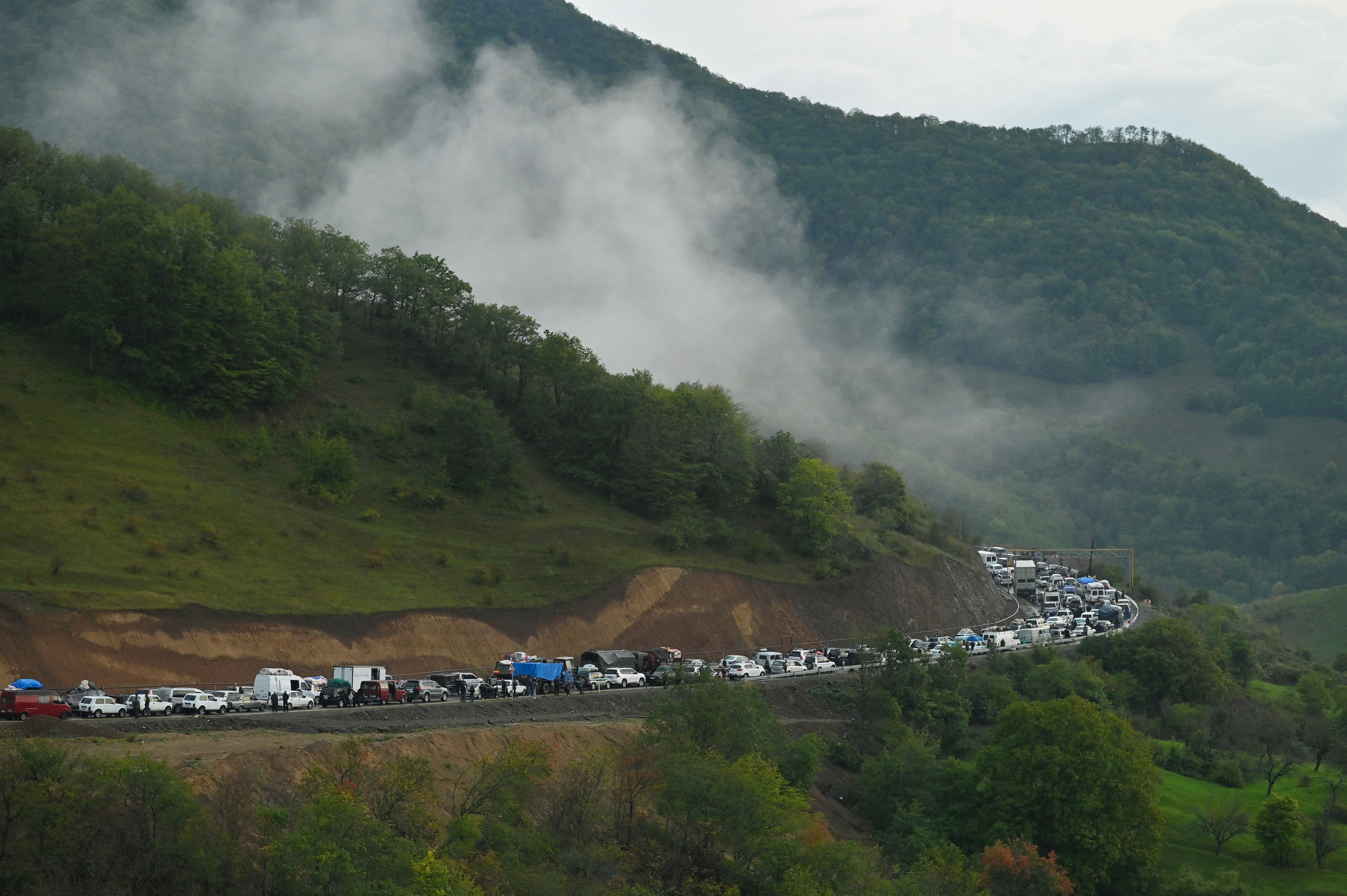
From December 2022 to September 2023, Azerbaijan blocked the only road between Nagorno-Karabakh and Armenia, the “Lachin Corridor”. The blockade resulted in acute shortages of food, medications, hygiene products, petrol, and other essential supplies in Nagorno-Karabakh. Azerbaijan also eventually cut utility lines from Armenia to Nagorno-Karabakh.[5] Following the re-opening of the Lachin Corridor, the remaining ethnic Armenian population in Nagorno-Karabakh fled their homes and endured the long and difficult journey to Armenia, often with little or no food or water and scant personal belongings.
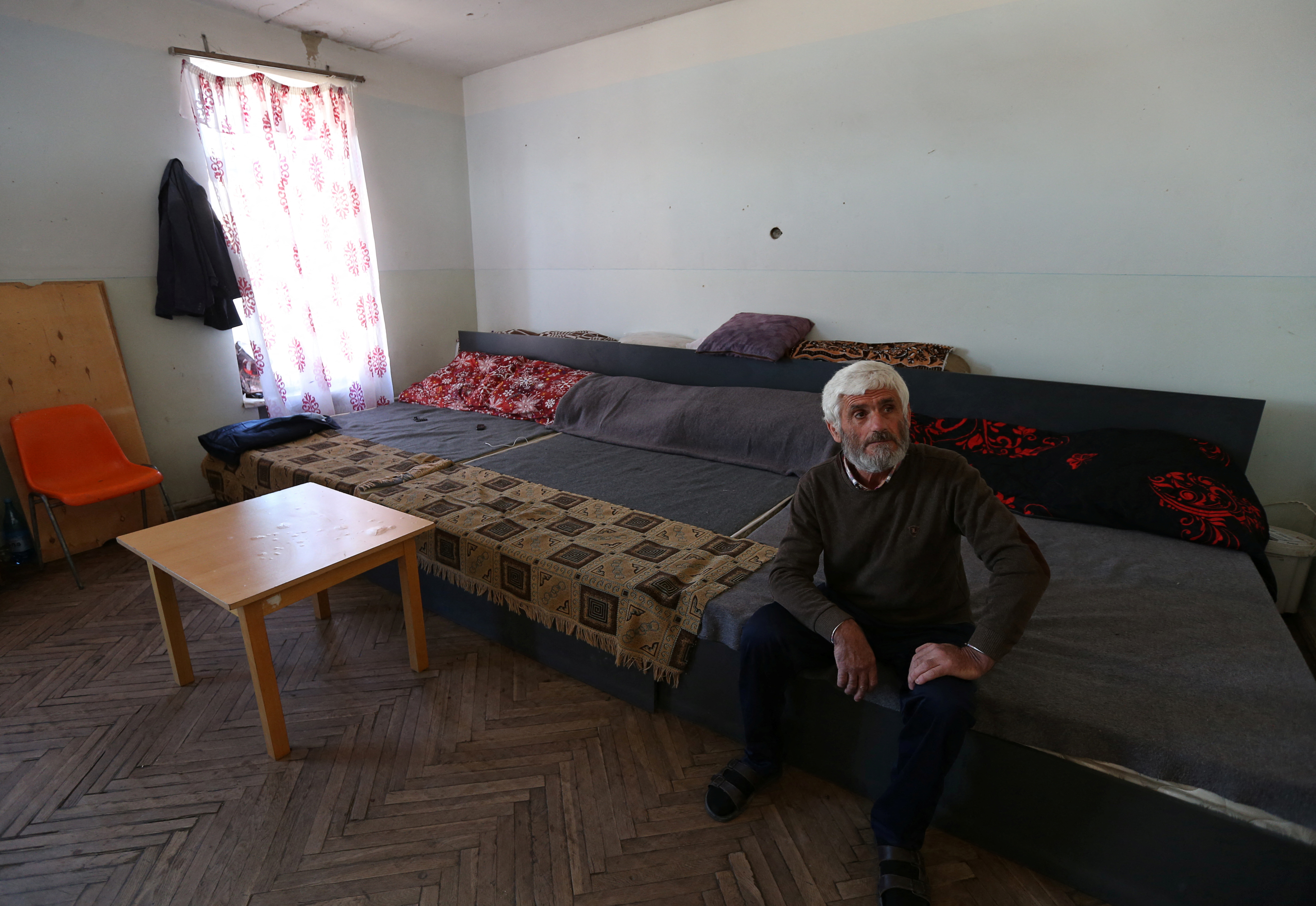
An estimated 101,000 ethnic Armenians have fled Nagorno-Karabakh for Armenia.[6] While the United Nations High Commissioner for Refugees (UNHCR) has, in coordination with the Government of the Republic of Armenia, developed a national Refugee Response Plan (RPP) in 2023, it remains underfunded and the full social-economic integration of vulnerable refugees into host communities across the country is not without problem. Ensuring access to adequate housing and livelihoods is particularly challenging in the current economic milieu, as is the provision of quality education and health care, including Mental Health and Psychosocial Support Services (MHPSS) in a country whose social services are already overstretched and underfunded.[7]
The recent peace process
Amidst ongoing tensions between the two countries, and incendiary rhetoric by the President of Azerbaijan, Ilham Aliyev, who continues to refer to Armenia as “Western Azerbaijan”[8] the text of a preliminary peace treaty which seeks to normalise relations between the two countries was agreed upon on in March 2025 after two years of protracted bilateral negotiations.[9] Following a meeting between Ilham Aliyev and the Prime Minister of Armenia, Nikol Pashinyan hosted by President Trump in Washington DC on the 8 August 2025, the White House hailed a historic peace deal between the two countries brokered by President Trump that “ends decades of conflict.”[10]

Contrary to the optics generated by the White House, the meeting did not result in the signing of a peace treaty between the two countries. It did however result in two provisional, but potentially significant, outcomes for the peace process: the initialling of the text of the preliminary peace treaty finalised in March 2025; and an agreement
on the creation of a 27-mile trade corridor linking Azerbaijan with its exclave Nakhchivan along the Armenia-Iran border, the so-called TRIPP.[11]
The preliminary peace treaty
Two preconditions to the signature of the treaty were demanded by Azerbaijan: one, a joint request for the dissolution of the mediation architecture set up in the 1990s by the Organization for Security and Co-operation in Europe (OSCE), known as the ‘Minsk Group’. The second demand, that Armenia’s constitution be revised to remove reference to the campaign to unify Karabakh with Armenia, is dependent on national political developments (a referendum on a new constitution is not scheduled until 2026) and remains unmet. The fact that both demands made by Azerbaijan require concessions to be made by Armenia – and that Armenia made no similar demands on Azerbaijan – is indicative of the unequal power dynamics in the process. Armenians within the country and overseas remain deeply divided over these developments, with many believing that they are in fact “the codification of defeat”.[12]
The 17-article treaty text is largely a technical document which lays out the normalisation of the relationship between the two countries, including territorial definition and recognition (Article I); guarantees for the absence of territorial claims on each other (Article II); prohibition of the use of force against each other (Article III); restoration of diplomatic relations (Article V); and the creation of a bilateral commission to oversee implementation of the treaty (Article XIII).
More contentious however are two articles which were demanded by Azerbaijan as conditions for finalisation of the treaty text: Article VII which stipulates that third-party forces will not be stationed on the border after ratification of the agreement – a clear reference to the EU monitoring mission that has operated on the Armenian side of the border since late 2022[13]; and Article XV, which requires that both parties withdraw any interstate legal claims against the other within one month of the treaty coming into force. This is an unambiguous reference to the withdrawal of cases filed by both countries to the International Court of Justice (ICJ) in September 2021, alleging that each had breached the International Convention on the Elimination of All Forms of Racial Discrimination as their respective actions amounted to ethnic cleansing in the region.[14]
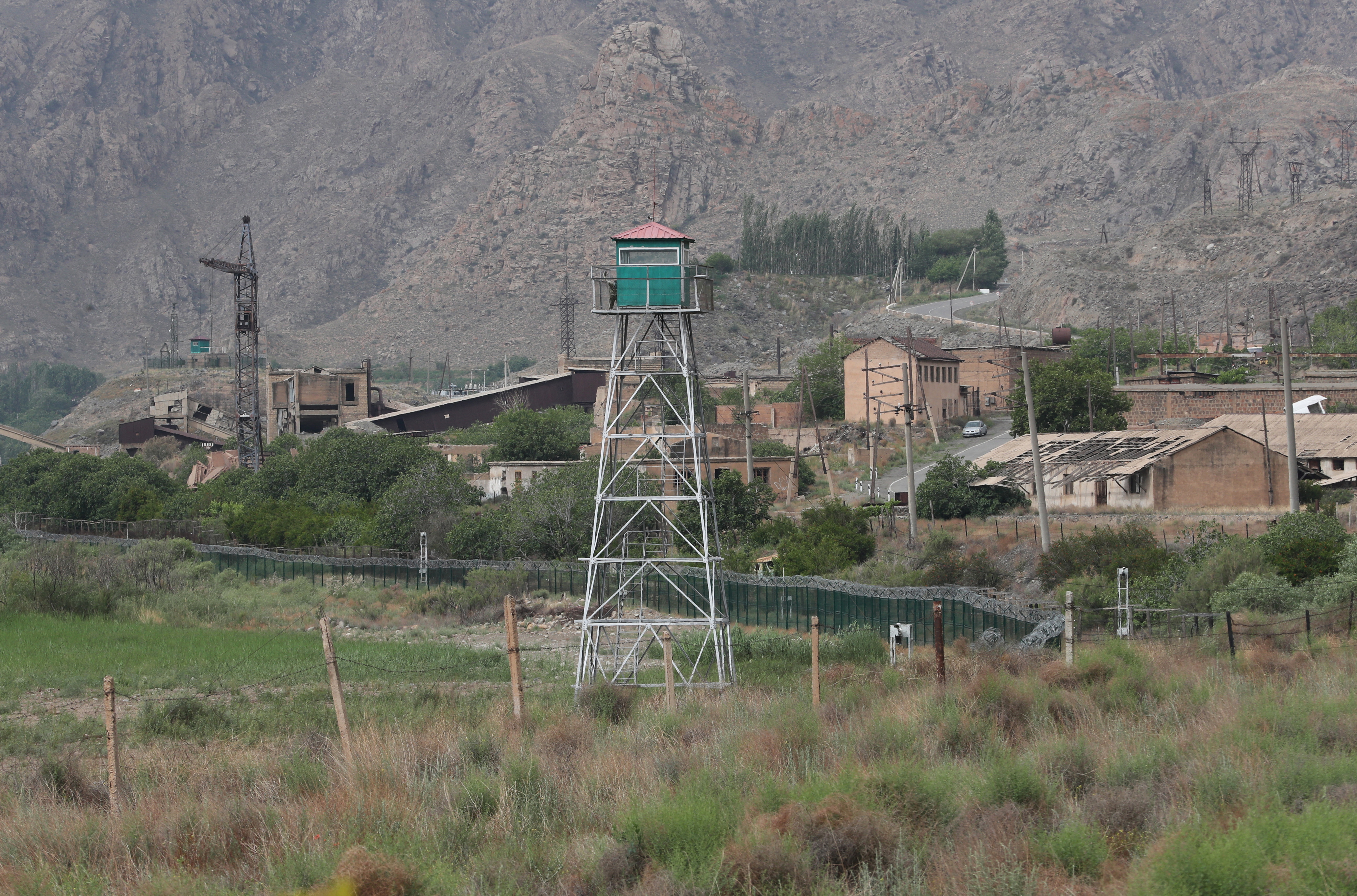
In prohibiting interstate complaints, and also any involvement by State parties in “claims, complaints, protests, objections, and proceedings” filed by third parties, Article XV clearly demonstrates that both countries have chosen to pursue collective amnesia at the cost of accountability. This decision to prioritise short-term peace over justice will have a clear negative impact on the Armenian and Azeri peoples’ rights to pursue an effective remedy for gross human rights violations and serious violations of international humanitarian law and may well also have serious consequences for longer-term peace and stability in the region.[15] It is also worth noting that Azerbaijan is not a party to the Rome Statute, and therefore falls outside the jurisdiction of the International Criminal Court (ICC). The hundreds of thousands of Armenians and Azeris affected by four decades of conflict and instability are being asked to suspend their demands for accountability in favour of the potential economic benefits of nascent connectivity schemes that are mired in competitive geopolitics and may never be realised.
The treaty does make an attempt to address some conflict-related violations under Article IX, which stipulates that the parties undertake to address cases of missing persons and enforced disappearances during the conflict, “including searching for and returning the remains as appropriate and ensuring that justice is served in relation to these persons through proper investigations, as a means of reconciliation and building confidence”[16]. There is however no mention of the release of Armenian prisoners of war, many of whom are now effectively missing following the expulsion of the International Committee of the Red Cross (ICRC) from Azerbaijan in March 2025.[17] In the absence of any independent humanitarian or human rights monitoring body in the country, concerns around the treatment of Armenian prisoners in Azeri custody are understandable. Amnesty International has raised longstanding concerns about Azerbaijan’s human rights record, including widespread violations of the right to a fair trial and abuse of the criminal justice system for political purposes.[18]
The so-called TRIPP agreement
Like the peace treaty, discussions around the 27-mile corridor connecting mainland Azerbaijan and its exclave Nakhchivan through Armenian territory had been ongoing for a number of years before a provisional agreement was formalised at the White House in early August. The opening up of what Azerbaijan refers to as the “Zangezur corridor” through Armenia’s Syunik province is part of a plans for larger transportation project connecting Baku to Istanbul. In a more general sense, this corridor is a geopolitical project intended to connect Europe to Central Asia and China through Azerbaijan and Türkiye.[19] Azerbaijan stands to benefit the most from the project and has stipulated exemption from Armenian customs checks and security clearance as part of the agreement.[20]
The details of the agreement are not yet well-defined, and although the three leaders have agreed on “reciprocal benefits” for all countries, it is difficult to see how making long-term leasing agreements of Armenian land to US private enterprises, and exempting Azerbaijan from customs checks and security clearance, will result in significant benefits for Armenia. Given the already unequal power dynamics between Armenia and Azerbaijan, and the United States’ reluctance to offer any security guarantees, it is likely that Armenia may be forced to accept conditions which result it relinquishing de facto control over a significant area of its sovereign territory.[21]
Connectivity in the region has long been mired in the geopolitical interests of the three regional powers: Iran, Russia, and Türkiye. Historical alignments between Azerbaijan and Türkiye, and Armenia and Russia have not changed significantly, but Russia’s positioning from “regional hegemon and patron of conflict irresolution, to a partner and stakeholder in Azerbaijani-Turkish connectivity” reflects a shift from its policy of enabling frozen conflicts as a buffer against pro-Western development “for a new policy of stake-building in an alternative regional order dominated by similarly illiberal states.”[22] Furthermore, Russia’s fight in Ukraine and desire for good relations with Azerbaijan has seen Moscow continue to recede from its traditional dual role as Armenia’s security guarantor and as mediator between Baku and Yerevan. Iran has emerged as a potential security guarantor for Armenia, and Türkiye remains Azerbaijan’s biggest backer, but their roles in any future conflict are difficult to predict.[23]
While both Iran and Russia had little to lose from increased regional connectivity through the “Zangezur corridor” before the involvement of the US, the recent tripartite agreement has significantly altered the status quo. Unsurprisingly, Iran has not welcomed these developments. Ali Akbar Velayati, a top adviser to Iran’s supreme leader, has publicly stated that Tehran would block the initiative “with or without Russia” and that “this passage will not become a gateway for Trump’s mercenaries — it will become their graveyard,” further describing the plan as “political treachery” aimed at undermining Armenia’s territorial integrity.[24]
Russia’s position is less clear cut. It cautiously welcomed the deal, but has also warned against outside intervention, arguing that lasting solutions should be developed by countries in the region.[25] This is a clear reference to an unwelcome, as far as Russia is concerned, shift away from the country’s hegemony in the south Caucasus and that the US and EU should refrain from any further interference in its backyard. While Russia no longer wields the influence it used to, it still retains the ability to spoil the nascent peace process, and Armenia and Azerbaijan may be wise to move ahead while Russia’s focus remains predominantly on its war with Ukraine.[26]
Prospects for sustainable peace
Ultimately, contrary to what President Trump would choose to believe, long-term peace between Armenia and Azerbaijan is not a “done deal”. The signature of even the preliminary peace treaty is dependent on constitutional amendments in Armenia, which will be determined by the results of a public referendum in 2026 whose outcome is by no means certain. The Armenian Prime Minister, Nikol Pashynian is deeply unpopular, and the population and diaspora are divided over what many see as unacceptable concessions for the sake of an uncertain peace and vague economic benefits. Azerbaijan has a much greater bargaining position, but its continued and vocal rhetoric around “Western Azerbaijan” is at odds with the spirit and content of the peace agreement and the extent to which this discourse subsides will be no less a seminal test of the treaty’s prospects than geopolitical outcomes.[27]
Iran has made its position on the so-called TRIPP very clear. Russia and Türkiye, less so, but the extent to which the plan moves forward is dependent on both of these countries’ implicit support (including the normalisation of relations between Armenia and Türkiye), and also the US administration’s persistence and ability to navigate the complexities of the process once contentious issues inevitably arise. Sustained commitment from all sides will be necessary to keep momentum going towards both outcomes and at this point, Trump’s “done deal” remains a long way off. Crucially, neither of these outcomes seek to redress the multitude of harms suffered by both Armenian and Azeri populations over the last forty years. Failure to engage in meaningful transitional justice processes will ultimately have a negative impact on achieving sustainable peace in the region.