
The conflict and its aftermath
Between 1992 and the end of 1995, Bosnia and Herzegovina played host to a complex tripartite war, initially between Bosnian Serb forces of the Yugoslav army (including the Army of Republika Srpska – VRS) and combined Bosnian Muslim (Bosniak) – Croat forces, but which then shifted to a conflict between Bosniak and Croat forces, at the same time as both sides continued to fight against Bosnian Serb forces. For most of the conflict period, there were essentially three sides to the conflict, with numerous forces fighting for each side simultaneously.[1] The death toll reached 100,000—mostly Bosniak Muslims—with over two million civilians forcibly displaced.[2] In July 1995, Bosnian Serbs perpetrated an act of genocide against Bosniak Muslims in Srebrenica, killing over 8,000 civilians and becoming one of the most notorious genocide cases in post-war history.[3] The devastating conflict ended with the signing of Dayton Agreement in December 1995,[4] which, while bringing an end to almost four years of brutal hostilities, failed to address post-conflict concerns relating to reconciliation and communal healing across the country.
July 2025 marked the thirtieth anniversary of the Srebrenica genocide. Despite global recognition, commemorating the Srebrenica genocide remains profoundly contested in the region due to politicised remembrance and competing narratives. By shaping collective memory, identity construction, and intergroup relations within the country, and across the border in Serbia, these dynamics continue to influence reconciliation processes and community recovery. Indeed, it could be argued in the wake of a decade of divisive and incendiary rhetoric by the recently removed president of the Republika Srpska, Milorad Dodik, that the country remains more divided than ever.[5]
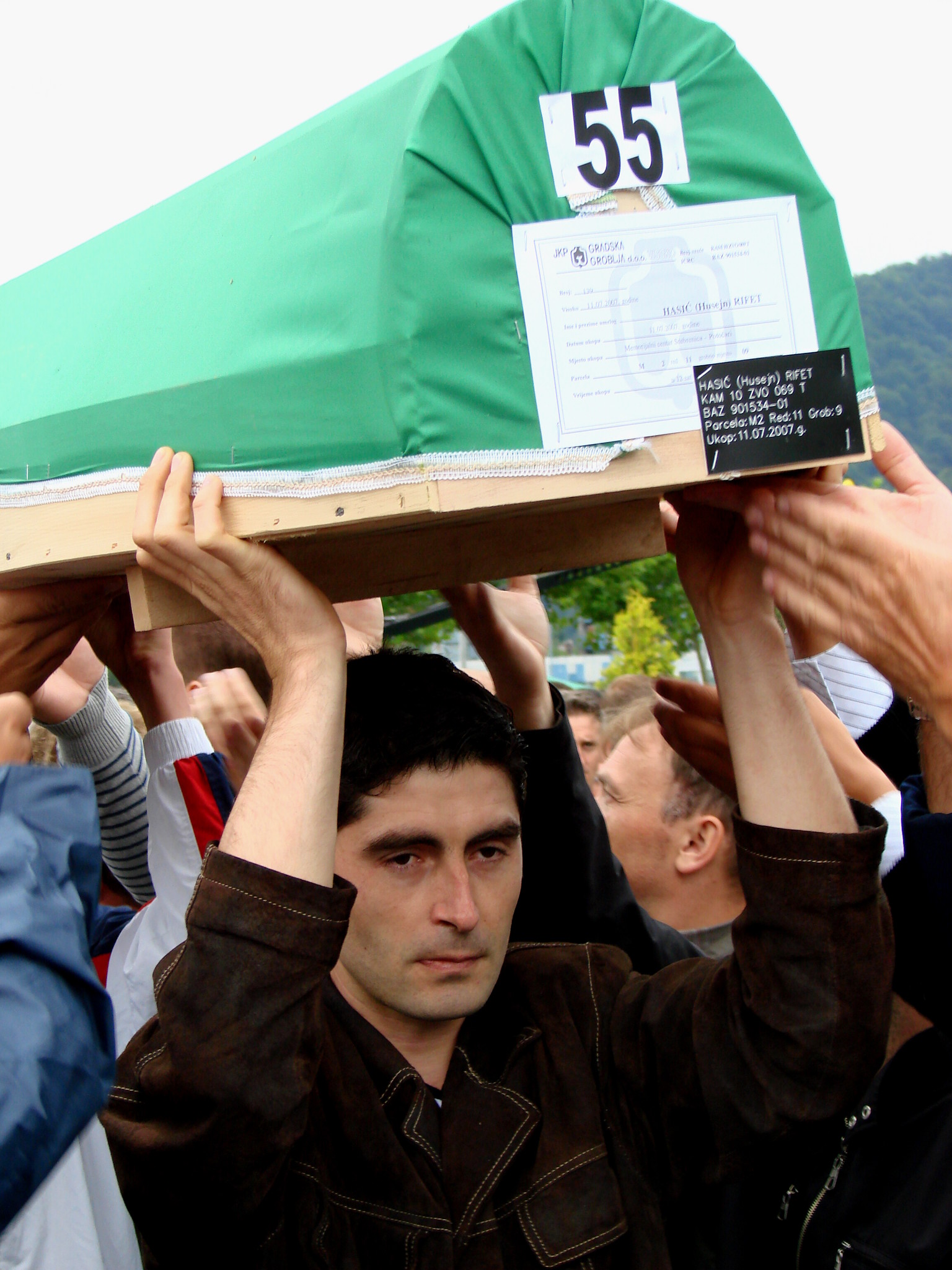
In the context of this complex and increasingly unstable national context, this article asks, “how do Srebrenica genocide-related contested memorialisation practices function simultaneously as catalysts and barriers to reconciliation and healing at the community level?” It frames reconciliation as a critical humanitarian objective for post-conflict societies, emphasising the need to address the mental health consequences produced by contentious memorialisation practices, prevent renewed conflicts, and underpin sustainable peace.
Contextualising Srebrenica memorialisation
For decades, divisive memorialisation practices have posed a significant threat to Bosnia’s stability and development. In fact, contested remembrance, both locally and globally, has undermined governance and served as a key source of social fragmentation.
Genocide denial dominates the public sphere in Bosnia and Herzegovina, at the same time as families of victims commemorate the killing of innocent civilians and untiringly seek justice.[6] Each July, memorial and commemorative events take place across the country, and key sites—the Potočari Memorial Centre and the Cemetery—receive large numbers of visitors,[7] signifying the persistence of grief decades after the genocide. Conversely, the Srebrenica genocide is not only unrecognised in the Serb-majority Republika Srpska but is also celebrated and praised through various practices. These include glorifying Ratko Mladić—the so-called “Butcher of Bosnia”—by displaying his images in public, describing the genocide as a “fabricated myth,” criminalising the use of the term genocide, and entrenching denial in state institutions through Serbian history textbooks that neglect the events of Srebrenica.[8] This dichotomy of narratives shapes local memory politics and narratives, exposing the incomplete nature of post-genocide reconciliation.

Globally, the United Nations (UN) General Assembly has played a key role in directing the international narrative. In May 2024, it designated 11 July as the International Day of Reflection and Commemoration of the 1995 Genocide in Srebrenica.[9] Despite adversary efforts by Serbia’s president and the Bosnian Serb leadership to block this decision, the support of Germany, Rwanda, and 32 other major actors such as the United States, France, Britain, and Italy, led to its successful adoption.[10] Although the international community failed to prevent the massacres in 1995, their later efforts were fundamental in recognising the genocide, thus influencing memorialisation across the globe.
The societal implications of the memorialisation crisis
The competing narratives ultimately shape how people perceive and interact with one other. Genocide denialist practices across public spaces, schools, art, sports and popular culture not only hinder community dialogue—essential for rebuilding social trust—but also politicises all aspects of people’s lives.[11] They reinforce conflicting victim-perpetrator narratives across the country.
Contested memorialisation has worsened already-tense relations between Republika Srpska and the Federation of Bosnia and Herzegovina, undermining national cohesion and identity. The memory war goes beyond recognition, becoming a political tool for Milorad Dodik, Republika Srpska’s now former president, who seeks secession for increased autonomy and rejects the central government’s authority in Sarajevo.[12] This encourages people in Republika Srpska to relinquish a shared national identity, thereby ostracising Bosniak Muslims and systemically denying their suffering.
Celebrating the occurrence of genocide and glorifying the perpetrators remain critical sources of social tension between Bosnian Serbs and Bosniak Muslims. This is evident in how genocide-praising murals in Republika Srpska became a space of tension between extreme right nationalists, pro-government and pro-Mladic supporters, and Bosniak activists. Acts of resistance by Bosniaks, whether through counter-murals or protest marches, to fight and challenge the Serb denialist narratives have often been met with attacks, violence by extremist groups, and repression by local authorities.[13]
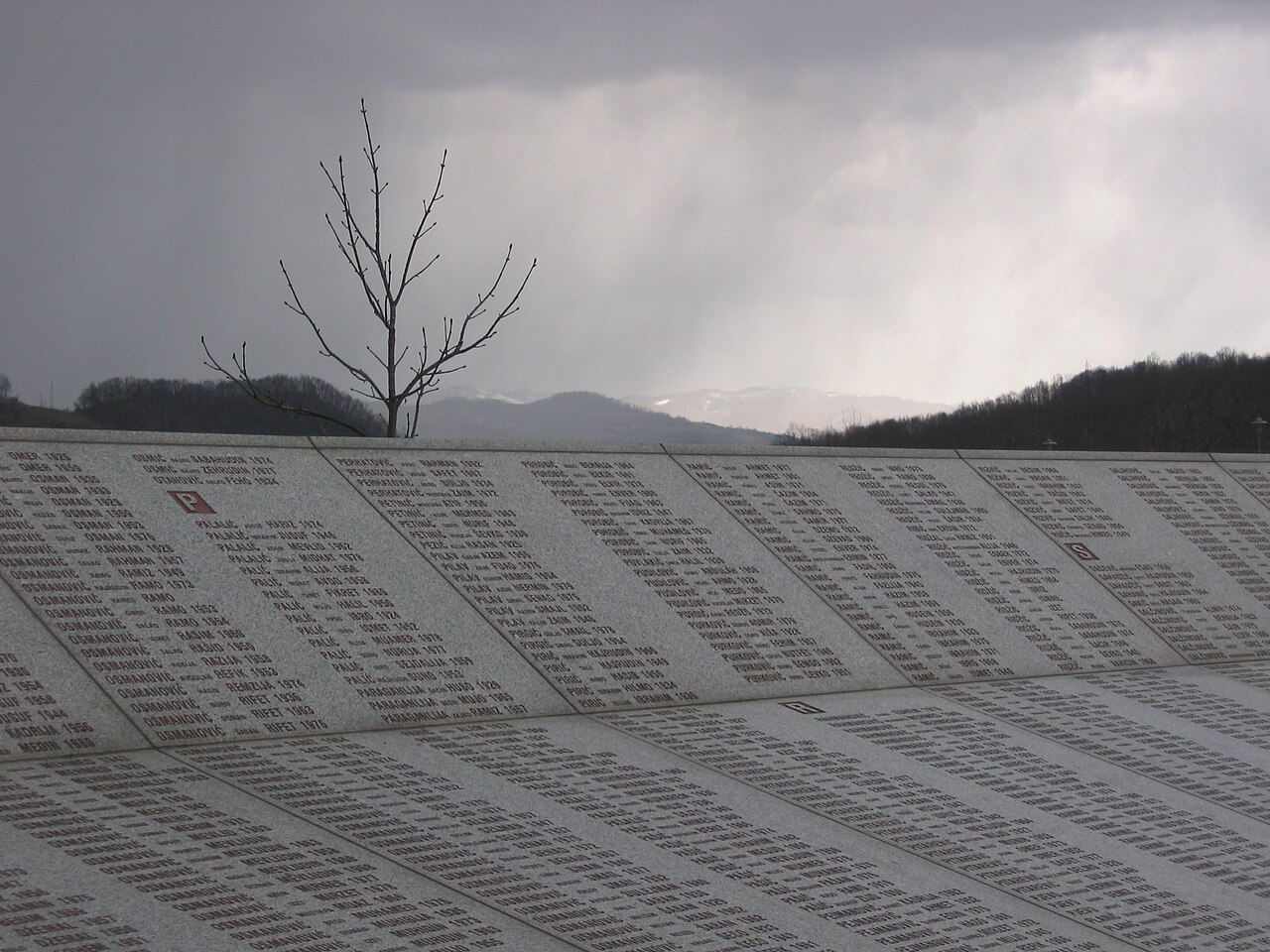
On the 2023 genocide commemoration day, a university student not only publicly celebrated the genocide on social media but also replied to another student’s criticism by saying “Screw you, it’s good that we killed you all.”[14] Such acts of celebratory violence further worsen social fragmentation, deepen inter-group hostility, and increase the risks of renewed violence. Consequently, each side continues to perceive coexistence as an existential threat, prioritising escalation over reconciliation.
Mental health implications
The contested memorialisation practices have profound mental health implications. Individuals who survived the Srebrenica genocide in early childhood face severe post-traumatic stress disorder (PTSD) symptoms during adolescence,[15] highlighting enduring psychological impacts of mass violence.
Memorialisation can help individuals and communities heal, but if it happens without proper consultation with experts or psychosocial support, it may lead to retraumatisation of victims’ families. Beyond the direct mental health implications, commemoration practices can act as triggers for re-experiencing trauma, especially without adequate psychosocial support available to those in need. Families and community members of victims recount the brutal incidents to defend their cause, forcing them to relive traumas. For instance, 30 years after the genocide, a Muslim Bosniak continued receiving mental health treatment, as he was forced by the Serbian army to rape his own mother.[16] In order to advocate for recognition of the genocide and other war crimes, he has to recall and narrate these incidents in detail, detrimentally affecting his mental health. These dynamics contribute to transgenerational trauma, where children and youth inherit mental health issues stemming from collective and traumatic memories.
Similarly, genocide survivors express their desire to bury their loved ones only at Potocari, since the site embodies the genocide and pain.[17] Given that burial is considered as a means of recognising the past massacre,[18] the lives of survivors revolve around such traumatic events in an attempt to prove their painful history, posing a grave risk to their mental health. Consequently, there remains an absence of and increasing need for medical humanitarian efforts, focusing on mental health awareness campaigns and psychosocial support programs, even decades after the genocide.
Some efforts were undertaken to address this issue. Between the period following the genocide and 1999, ten centers provided community-based psychosocial programmes in the besieged city of Sarajevo as well as in the towns of Zenica, Travnik, and Vitez.[19] This underscores the willingness of communities and community-based centers to engage in mental health activities aimed at alleviating the suffering of affected populations. While such interventions contributed to significant recovery and improvement for some people, others showed no progress.[20] This disparity can be explained by the diverse experiences each individual has undergone, underscoring the need for tailored interventions to ensure effective outcomes and foster community healing—an essential foundation for sustainable reconciliation.
Moreover, there are still ongoing efforts to address the gaps in mental health services. While there is a lack of specialised youth mental health programs, local organisations continue to organize workshops on emotional regulation and stress management in partnership with educational institutions.[21] This is a crucial step for community healing, as it begins by addressing the mental health needs of students, who represent the future generation. Furthermore, local actors such as the Bosnian-Herzegovinian Association for Integrative Child and Adolescent Psychotherapy—a European Accredited Psychotherapy Training Institute—provide comprehensive educational programmes and mental health support for caregivers, among other activities.[22] Yet, there remains a pressing need for greater dedication to and emphasis on mental health programs, given their vital role in reconciliation and peacebuilding.
Memorialisation as a catalyst and barrier to reconciliation
Memorialisation represents both a challenge and opportunity for reconciliation efforts in Bosnia and Herzegovina. The preservation of each side to their narrative,[23] coupled with a reluctance to express empathy or forgiveness, builds a fragile social fabric rooted in hatred, fear of the other, and lack of trust. This, alongside the country’s division into two ethnic entities, have undermined reconciliation efforts and diminished the willingness of communities to engage in dialogue towards establishing a stronger social fabric.
For Bosniak Muslims, engaging with genocide perpetrators and forgiving them can result in feelings of disgrace, shaming, and guilt, perceiving it as disrespect to their ancestors. Such sentiments bolster caution and mistrust towards Bosnian Serbs. For instance, the Srebrenica Memorial Centre was closed for the first time in history in March 2025; the centre’s director, Emir Suljagić, explained that it was a preventive measure to ensure that families of survivors are safe from “being harmed by someone inspired by the state’s retreat in the face of the rebels.”[24] This instance reveals how memorialisation functions as a public expression of perceived threats about the other side.
Furthermore, Bosnian Serbs and Croats may fear legal, political, and even social consequences for acknowledging the crimes committed against Bosniak Muslims. Such fears push them to restrict access to remembrance spaces, adopt exclusionary practices, and persistently use denialist approaches. This not only impedes efforts of peacebuilding and community healing but also undermines locally grounded, medical humanitarian efforts due to the politicisation of memorialisation practices. For example, a ban on studying the 1990s war across Bonsia ended only in 2018, after which each ethnic group developed its own curricula.[25] Schools in the Federation of Bosnia and Herzegovina use textbooks that portray the events and crimes in different ways, ignoring the genocide and portraying the Bosnian army as heroic. This illustrates knowledge suppression, traumatising future generations and forcing them to learn from manipulated curriculum.
In spite of the divisive nature of memorialisation in the context of Bosnia and Herzegovina, Srebrenica genocide memorialisation can be an effective instrument to guide Bosniak Muslims and Bosnian Serbs towards reconciliation when applied strategically. Commemorating the Srebrenica genocide is a painful yet shared reminder of the past,[26] which pushes each side to collaborate to achieve peace and community healing. For instance, Edward Ferguson, the United Kingdom ambassador in Sarajevo, argued that the UN’s resolution on Srebrenica genocide “will encourage further steps towards reconciliation and a brighter future for Bosnia and Herzegovina.”[27]
Additionally, the “Quo Vadis, Aida?” film by the Bosnian Oscar nominee Jasmila Žbanić was used as an educational and dialogical tool to narrate the Srebrenica Genocide.[28] This artistic memorialisation practice received support from Serbian actors, as it offered the needed space for addressing trauma, guilt, and shame, enhancing the reconciliation efforts and promoting the idea of listening to the other side by encouraging collective mourning and truth-seeking. Therefore, if used strategically, memorialisation can become an essential tool for reconciliation, long-term social cohesion, and sustainable peace.
Going beyond general memorialisation practices, the memorialisation of harm through monuments and museums has played a fundamental role in fostering reconciliation by guaranteeing victims the non-recurrence of similar genocidal incidents and by restoring their dignity.[29] Other legal practices of memorialisation have also been crucial in reducing genocide denial. For instance, the Memory Law in Bosnia and Herzegovina—which criminalises genocide denial—was followed by an 80% decrease in genocide denial in Bosnian media and public speeches during its first year, yet denialism rose again in subsequent years, particularly in neighbouring regions.[30] This demonstrates both the potential of such practices in curbing hate speech and their role in strengthening the social fabric, decisively contributing to the country’s path towards reconciliation.
Conclusions
Three decades after the Srebrenica genocide, contested memorialisation practices continue to shape the trajectory of reconciliation in Bosnia and Herzegovina, causing psychological distress and intergroup tensions. Resistance movements by Bosniak Muslims—such as marches and annual commemoration rituals—as forms of memorialisation are confronted by persistent genocide denial from Bosnian Serbs. This not only negatively influences collective memory and collapses the already-fragile social cohesion but also exacerbates mental health issues and traumas. Therefore, there remains an urgent need for awareness initiatives and inclusive, large-scale medical humanitarian efforts for community healing.
Conversely, memorialisation practices within the Bosnian context have obstructed reconciliation efforts through exacerbating existing societal divisions, but have also played a positive role in fostering acknowledgment and dialogue, which is vital in effective longer-term truth-telling processes. Sadly, the predominance of hostile memorialisation practices amid injustice, unhealed traumas, and absence of recognition of others’ pain, have placed broader efforts towards reconciliation in a fragile and precarious position. In addition, activities related to mental health were crucial in alleviating the struggles of affected populations, yet requiring greater dedication and tailored efforts on this matter. Ultimately, recovering the paralysed social fabric in Bosnia and Herzegovina requires integrated policy, community-level, and psychosocial interventions, which then can serve as the foundation of sustainable and effective reconciliation.