
Introduction
Security dynamics across the Middle East have long been shaped by tensions between Israel and Iran, however the recent escalation of tensions could have profound consequences for peace, stability and international law across the Mediterranean and Middle East. On Friday, 13 June 2025, Israel launched several missiles targeting nuclear facilities, military targets and individual scientists in Iran, after which Iran retaliated by launching missiles at Israel. At the time of writing, Iran has reported over 220 fatalities, including children, while Israel has reported 24 fatalities.[1][1] Israel’s attacks signify a significant escalation, with Israel declaring it an act of “preemptive, precise, combined offensive based on high-quality intelligence to strike Iran’s nuclear program, and in response to the Iranian regime’s ongoing aggression against Israel.”[2] In other words, Israel has framed it as an act of pre-emptive self-defence under Article 51 of the United Nations (UN) Charter, to protect against a future nuclear attack.[3] However, Article 51 permits force only in response to an armed attack, and any response must meet the tests of necessity and proportionality.
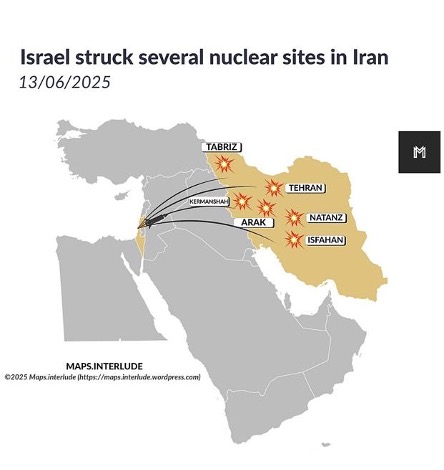

Israel’s offensive thus gives rise to controversy regarding its legality. It argues that Iran’s nuclear and proxy capabilities pose an “existential”, imminent threat. Yet experts argue that these attacks comprise a preventive, rather than reactive or anticipatory doctrine, which is incompatible with international law. This then begs the question of whether a state may use force against another to prevent a non-imminent threat from materialising in the future. Israel’s attack against Iran likely does not meet the legal threshold for lawful self-defence. Such a legal manoeuvre risks undermining regional peace and stability, as well as the prohibition on the use of force.
Reactions
Members of the UN Security Council have been divided. China and Russia condemned the attacks as “violations of Iranian sovereignty” and a “flagrant violation” of both international law and the UN Charter.[4] Western allies offered muted support whilst calling for restraint and de-escalation.[5] UN Secretary-General Antonio Guterres stated that there are “moments when the directions taken will shape not just the fate of nations, but potentially our collective future… This is such a moment,” and that the conflict could not be allowed to expand.[6] These reactions are significant in emphasising the lack of international consensus supporting Israel’s legal rationale. Israel’s operation risks legitimising preventive use of force, undermining international norms.
The Legal Framework of Self-Defence
UN Charter and Customary Law
The international legal regime governing the use of force derives from the UN Charter, Article 2(4), which sets out an almost absolute prohibition against the threat or use of force. The one, limited, exception to this is Article 51, which permits the use of force in self-defence only “if an armed attack occurs.”
The International Court of Justice (ICJ) has interpreted Article 51 narrowly, affirming in Nicaragua v. United States and other cases that the right to self-defence applies only in response to an actual armed attack.[7]
Customary international law further develops these principles, particularly through the Caroline affair (1837), a diplomatic dispute between the United States and Britain following a British militia raid on the American steamboat Caroline, which had been supplying Canadian rebels across the Niagara River. The incident led to an exchange of diplomatic notes which established a long-standing test for lawful anticipatory self-defence: the threat must be “instant, overwhelming, and leaving no choice of means, and no moment for deliberation.”[8] A key element in assessing imminence is the difference between nuclear capacity and the intent to use it.
Categories of Self-Defence
The following are the general categories of self-defence in international law:
-
- Reactive: responding to an armed attack already underway or occurred.
-
- Pre-emptive: used to stop a likely and identifiable threat believed to evolve into an armed attack – but is not yet imminent.
-
- Anticipatory: aimed at stopping a future obvious, imminent attack.
-
- Preventive: directed against non-imminent, speculative threats, usually based on strategic assessments.[9]
Whilst anticipatory self-defence remains somewhat legally contentious and debated, there is consensus that preventive self-defence is unlawful. As legal scholar Marko Milanović emphasises:
“There is unanimous agreement in the literature and in state practice that preventive self-defence is not permitted under international law.”[10]
Additionally, pre-emptive self-defence is more controversial than anticipatory self-defence, and lacks legal consensus supporting its legality. To sum, any lawful invocation of Article 51 requires a demonstrable threat of imminent attack, not a possible future or hypothetical attack. The onus is on Israel to prove that both immediacy and necessity are fulfilled, which appears unlikely in this case based on the facts available to us.


Israel’s Operation Rising Lion Against Iran
The Facts
In the early hours of 13 June 2025, Israel launched missile strikes deep inside Iran, targeting facilities and individuals associated with Iran’s uranium enrichment programme, as well as military and intelligence personnel. This was justified as an act of anticipatory self-defence, with the goal of thwarting Iran’s nuclear ambitions and invoking the right of self-preservation.
One central issue involves whether the threat posed by Iran was ‘imminent’ according to the customary international law standard. Whilst Israel has cited “high-quality intelligence” against the Iranian nuclear programme, no clear evidence has been provided indicating that Iran had decided to use such a capability aggressively or imminently.[11]
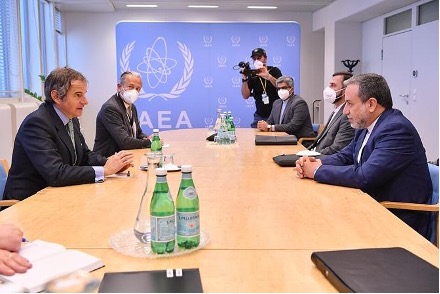
Assessing this claim requires scrutiny of publicly available intelligence and independent verification, by drawing on recent US intelligence briefings and findings from the International Atomic Energy Agency (IAEA) to evaluate whether Iran’s nuclear activity amounted to an imminent armed threat.

Intelligence and Verification on Iran’s Nuclear Programme
A legal assessment must be supported by verifiable facts. Israel has claimed that Iran’s nuclear programme posed an imminent existential threat, thereby justifying anticipatory self-defence. Yet assessments of available intelligence suggest this threshold was not met.
In early 2025, US intelligence agencies indicated that Iran had neither decided nor begun building a nuclear weapon. In March, Director of National Intelligence Tulsi Gabbard testified in a Senate hearing that “Iran is not building a nuclear weapon.”[12] However, she later walked back this statement, suggesting in media appearances that Iran could develop a nuclear weapon within weeks – blaming the initial statement on media misrepresentation.[13] Gabbard’s reversal, viewed by some as politically motivated, raised concerns about the credibility of intelligence briefings and highlighted tensions within the administration’s messaging.
In June, US President Trump claimed Iran was “very close” to building nuclear weapons.[14] A May 2025 IAEA report documented that Iran had 408.6kg of uranium enriched up to 60% and found that Iran had violated non-proliferation obligations by conducting secret nuclear activities with material undeclared to the IAEA at three locations, labelling it a “serious concern”.[15] However, it did not find evidence of an active nuclear weapons programme.
The difference between capacity and intent is important for jus ad bellum. Without evidence of a decision by Iran to imminently use force, Israel’s justification lacks the causal, or factual, basis for anticipatory self-defence. Consequently, the attack is more likely to be preventive in nature, and therefore unlawful under international law.
Necessity, Imminence, and Proportionality
As noted, there are three positions on self-defence (use of force) to respond to future attacks.[16] Israel’s strikes likely fall within the preventive category, which does not enjoy support amongst international legal scholars or professionals.
The principle of proportionality requires that, even when a state faces an imminent threat, its response must be proportionate. Arguably, attacks deep within the territory of another sovereign state to destroy infrastructure and kill scientific and military personnel, without a preceding armed attack, would not meet this criterion. The scale and timing of Israel’s attack appears disproportionate to any immediate threat. Legal experts argue that the right to self-defence cannot be separated from the requirement that the attack be temporally proximate and causally linked to an actual or imminent use of force.[17] In this case, there is no evidence that Iran had launched, or was about to launch, a nuclear strike – raising doubts about both the causal trigger and temporal urgency required to justify anticipatory action.
There is some debate around how to apply jus ad bellum necessity and proportionality to an ongoing armed conflict, as certain critics argue exist between Israel-Iran. Some argue, (and state practice seemingly reflects) that necessity and proportionality only regulate the first decision to use force to respond to an armed attack, and that it is unnecessary to assess the necessity and proportionality of each ensuing attack during the hostilities.[18] However, the leading view in current discourse maintains that necessity and proportionality must be evaluated throughout the hostilities.[19] Attacks that comply with international humanitarian law (jus in bello) can still be considered unlawful under jus ad bellum where they are separate from or excessive relative to the lawful goals of the acts of self-defence. Even if an operation complies with jus in bello, it can still violate the broader prohibition on the use of force (jus ad bellum) if it lacks a lawful basis under Article 51. Thus, this would constitute a severe escalation of an existing armed conflict between the two states.


Attribution and Proxies
A key, relevant legal issue is whether Israel’s strike can be attributed to self-defence against Iran or its proxies. While past engagements with actors like Hezbollah or the Houthis are important, the strikes targeted Iran directly and aimed to prevent a potential nuclear attack, not to respond to an armed attack already carried out.
Previous clashes between Iran and Israel are relevant to provide context, however the issue in question revolves solely around preventing a future Iranian nuclear attack. Determining the lawfulness of Israel’s strike against Iran requires both a careful interpretation of what counts as self-defence in international law, and an honest assessment of whether the facts actually meet that threshold.
Israel has long justified actions against Syria and Lebanon by attributing attacks by proxies to those states. However, the recent use of force targeted Iran itself, removing any ambiguity, without proxy involvement. Thus, the legal assessment concerns whether Iran’s behaviour amounted to an imminent armed attack – and by most legal accounts (given the information available to us), it did not.
A competing perspective argues that Israel’s strikes should be seen not as a preventive action, but as an escalation within an already ongoing, low-intensity conflict with Iran. Proponents of this view claim that a sharp shift in Israel’s strategic risk assessment – driven by credible intelligence about Iran nearing nuclear weapons capability, combined with the IAEA’s findings that Iran was in violation of its non-proliferation obligations, as well as the collapse of US-Iran nuclear diplomacy – created a uniquely urgent context.[20] In this light, Israel’s timing was also reportedly shaped by short-term operational opportunities, including a temporary degradation of Iranian air defences and a weakened Hezbollah, potentially reducing the likelihood of immediate retaliation.
However, the notion that a pre-existing armed conflict with Iran justifies ongoing strikes is problematic. Under international law, self-defence under Article 51 must still meet the tests of necessity and proportionality for each use of force, and cannot be invoked perpetually once hostilities begin. The ICJ in DRC v. Uganda reaffirmed that self-defence does not create a legal blank cheque for future uses of force.[21]
Implications for Peace and Security
If Israel’s use of force is accepted as a lawful act of anticipatory self-defence, this would indicate a dangerous shift within international law. International law traditionally prohibits preventive use of force, and any erosion of this principle could result in further use of force under the justification of preventing a future attack. The application of jus ad bellum necessity and proportionality may arguably give rise to some debate and differing interpretations.[22] Without clear consensus or enforcement, due to frequent UN Security Council deadlock, states increasingly resort to unilateral action, citing national security concerns.
Legal acceptance of Israel’s operation could potentially expand the scope of lawful self-defence to include uncertain future risks – which risks undoing the Charter system itself. This would effectively legalise preventive war, destabilising the very normative order the UN was built to protect.
Regionally, the attacks have deepened fault lines, with a rise in civilian casualties across both Iran and Israel, as well as comprising an additional strain on international humanitarian law, water, refugee, and energy concerns in areas such as Lebanon and Gaza.
Conclusion
It is strongly arguable that Israel’s June attacks cross the line from anticipatory self-defence into preventive self-defence. This leap is not supported by Article 51, or ICJ jurisprudence, whilst academic consensus generally underscores that preventive self-defence lacks legal standing.
Reactions globally indicate (from UN condemnations to warnings of caution from various states) strong concerns over the legitimacy of the attack, as well as the potential precedent it may establish. If other states cite Israel to justify pre-emptive or preventive force, international norms prohibiting the use of force will erode and undermine peace and security.
Treating a long-term strategic threat as an imminent risk weakens the legal threshold for self-defence, and undermines the historical and textual meaning of Article 51. The UN Charter was intended to prevent states from launching a unilateral use of force based on perceived security threats. This is why states invoking Article 51 must meet a high legal and evidentiary threshold, and public, verifiable facts matter. Without any concrete, verifiable evidence of an imminent Iranian armed attack, or nuclear attack in this case, as required under international law, any invocation on the part of Israel of self-defence remains unlawful and incompatible with both Article 51 and ICJ jurisprudence.