
Renewable energy systems have been at the forefront of politics as the demand for phasing out of fossilfuels across the world increases. The International Energy Agency’s (IEA) Stated Policies Scenario estimates that electric vehicles could help avoid more than 2 gigatonnes (Gt) of CO2-equivalent emissions by 2035 compared to internal combustion engines. In that regard, electrifying transportation systems and increasing the use and availability of EVs have been recognised as key solutions to the carbon emissions problem driving climate change.2 Consequently, the demand for critical minerals needed for clean energy transitions has risen, especially for “battery minerals” such as cobalt, lithium and nickel.3 4 However, this process comes with a profound paradox: the very minerals needed to power our sustainable future are being extracted through processes that perpetuate environmental destruction, human rights violations and the systematic marginalisation of Indigenous communities.
This contradiction is particularly stark in Southeast Asia, where Indonesia and the Philippines have emerged as critical suppliers of transition minerals that are essential for EV batteries and renewable energy infrastructure. Analysis by Global Witness of S&P data forecasts a 100% increase for cobalt mining, 300% for lithium and 75% for nickel between 2021 and 2028. Yet these increases are occurring in regions where international law protections for Indigenous peoples remain weak, environmental safeguards are poorly enforced and the benefits of resource extraction continue to flow primarily to multinational corporations rather than local communities.5
The Indonesian and Filipino contexts shed light on broader challenges facing the international legal framework governing resource extraction, Indigenous rights and environmental protection. As these nations implement policies to capture more value from their mineral wealth, Indonesia through its nickel ore export ban since 2020,
and the Philippines through similar legislation passed in February 2025, the human and environmental costs of the green transition are becoming increasingly apparent. These developments demand urgent attention from the international community and highlight critical gaps in existing legal frameworks that must be addressed to ensure that the transition to renewable energy does not perpetuate historical patterns of exploitation and environmental injustice.6
Resource Concentration and Global Dynamics
Indonesia is the world’s largest producer of nickel,7 producing an estimated 2.2 million metric tonnes of nickel in 2024 and accounting for over 50% of the world’s nickel mine production.8 The Philippines follows in terms of nickel production, accounting for 11% of global production,9 and has major untapped reserves of copper, chromite, silver and zinc; all used in renewable energy technologies like wind turbines and solar panels.10 This concentration of critical mineral resources has created new geopolitical dependencies11 withIndonesia being the first supplier of nickel for EV batteries to China which, in turn, is the largest producer and consumer of EVs. Together the United States (US), Europe, and China accounted for approximately 95% of EV sales in 2023, highlighting how the benefits of the green transition remain concentrated in developed economies while the environmental and social costs are borne by developing nations.12 13
Table 1 – Top transition minerals producing countries in 2024 – Global ranking by mineral
Source: Global Witness analysis of S&P Global data14

Policy Responses and Market Disruption
Both Indonesia and the Philippines have recognised the need to capture greater value from their mineral resources through downstream processing requirements. Indonesia’s nickel ore export ban, implemented in 2020, was designed to encourage domestic processing and value addition.15 16 The Philippines followed suit in February 2025, passing legislation that will ban raw mineral exports within five years.17 These policies represent legitimate attempts to break free from the traditional pattern of resource extraction that leaves producing countries as mere suppliers ofraw materials while value-
added processing occurs elsewhere. However, these policy shifts have created significant market disruptions. In 2025, Indonesia proposed further cuts to nickel mining quotas and increased royalties, contributing to upheaval in global nickel markets already facing price volatility. Nickel prices dropped from an average of US$25,800 per tonne in 2022 to US$17,000 per tonne by the end of 2024, reflecting both increased supply and changing demand dynamics in the renewable energy sector.18 19
Indigenous Rights and Domestic Implementation Gaps
Several international frameworks governing Indigenous rights provide a robust foundation for protecting communities affected by mining activities, yet implementation remains systematically inadequate. BothIndonesia and the Philippines are bound by international law to respect the rights of peoples to self-determination, including control over their natural resources (International Covenant on Civil and Political Rights (ICCPR) Article 120)
and have committed to uphold the principles and standards outlined in the UNDRIP.21 The UNDRIP establishes minimum standards based on fundamental rights like self- determination and freedom from racial discrimination. In particular, it states that Indigenous peoples have the right to participate in decisions affecting their rights, and specifically under Article 32(2) it reads “States shall consult and cooperate in good faith with the indigenous peoples concerned […] to obtain their free and informed consent prior to the approval of any project affecting their lands or territories and other resources, particularly in connection with the development, utilisation or exploitation of mineral, water or other resources.”22 23 The United Nations Committee on Economic, Social and Cultural Rights similarly requires governments to recognise and protectIndigenous peoples’ rights to own, develop, control and use their communal lands, territories, and resources.24
Despite these international commitments, domestic legal frameworks in both countries reveal significant implementation gaps that undermine Indigenous rights protection. In the Philippines, the 1997 Indigenous Peoples’ Rights Act (IPRA) theoretically grants Indigenous communities the right to “negotiate the terms and conditions for the exploration of natural resources” on ancestral domains.25 However, the 1995 Philippine Mining Act, which declares mineral resources as state property under full government control,goes against this protection.26 27 This legal contradiction creates an inherent tension that consistently resolves in favour of extractive interests. Studies show that 38% of approved free, prior and informed consent(FPIC) cases involved violations, mainly due to inadequate consultation with Indigenous communities.28 29 Local governments sometimes circumvent proper consultation by appointing alternative councils of elders who approve mining projects, bypassing legitimate community representatives and communities have reportedly been pressured by the military and companies into accepting projects. Consequently, communities have been repeatedly displaced, intimidated and harassed by the military over the years.30
Indonesia’s legal framework presents similar contradictions. The central government is in charge of issuing permits and monitoring international companies involved in mining activities.31 In 2009, theIndonesian government passed Law No. 4 on coal and mineral mining whereby companies with mining licenses are required to process and refine products domestically within five years, creating an ore export ban which was only enforced in 2020.32 33
The 2020 Amendment to Law No. 4 removed the 15,000-hectare (37,000-acre) limit on mining concessions under a single permit and allowed contract holders to automatically renew their permits twice for 20-year periods.34 35 This amendment was met with massive protests and generally considered as weakening environmental protections, workers’ and

Jufri for Greenpeace)
Indigenous people’s rights by simplifying infrastructure development. While the 2009 mining law, and other existing laws on environmental protection, prescribe sanctions ranging from warnings to revocation of permits, authorities reportedly fail to enforce those sanctions.36 37
Perhaps most significantly, Indonesia’s government fundamentally rejects the concept of special Indigenous rights, arguing that nearly all Indonesians are Indigenous.38 This position directly contradicts UNDRIP principles and has resulted in minimal recognition of customary lands, especially since Indonesia has not enacted the Indigenous Community bill introduced to parliament in 2012 to incorporate the UNDRIP principles into domestic law.39 By November 2023, Indonesia had officially recognised only 219 Indigenous territories totaling 3.73 million hectares; merely 14% of estimated Indigenous lands documented by independent organisations.40
Ecosystem Devastation
The failure to protect environmental rights is particularly evident in areas designated for conservation. Indigenous peoples represent about 15% of the Philippines’ population, yet nearly 60% of mining operations take place on their ancestral lands.41 Global Witness’ analysis also revealed that over 25% of transition mineral concessions overlap with protected areas, key biodiversity zones, or Ramsar Sites and nearly half of all individual permits conflict with these ecologically important areas, directly violating international environmental commitments and domestic protected area legislation.42
The environmental impacts of nickel mining in both countries demonstrate the inadequacy of current legal protections. Open-pit mining (OPM), the dominant extraction method, involves large-scale removal ofvegetation and topsoil, destroying habitats across some of the world’s most biodiverse regions. The Philippines, recognised as one of 17 mega diverse countries with over 52,000 described species, has lost more than 230,000 hectares of tree cover in mining regions since 2010. OPM also causes widespread water contamination and air quality degradation through heavy machinery use and particulate matter dispersion.43 44 Communities have reported waters turning red from toxic waste contamination, leading to fish deaths and crop failures that destroy both livelihoods and ecosystems.45
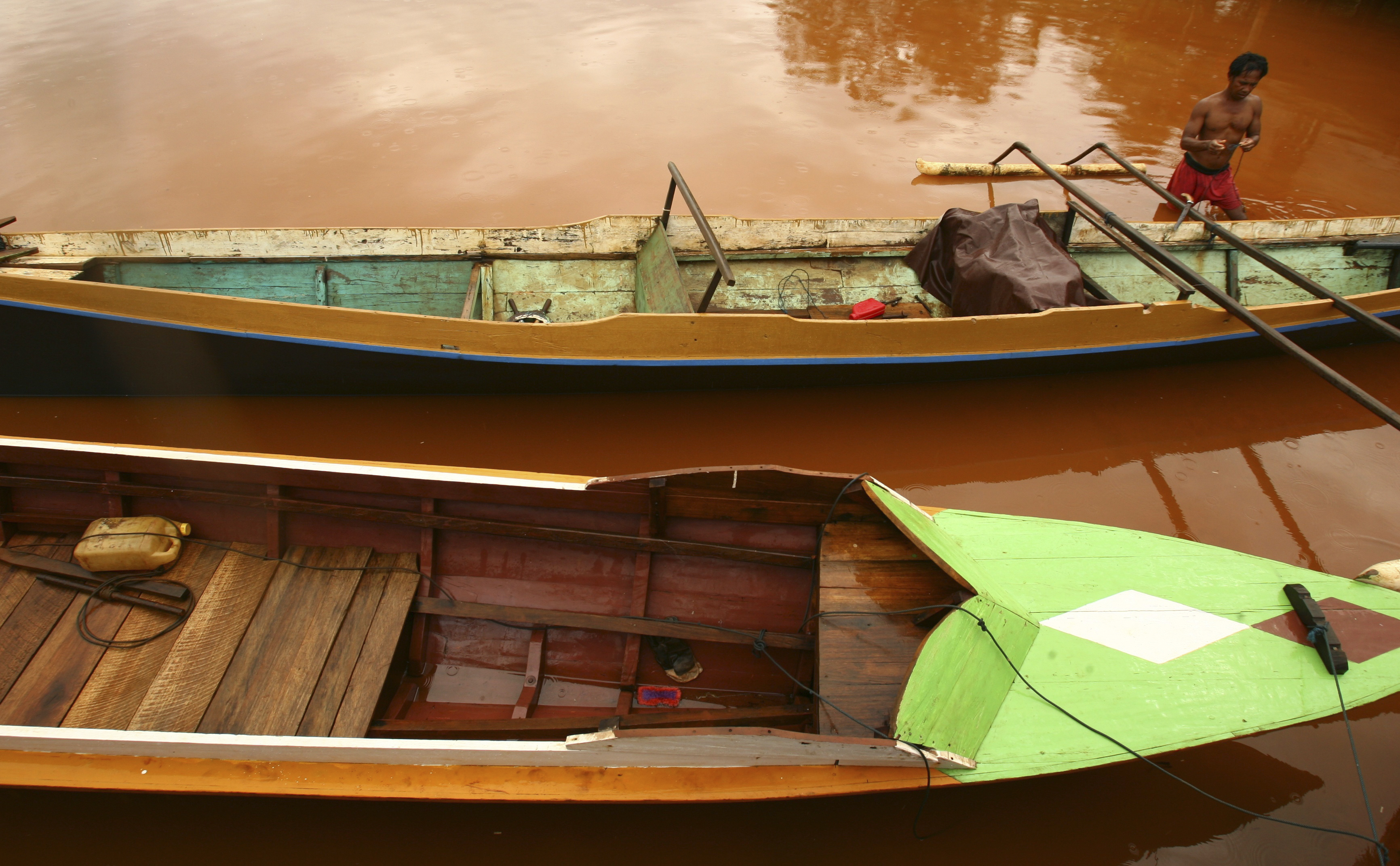
Ahmad via REUTERS 2011)
Indonesia’s mining expansion has been equally devastating. In Raja Ampat, home to the world’s richest marine ecosystem, nickel mining expanded by roughly 500 hectares between 2020 and 2024, three times the expansion rate of the previous five years. In June
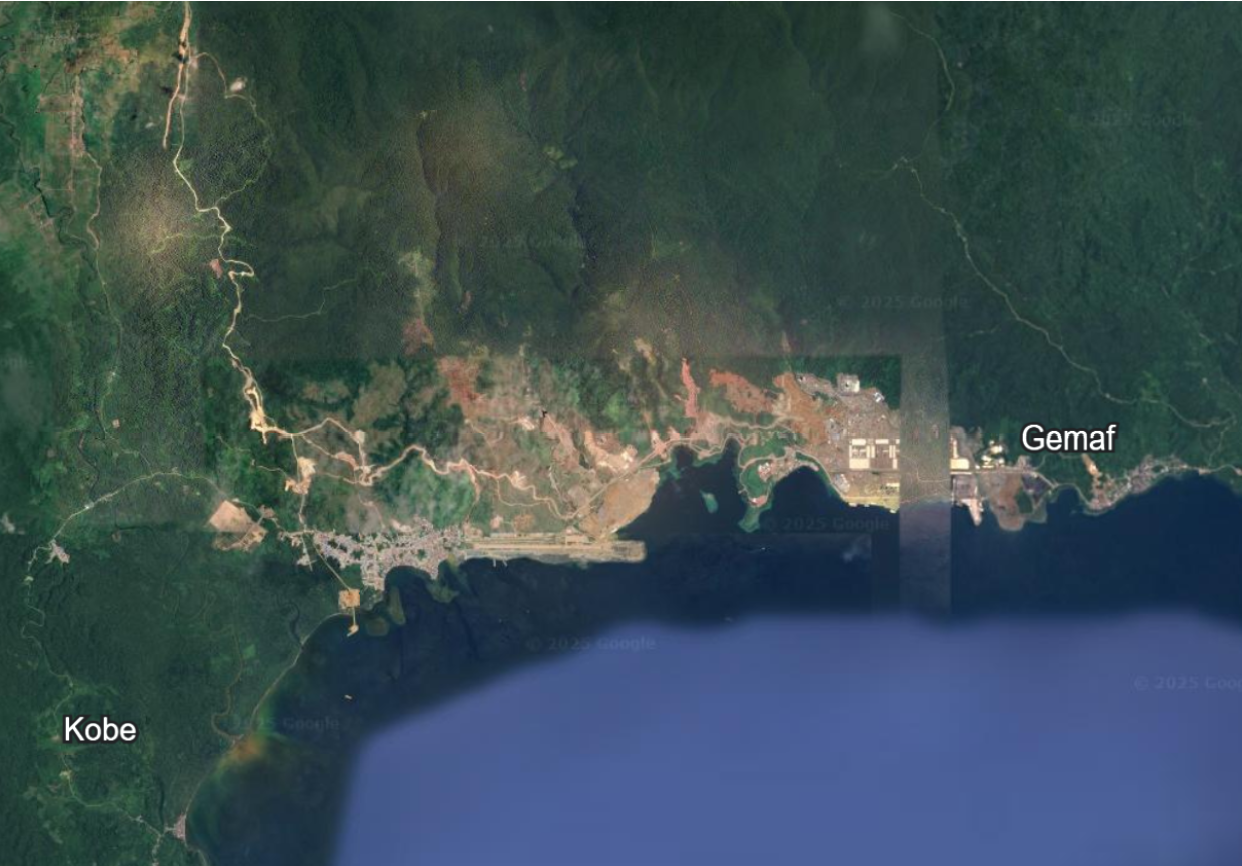
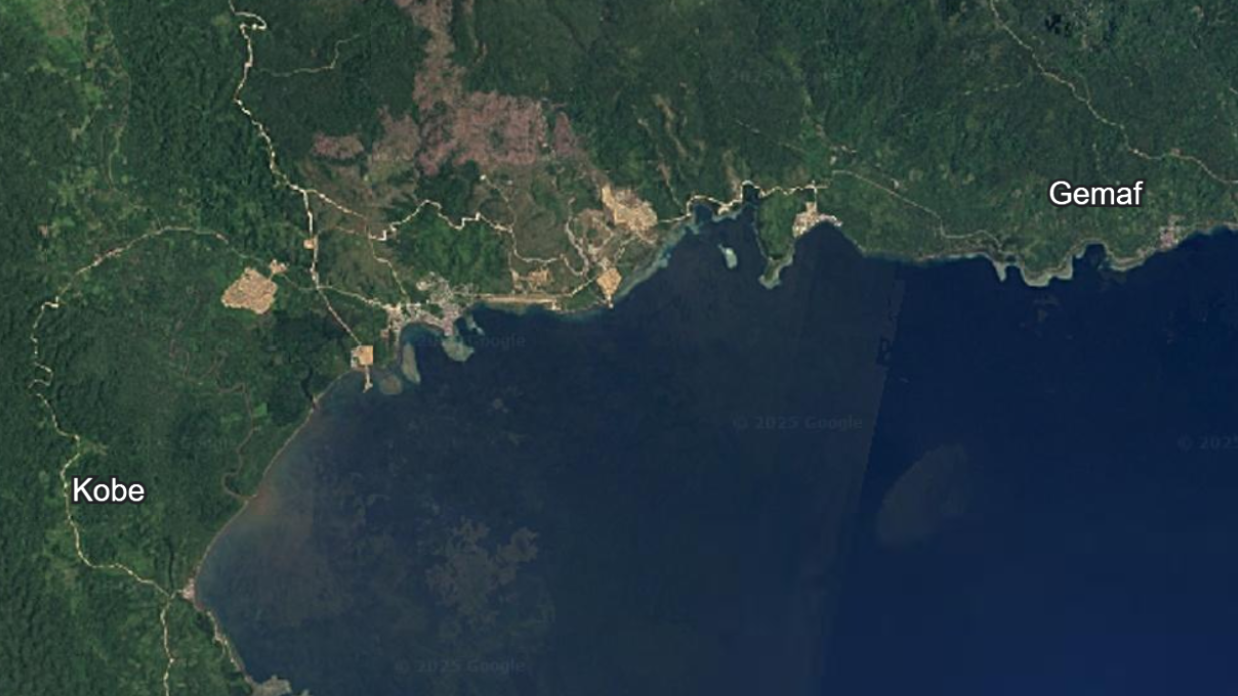
North Maluku province in 2025 and 2017, respectively (Google Earth 2025 and 2017)
2025, increasing public pressure led the Indonesian government to revoke licenses for four out of five mining companies active in Raja Ampat.46 On Halmahera island, a nickel mining project has cleared thousands of hectares of forest, forcibly displaced locals, and polluted waterways, devastating Indigenous communities. In 2024, the Corporate Responsibility Initiative (CRI) interviewed 45 residents near the Indonesia Weda Bay Industrial Park, finding that companies violated legal requirements for FPIC during land acquisition. Locals reported land grabbing, police or companies intimidation, inability to negotiate prices, deforestation of hunting grounds, river pollution and hot water discharge killing fish populations.47 48 49 Geospatial analysis by CRI and the AI Research Climate Initiative has shown that at least 5,331 hectares of forest have been cleared within nickel mining concessions on Halmahera.50
Violence Against Environmental Defenders
The human rights dimensions of mining conflicts reveal the systematic failure of legal protections for those defending their communities and environments. Since 2012, the Philippines has been consistently ranked the deadliest country in Asia for land and environmental defenders.51 As documented by Global Witness, between 2012 and 2023, Indigenous peoples accounted for one-third of land and environmental defenders being killed in the country, among which half of the cases were linked to mining operations.52
This violence occurs within a broader context of militarisation designed to suppress opposition to extractive projects. Mines are often guarded by military and paramilitary units who work with mining companies and have been linked to several cases of abuses, including sexual violence. Civil society groups havereported further abuses from military forces who are known to suppress opposition to extractive projects and displace Indigenous people from their land. The National Task Force to End Local Communist Armed Conflict (NTF-ELCAC) created in 2018 by the then President, Rodrigo Duterte, has been mandated tocounter any insurgency and played a key role in “red tagging” human
rights and environmental activists as communist rebels.53 54 In Indonesia, the Indonesian Legal Aid Foundation has documented at least 50 cases of conflicts between national security forces and local communities between 2017 and 2023.55 While Indonesian laws do not stipulate security forces need to be deployed when implementing national strategic projects such as mining operations, interviewees from the CRI report have attested that national military and police forces have been guarding mining projects.56 The “green mineral rush” is thus expected to lead to increased militarisation and state-driven violence, land grabs as well as the destruction of crucial biodiversity.57
Labour Rights and Working Conditions
The United Nations Guiding Principles on Business and Human Rights require companies to “avoid causing or contributing to adverse human rights impacts through their own activities, and address such impacts when they occur.”58
Both Indonesia and the Philippines have endorsed the Guiding Principles and are, thus, expected to develop national actions plans on business and human rights, strengthen domestic laws to regulate business impacts on human rights, ensure effective remedy mechanisms for victims and enforce human rights due diligence requirements for companies.59 However, implementation has been minimal, and accountability mechanisms remain weak. The expansion of mining operations has also created serious labour rights concerns, particularly regarding foreign workers and workplace safety. In 2023, three Chinese workers filed a human rights complaint against PT Indonesia Morowali Industrial Park (IMIP) in Central Sulawesi, citing severe workplace violations. The workers reported inadequate safety equipment, excessive work hours without breaks, wage cuts, passport confiscation and union bans between 2020-2022, according to their legal representatives at AMAR Law Firm.60

for ILO via Flickr 2004)
These labour rights abuses reflect broader patterns of exploitation within the global supply chain for critical minerals. While companies promote their role in enabling the green transition, workplace conditions often violate basic international labour standards. The increasing presence of foreign workers, particularly from China, has also created tensions with local communities already displaced from traditional livelihoods by mining activities.61
Systemic Governance Failures
The systematic failure to protect environmental and Indigenous rights cannot be understood without examining the governance context in which mining operations occur. Both countries face significant challenges with corruption and regulatory capture that undermine legal protections and accountability mechanisms.
In the Philippines, the FPIC often fails to protect Indigenous communities and has been tainted by corruption scandals and conflicts of interests. The overlap between political power and extractive industries creates structural incentives for approving mining projects regardless of community opposition or environmental impacts.
Similar to the Filipino context, enforcement of mining regulations in Indonesia is poor and tainted by corruption scandals involving senior government officials in the licensing process.62 Several mining entrepreneurs are also high-ranking ministerial officials, state military and security leaders or members of the people’s council. This has resulted in, among other issues, laws giving the government more legitimacy and authority to issue mineral and coal mining permits. “The intertwining of patronage and trading of influence in the political system has (…) also silenced communities on the ground with the threat of criminal sanctions.”63 Indeed, victims of mining conflicts have been increasingly charged with sedition, defamation and criminal violence against authorities.64
Both countries suffer from limited transparency regarding mining operations’ environmental and social impacts. Indonesian environmental laws, including the Environmental Protection and Management Law No. 32/2009, inadequately cover key issues like pollution prevention, community safety, land rights and Indigenous peoples’ protections. There also is little transparency about emissions and pollution since government agreements with companies are not made public, reducing accountability or environmental and social risks.65 This lack of transparency undermines community rights to information and meaningful participation in decisions affecting their territories.
New Forms of Dependency and the Paradox of the “Just Transition”
The extraction and trade of critical minerals is creating new geopolitical tensions while perpetuating historical patterns of exploitation. On the one hand, China has secured mineral access across Africa, Latin America and Southeast Asia through strategic investments, dominating the energy transition supply chain. On the other hand, the US and Europe are scrambling to reduce Chinese dependence; Europe through its Global Gateway strategy and the US by targeting Canadian and Greenlandic resources. This competition traps resource-rich nations between competing powers, escalating global tensions as these resources are most commonly found in already unstable regions. Consequently, the race for critical minerals is paradoxically undermining the “just transition” it is meant to enable and evidence from Indonesia and the Philippines suggests both countries are headed in this direction unless multilateral coordination steps in.66
Indonesia’s strategy exemplifies this contradiction. On the one hand, the Indonesian government has been increasingly implementing measures qualified as “clean, green and sustainable” but its extractive policies rely mostly on coal-fired power and other fossil fuels.67 In fact, nickel smelters drove a 32% increase in coal consumption in 2022. This strategy undermines Indonesia’s emissions reduction goals but also masks the real carbon footprint of EVs being used in other countries.68
In November 2025, the COP30 will be held in Brazil and Global Witness, together with 65 civil society groups, industry voices and academics are calling for the delivery of an agreement that prioritises climate, environmental, and human rights safeguards in green energy mining.69
Conclusion
The green transition’s promise of a more sustainable and equitable future is being undermined by the very processes meant to enable it. In Indonesia and the Philippines, the extraction of critical minerals for renewable energy technologies is perpetuating historical patterns of exploitation while creating new forms of environmental and social injustice.
The systematic failure of international legal frameworks to protect Indigenous rights, environmental integrity and community welfare in the face of mining pressures represents one of the most significant challenges facing the global energy transition.
Without fundamental reforms to governance structures, corporate accountability mechanisms and benefit-sharing arrangements, the race for critical minerals will continue to undermine the justice and equity that must be central to addressing climate change.
The experiences documented in this analysis demonstrate that technical solutions to climate change are insufficient without addressing the political, economic and social structures that enable environmental destruction and human rights violations. As the international community prepares for COP30 and beyond, the imperative is clear: the green transition must be genuinely just, or it risks perpetuating the very patterns of exploitation and environmental destruction that contributed to the climate crisis in the first place.