
Platform for Peace and Humanity

Southeast Asia’s Lucrative Scam Industry Runs on Modern Slavery

The Peace and Security Monitor

The Indo-Pacific

Issue 6, September 2025

Key Takeways

  • Scam operations, often running under modern slavery conditions, have surged across Southeast Asia overthe past decade, with major hubs in Myanmar, Cambodia, and Laos. Their growth has been fuelled by weak governance, poor law enforcement and regulatory gaps.
  • Hundreds of thousands of people from more than 60 countries have been trafficked into compounds,where they are forced to work in scam operations, suffering abuse, and in some cases, sexual The scale and severity of these abuses have led United Nations (UN) experts to warn thatthe situation amounts to a humanitarian crisis – underscoring the need for coordinated regional and international action.
  • Government responses remain While there have been large-scale rescues, overall efforts are restricted by selective enforcement, bureaucratic hurdles in release and repatriation, and resource constraints.
  • The industry thrives on corruption and is highly adaptable, relocating across borders and areas with limited state control, moving workers between compounds, and leveraging technologies such as Artificial Intelligence (AI), deepfakes, and online markets to evade crackdowns.

Slavery may sound like a concept consigned to history, yet a survey by Walk Free – an international human rights group – and the International Labour Organisation (ILO) estimates that 49.5 million people today are victims of it.1 Under the ILO’s Forced Labour Convention, 1930 (No. 29), modern slavery is defined as “any work or service exacted from any person under the threat of a penalty and for which the person has not offered himself or herself voluntarily”.

Scam centres exemplify this reality: people are trafficked or deceived with false job offers and then compelled to run online fraud under coercive conditions. While workers in these centres operate scams that defraud victims worldwide, they endure intimidation, debt bondage, and violence –conditions that amount to modern slavery.

Over the past decade, these centres have multiplied across Asia. Weak governance, poor law enforcement, and lack of regulation have fuelled their growth, compounded by the COVID-19 pandemic, Myanmar’s 2021 military coup and subsequent political unrest, as well as the influence of gambling-related criminal networks in Cambodia and Laos.2

A Dark, Lucrative Industry and a Humanitarian Crisis

UN Human Rights experts have expressed that the scam-centre phenomenon has reached “the level of a humanitarian and human rights crisis”.3 In a joint statement in May 2025, three UN Special Rapporteurs described how hundreds of thousands of people have been trafficked into compounds operating scams across Southeast Asia, where they face forced labour, torture, abuse, and, in some cases, sexual exploitation.4

INTERPOL has likewise reported victims from more than 60 countries, with no continent left untouched, underlining the truly global scale of the crisis.5 The experts stressed that state responses remain inadequate, with victims too often criminalised instead of protected, and urged governments, especially in Southeast and East Asia, to take urgent, coordinated, rights-based action.

The epicentres of these operations are in Myanmar, Cambodia, and Laos, with additional cases in the Philippines and Malaysia,6 often located in areas where state control is limited, such as border areas, Special Economic Zones (SEZs), or repurposed hotels and offshore casinos.7 The scale of this industry is colossal.By the end of 2023, the annual value of funds scammed worldwide was estimated at nearly USD 64 billion,8 with financial losses ranging between USD 18-37 billion in East and Southeast Asia alone.9

For those running the scam operations, however, this is a lucrative business. The United Nations Office on Drugs and Crime (UNODC) estimates that the industrial-scale scam centres generate close to USD 40 billion in annual profits.10 According to the United States Institute for Peace (USPI), the returns on the cyber scamming industry are so high that they amount to almost 40% of the combined formal Gross DomesticProduct (GDP) of Laos, Cambodia, and Myanmar, with a significant share flowing directly to the Myanmarmilitary and to ruling elites in Cambodia and Laos.11 This profitability makes the industry harder to control, as it has become of strategic interest for ruling elites.

View of the Golden Triangle Special Economic Zone in Bokeo Province, Laos, from Ban Sop Ruak in Thailand (Slleong via Wikimedia Commons 2019)

Behind the billions in illicit profits are hundreds of thousands of trafficked men and women. USPI estimated that by 2024, 500,000 people were forcibly involved in scam operations across Southeast Asia.12 Conditions for trafficked workers are undignified and dangerous, with overcrowded and unsanitary environments, where workers are forced to sleep on the floor, face food shortages and lack of medical care,13 and endure beatings, torture, and sexual violence.14 Workers are often segregated or targeted because of nationality, gender, or identity, with women and LGBTQI+ individuals facing disproportionate violence and sexual abuse.15 Human rights violations sometimes also continue after the “rescue”. For many victims, especially those from countries with limited resources, returning home is far from straight forward. Repatriation can take months, leaving people stranded in foreign nations, separated from their families and suffering physical and psychological distress.16 Others are re-victimised, whether detained on immigration charges, or prosecuted for crimes committed under coercion,17 and even resold to other scam operations.18

States should ensure that victims are protected, not punished. Some have started moving in this direction. The Association of Southeast Asian Nations (ASEAN), for example, has adopted regional guidelinesdeveloped by its transnational crime and human rights bodies

to promote “non-punishment” principles, which affirm that victims should not be detained or prosecuted for unlawful acts committed as a direct result of being trafficked.19 Other governments should follow this lead. The non-punishment principle, while not explicitly detailed in the UN Trafficking Protocol, is reinforced by international human rights law (e.g., UNTOC Article 25, ILO Convention No. 29) and soft law instrumentssuch as the Office of the United Nations High Commissioner for Human Rights (OHCHR) Recommended Principles and Guidelines. Upholding it is essential for protecting human rights.

Coordinated Criminal Operations

Protecting victims is only one side of the challenge; the other is understanding and dismantling the networks behind these crimes. Southeast Asia’s cyber scam industry is powered by hundreds of thousands of people and draws on a wide web of actors. Operations usually take place in compounds located in areas where statecontrol is limited or where criminal groups have taken over. These compounds are mostly managed by Chinese-speaking criminal networks with ties to local armed groups who oversee day-to-day operations.20 A prominent example is Shwe Kokko, in Myawaddy Township, Myanmar, which was built on scams.21 Thetown is run by the Karen Border Guard Force (KBGF), a militia group allied with the Myanmar military, in partnership with Yatai International Holding Group (IHG), a Hong Kong-registered company.22 The KBGF controls access through multiple checkpoints and provides security inside, while profits are reportedly shared with the Myanmar military.23
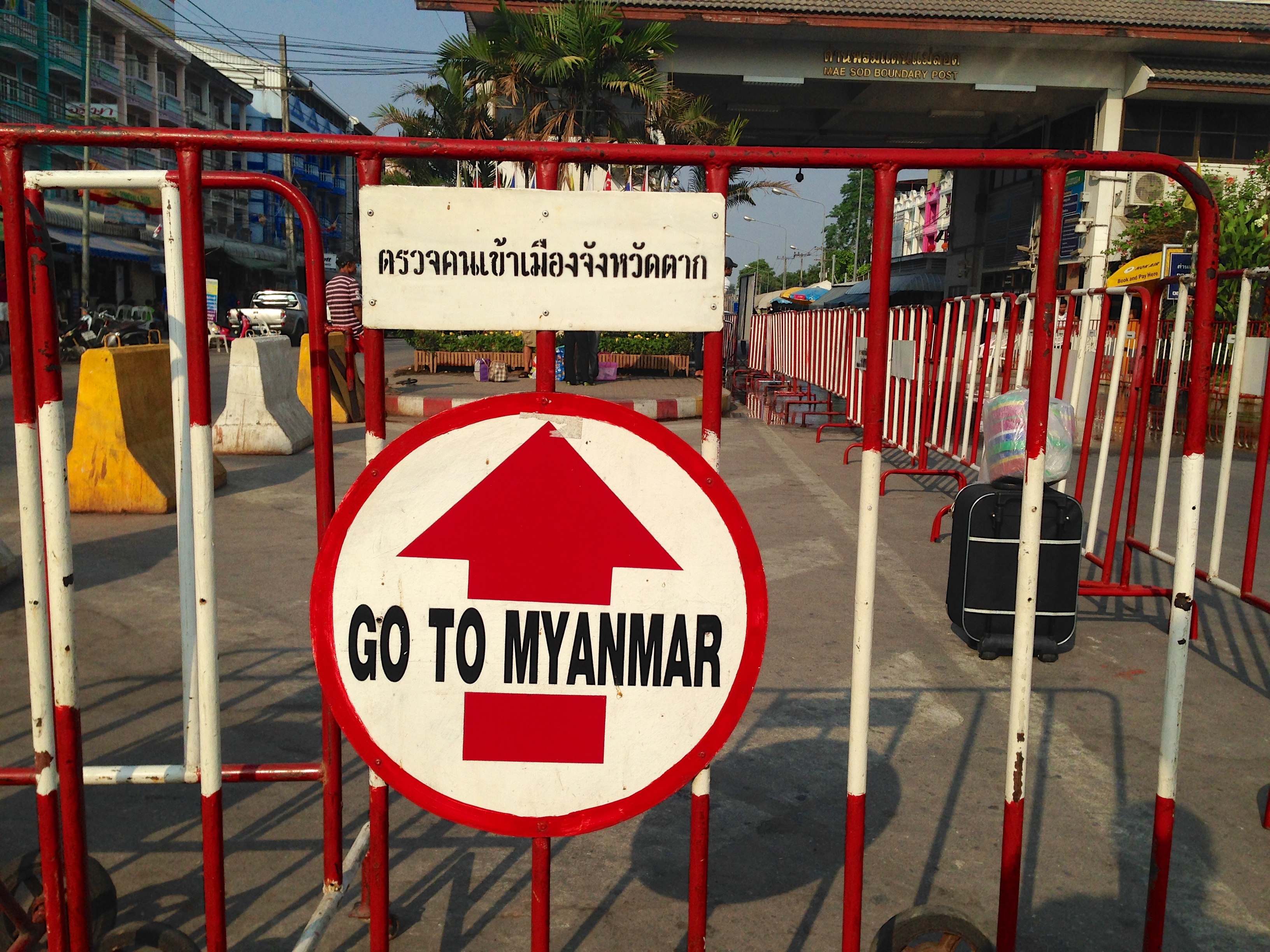
Thai/Myanmar border (Thai side) (James Antrobus via Flickr 2014)

Recruitment operations include brokers, smugglers and traffickers, who are sometimes scammed themselves, with online professional-looking job advertisements, and only realise later that the job entails perpetrating crimes.24 Recruiters span from friends, relatives, or acquaintances25 to professional networks and brokers, some working with licensed firms and corrupt border officials to traffic victims abroad.26 Information Technology (IT) and money-laundering specialists provide the technical backbone of the scam industry – designing fake investment platforms, managing phishing and malware tools, and running complex laundering networks.27 These include currency exchangers and cryptocurrency “mixers” that disguise theorigin of the transactions, and “mule accounts” – bank or crypto accounts used to move stolen money. A Reuters investigation into Thailand-based “pig- butchering” scams showed how such fake crypto platforms and layered laundering schemes are used in practice.28 Corruption further sustains the industry, undermining accountability and blocking access to justice. Credible reports describe corrupt officials securing border crossings, shielding compounds, and even extorting rescued victims in the context of immigration detention.29

Finally, at the grassroots level are the scam workers – most of them unwilling participants. Trafficked or deceived recruits come from all over the world, from conflict-affected Myanmar nationals, migrants, to educated and high-skilled individuals, and even teenagers or pregnant women.30 Forced to run online fraud under brutal conditions, they deploy strategies aimed at building trust and manipulating victims into sending money, from romance and investment scams to impersonating police, running Ponzi schemes, blackmailing, phishing, or spreading malware.31

Global Reach, Diverse Victims

These scams resulting in forced labour are unlike other types of human trafficking. While many trafficking cases target vulnerable or marginalised individuals in desperate need for labour opportunities,32 this more recent scam industry has also deceived people who appear financially stable, including highly educated professionals and skilled IT workers.33

These operations are so elaborate that even celebrities have been misled. In January 2025, Chinese actor Wang Xing was trafficked into Myawaddy, Myanmar, a notorious fraud hub, after being lured from Thailand, under the pretext of a movie casting call.34 This case sparked safety fears among Chinese citizens wanting to travel to Thailand and triggered a sharp decline in tourism shortly before the Lunar New Year peak travel season.

While Chinese citizens were once the primary targets, trafficking operations have expanded worldwide. Judah Tana, director of Global Advances Projects and a longtime aid worker along the Thailand-Myanmar border, witnessed and rescued hundreds of trafficked victims from across the globe – from neighbouring countries to as far away as Uganda.35 Following public efforts by the Chinese government to release nationals from scam centres – as well as foreign nationals, such as a worker from Sierra Leone, lured to Thailand with the promise of a salary ten times higher than at home36 – far fewer Chinese victims are now appearing at the border. This trend has been reinforced by official campaigns warning citizens against travelling to Southeast Asia.37

Due to recent crackdowns, scam centres have been relocating and expanding to regions beyond Southeast Asia. For example, in Africa, Nigeria has become a hotspot for cryptocurrency and romance scams, and Zambia and Angola have also been caught for Asian-led cyber fraud. In Latin America, Brazil has been linked to Southeast Asian criminal groups, and cases of human trafficking led by a Taiwanese criminal group to commit
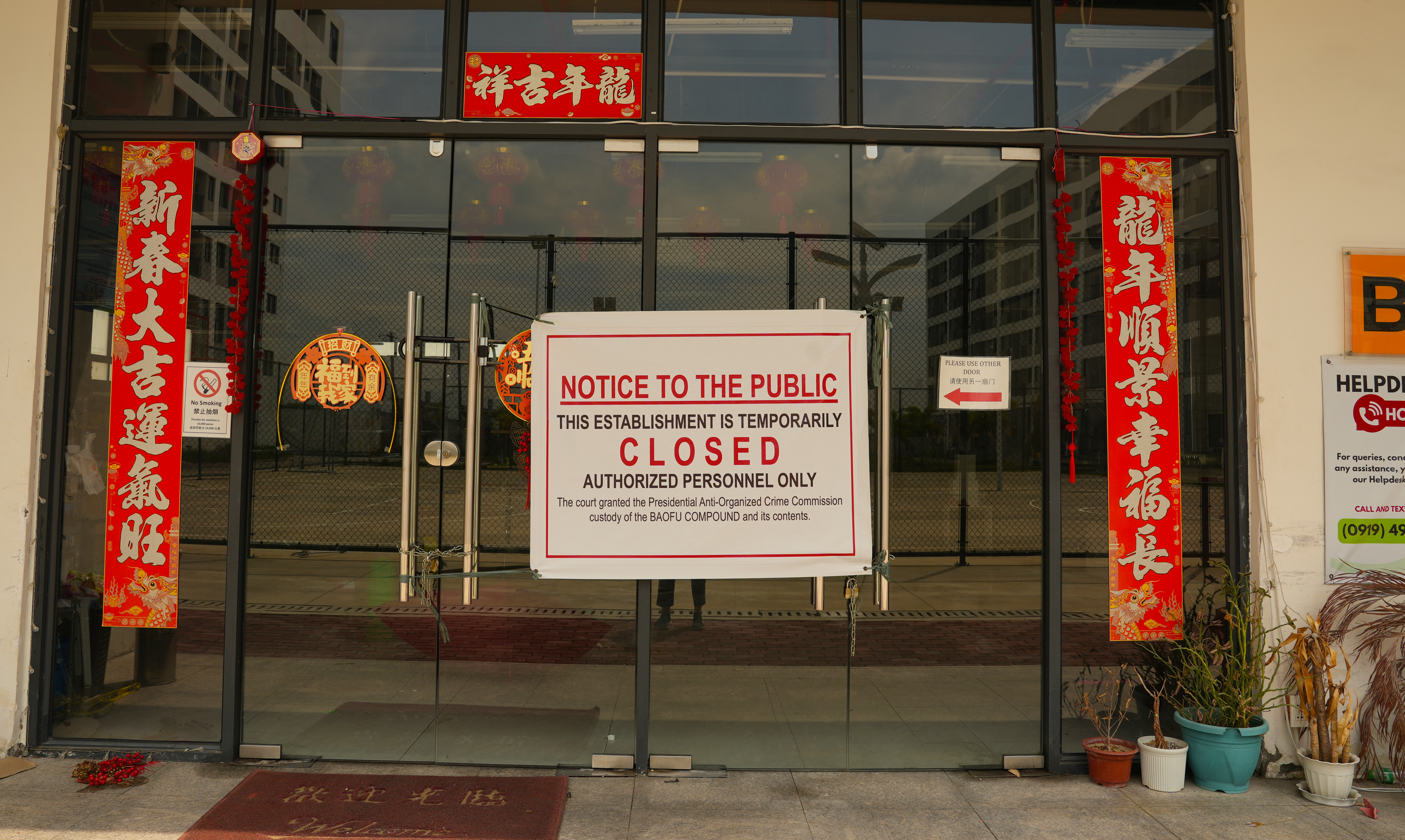
Raided gang-run internet ‘scam farm’ in Bamban, north of Manila, the Philippines (UNODC / Laura Gil via Wikimedia Commons 2024)

cyber-enabled fraud were found in Peru.38 Operations have also been found in the Middle East, in South Asia, and in Pacific islands.

Patchy Government Responses

The proliferation and professionalisation of scam centres highlight the intensity of the industry and the need for governments and international institutions to act. Bad press is another motivating factor for governments to take action. The January 2025 case of Wang Xing prompted the Chinese government to urge Thai and Myanmar authorities for action. Concerned about the impact on tourism, Thailand responded quickly. Within a month of Xing’s rescue, Thai, Chinese, and Myanmar authorities launched an unprecedented crackdown that freed more than 7,000 people from illegal call centres,39 yet this remains a fraction of the hundreds of thousands believed to be trapped in such facilities. Other governments have also invested effortsto release some of their citizens – India, for example, mobilised military transport planes to rescue citizens from scam centres in Myanmar, repatriating 280 people.40

While China implemented measures to shut down some of the scam centres, a report by USIP notes that local police forces selectively choose networks to dismantle, while those that serve national strategic goals – such as China’s Belt and Road Initiative – maintain ties with Communist Party members and state-linked entities.41

While there have been successful rescues, most governments face major obstacles in supporting trafficked victims, as repatriation efforts are tied up in excessive embassy bureaucracy. For some African victims, for instance, the nearest diplomatic mission may be located far from their place of detention.42 Additionally, governments with limited resources are often unable or unwilling to pay for the repatriation,43 leaving some behind, held in military camps or repurposed scam compounds, mostly run by the KBGF.44

A Highly Adaptable Industry, Expanding Threat, and Call for Action

Scam centres are difficult to control because they thrive on weak governance – conflict zones, unregulated border regions, and SEZs. In some cases, SEZs designed to attract foreign investment under special regimes have become hubs for trafficking and fraud. The Golden Triangle SEZ, where Laos, Myanmar, and Thailand meet, is one such hotspot, offering criminal groups porous borders and limited oversight.45 In the Philippines, poorly regulated offshore gaming operators (POGOs) have likewise been linked to smuggling, financial crimes, and human trafficking, with many operating without licenses.46 Corruption further fuels impunity, with reports of police, officials and businesses colluding to protect the scam networks.47

The industry’s adaptability makes enforcement even harder. Scam operations frequently relocate when authorities crack down, shifting operations and moving workers across Laos, Cambodia, and Myanmar.48 Increasingly, operations are expanding beyond Asia into Africa and Latin America, targeting people from all backgrounds worldwide. New technologies and innovations, such as online markets, AI, and deepfake technologies, further enhance the industry’s flexibility, enabling networks to re-establish operations quickly and evade detection.49

The scam industry has become a global threat: damaging local economies, undermining development goals, and exploiting gaps in governments’ enforcement capacity. The UN has warned that scam networks are innovating faster than states can respond.50 Meeting this challenge will require coordinated regional strategies, shared priorities, and stronger cooperation with UN bodies, such as the UNODC, to disrupt organised crime at scale.

Policy Recommendations

  • International development and humanitarian organisations should help identify the root causes that put individuals at risk of trafficking into scam operations and support governments in raising awarenessabout scam recruitment tactics, in both source and destination countries.
  • National governments should apply and enforce labour and human rights protections across all businesses, including those in SEZs and gaming sectors, through robust legislation and effective regulation. This must be paired with stronger regional cooperation, and collaboration with international organisations working on organised crime, such as the UNODC, to share intelligence,conduct joint enforcement operations, and introduce targeted regulatory reforms against scam
  • Governments of origin, destination, and transit countries should ensure that trafficking victims have access to justice and essential services, working with non- governmental organisations, service providers, and civil society to ensure their safety, dignified and voluntary returns, in line with principles of non-refoulement and without criminalisation.
  • The wider international community should share the financial and technical responsibility of dismantling scam networks, recognising that the human and economic costs are borne globally and thatcyber scams increasingly target citizens and financial systems worldwide.

Endnotes

1 Walk Free, Minderoo Foundation, ‘The Global Slavery Index 2023’ (2023) https://www.walkfree.org/global-slavery-index/ accessed 28 August 2025.

2 USIP Senior Study Group on Transnational Organized Crime in Southeast Asia, ‘Transnational Crime in Southeast Asia: A Growing Threat toGlobal Peace and Security’ (May 2024) https://www.usip. org/publications/2024/05/transnational-crime- southeast-asia-growing-threat-global-peace- and-security accessed 10 August 2025.

3 OHCHR, ‘UN experts urge immediate human rights based action tackle forced criminality in Southeast Asia scam centres’ (21 May 2025)https://www.ohchr.org/en/ press-releases/2025/05/un-experts-urge-immediate- human-rights-based-action-tackle-forced accessed 11 August 2025.

4 OHCHR, ‘Joint Statement by the Special Rapporteur on contemporary forms of slavery, Special Rapporteur on trafficking in persons, and Special Rapporteur on Cambodai on immediate human rights-based action to tackle forced criminality in Southeast Asia scam centres’ (19 May 2025) https:// www.ohchr.org/sites/default/files/documents/ issues/slavery/sr/statements/2025-05-stm-sr- slavery-southeast-asia.pdf accessed 28 August 2025.

5 INTERPOL, ‘INTERPOL releases new information on globalisation of scam centres’ (INTERPOL News, 30 June 2025) https://www.interpol.int/en/News- and-Events/News/2025/INTERPOL-releases-new- information-on-globalisation-of-scam-centres accessed 14 August 2025.

6 Laura Gil, ‘Scam centres are a ‘human right crisis’, independent experts warn’ (UN News, 21 May 2025) https://news.un.org/en/story/2025/05/1163521 accessed 11 August 2025.

7 Global Initiative Against Translational Organized Crimes, ‘Compound Crime: Cyber-scam Operations in Southeast Asia’ (Global Initiative, May 2025) https://globalinitiative.net/wp-content/ uploads/2025/05/GI-TOC-Compound-crime- Cyber-scam-operations-in-Southeast-Asia- May-2025.pdf accessed 12 August 2025.

8 USIP Senior Study Group on Transnational Organized Crime in Southeast Asia, ‘Transnational Crime in Southeast Asia: A Growing Threat toGlobal Peace and Security’ (May 2024) https://www.usip. org/publications/2024/05/transnational-crime- southeast-asia-growing-threat-global-peace- and-security accessed 10 August 2025.

9 UNODC, ‘Billion-dollar cyberfraud industry expands in Southeast Asia as criminals adopt new technologies’ (UNODC, 7 October 2024) https:// www.unodc.org/roseap/en/2024/10/cyberfraud- industry-expands-southeast-asia/story.html accessed 11 August 2025.

10 UNODC, ‘Cyberfraud in the Mekong reaches inflection point, UNODC reveals’ (UNODC, 21 April 2025) https://www.unodc.org/roseap/en/2025/04/ cyberfraud-inflection-point-mekong/story.html accessed 11 August 2025.

11 USIP Senior Study Group on Transnational Organized Crime in Southeast Asia, ‘Transnational Crime in Southeast Asia: A Growing Threatto Global Peace and Security’ (May 2024) https://www.usip. org/publications/2024/05/transnational-crime- southeast-asia-growing-threat-global-peace- and-security accessed 10 August 2025.

12 Ibid.

13 Nathalie Bello, ‘Rescued Victims from a Myanmar Scam centre Leads to a Humanitarian Crisis’ (Human Rights Research centre, 16 June 2025) https://www. humanrightsresearch.org/post/rescued-victims- from-a-myanmar-scam-centre-leads-to-a- humanitarian-crisis accessed 12 August 2025.

14 Huizhong Wu, ‘People detained in Myanmar after release from scam compounds attempt an escape’ (AP News, 2 April 2025)https://apnews.com/article/ thailand-myanmar-scam-centre-forced-labor- escape-ethiopia-d44c9f74d3b40ee88dd7e3a33ec ed8a3 accessed 12 August 2025.

15 Global Initiative Against Translational Organized Crimes, ‘Compound Crime: Cyber-scam Operations in Southeast Asia’ (Global Initiative, May 2025) https://globalinitiative.net/wp-content/ uploads/2025/05/GI-TOC-Compound-crime- Cyber-scam-operations-in-Southeast-Asia- May-2025.pdf accessed 12 August 2025.

16 Jonathan Head, ‘Casinos, high-rises and fraud: The BBC visits a bizarre city built on scams’ (BBC, 7  February  2025)  https://www.bbc.com/news/ articles/c04nx1vnw17o accessed 12 August 2025.

17 Huizhong Wu, Jintamas Saksornchai, and Martha Mendoza, ‘They Were Forced To Scam Others Worldwide. Now Thousands AreDetained on the Myanmar Border’ (AP News, 10 March 2025) https://www.pbs.org/wgbh/frontline/article/scam- centres-trafficking-myanmar/ accessed 13 August 2025.

18 Global Initiative Against Translational Organized Crimes, ‘Compound Crime: Cyber-scam Operations in Southeast Asia’ (Global Initiative, May 2025) https://globalinitiative.net/wp-content/ uploads/2025/05/GI-TOC-Compound-crime- Cyber-scam-operations-in-Southeast-Asia- May-2025.pdf accessed 12 August 2025.

19 ASEAN, ‘ASEAN Guideline on the Implementation of the Non-Punishment Principle for Protection of Victims of Trafficking in Persons’ (ASEAN, 2025) https://asean.org/wp-content/uploads/2025/06/ ASEAN-Guideline-on-the-Implementation-of- the-Non-Punishment-Principle-for-Protection-of- Victims-of-Trafficking-in-Persons-adopted-ad- referendum-on-27-May-2025.pdf  accessed  29 August 2025.

20 Shoon Naing, ‘What are Southeast Asia’s scam centres, and why are they being dismantled?’ (Reuters, 5 March 2025) https://www.reuters. com/world/asia-pacific/what-are-southeast- asias-scam-centres-why-are-they-being- dismantled-2025-03-04/ accessed 13 August 2025.

21 Jonathan Head, ‘Casinos, high-rises and fraud: The BBC visits a bizarre city built on scams’ (BBC, 7  February  2025)  https://www.bbc.com/news/articles/c04nx1vnw17o accessed 12 August 2025.

22 The Irrawaddy, ‘Yatai IHG May Seek to Co-opt Myanmar Government Officials Through Dubious Connections’ (The Irrawaddy, 9 October 2020) https://www.irrawaddy.com/news/burma/yatai- ihg-may-seek-to-co-opt-myanmar-government- officials-through-dubious-connections.html accessed 13 August 2025.

23 The Irrawaddy, ‘Sex, Drugs and Cyber Scams: Inside Myanmar’s Notorious Online Crime Hubs’ (The Irrawaddy, 8 May 2025) https://www.irrawaddy. com/in-person/interview/sex-drugs-and-cyber- scams-inside-myanmars-notorious-online-crime- hub.html accessed 13 August 2025.

24 ‘From Fake Job Ads to Human Trafficking: The Horrifying Reality of the Human Trafficking Scam Trade’ (The Mekong Club, 27 July 2023) https:// themekongclub.org/wp-content/uploads/2023/07/ From_Fake_Job_Ads_to_Human_Trafficking_The_Horrifying_Reality_of_the_Human_ Trafficking_Scam_Trade_2023.pdf  accessed  14 August 2025.

25 Emily Fishbein and Nu Nu Lusan, ‘Trapped in Myanmar’s cyber-scam factories’ (Al Jazeera, 29 July 2024) https://www.aljazeera.com/news/longform/2024/7/29/trapped-in-myanmars- cyber-scam-mills accessed 14 August 2025.

26 Gina McKeon, ‘Scam, sleep and scam again. Inside the scam facility behind those annoying text messages’ (ABC News, 10 June 2024)https:// www. abc. net. au/ news/ 2024 – 06 -11 / inside-the-scam-factory-pig-butchering-and- cyberscams/103937064 accessed 14 August 2025.

27 Global Initiative Against Translational Organized Crimes, ‘Compound Crime: Cyber-scam Operations in Southeast Asia’ (Global Initiative, May 2025) https://globalinitiative.net/wp-content/ uploads/2025/05/GI-TOC-Compound-crime- Cyber-scam-operations-in-Southeast-Asia- May-2025.pdf accessed 12 August 2025.

28 Poppy McPherson and Tom Wilson, ‘Crypto scam: Inside the billion-dollar ‘pig-butchering’ industry’ (Reuters, 23 November 2023) https://www.reuters. com/investigates/special-report/fintech-crypto- fraud-thailand/ accessed 15 August 2025.

29 OHCHR, ‘Online scam operations and trafficking into forced criminality in Southeast Asia: Recommendations for a Human Rights Response’ (OHCHR, 2023) https://bangkok.ohchr.org/sites/ default/files/wp_files/2023/08/ONLINE-SCAM- OPERATIONS-2582023.pdf accessed 15 August 2025.

30 Global Initiative Against Translational Organized Crimes, ‘Compound Crime: Cyber-scam Operations in Southeast Asia’ (Global Initiative, May 2025) https://globalinitiative.net/wp-content/ uploads/2025/05/GI-TOC-Compound-crime- Cyber-scam-operations-in-Southeast-Asia- May-2025.pdf accessed 12 August 2025.

31 Ibid.

32 ‘8 facts you need to know about human trafficking in the 21st century’ (UNODC, May 2024) https://www.unodc.org/unodc/frontpage/2024/May/8-facts- you-need-to-know-about-human-trafficking-in- the-21st-century.html accessed 14 August 2025.

33 UNODC. Key Indicators of Trafficking in Persons for Forced Criminality to Commit Cyber Enabled Crimes. https://www.unodc.org/roseap/uploads/ documents/ Publications/2023/ UNODC_Key_Indicators_of_TIP_for_Forced_Criminality_FINAL_ September_2023.pdf accessed 29 August 2025.

34 Nectar Gan, Joyce Jiang and Kocha Olarn, ‘A Chinese actor was abducted from Thailand. His swift return has sparked hopes – and fears – back home’ (CNN, 15 January 2025) https://edition.cnn. com/2025/01/14/china/china-actor-thailand- scam-myanmar-intl-hnk accessed 13 August 2025.

35 Luke Hunt, ‘Trafficked and Desperate: A Conversation with Judah Tana’ (The Diplomat, 27 May 2024) https://thediplomat.com/2024/05/ trafficked-and-desperate-a-conversation-with- judah-tana/ accessed 13 August 2025.

36 ‘Myanmar’s scam empire gets worse not better’ (The Economist, 29 May 2025) https://www.economist.com/asia/2025/05/29/myanmars- scam-empire-gets-worse-not-better accessed 12 August 2025.

37 Tommy Walker, ‘Why is China clamping down on scammers in Southeast Asia?’ (DW News, 1 February 2025) https://www.dw.com/en/why-is-china- clamping-down-on-scammers-in-southeast- asia/a-71456569 accessed 14 August 2025.

38 Associated Press, ‘UN Researcher Warns That Asian Scam Operations are Spreading Across the Rest of the World’ (U.S. News, 21 April 2025) https://www. usnews.com/news/business/articles/2025-04-21/ un-researchers-warn-that-asian-scam- operations-are-spreading-across-the-rest-of- the-world accessed 14 August 2025.

39 Leila Goldstein, ‘Thousands rescued from illegal scam compounds in Myanmar as Thailand launches huge crackdown’ (The Guardian, 19 February 2025) https://www.theguardian.com/world/2025/feb/19/ myanmar-scam-call-centre-compound-rescues- thailand-crackdown accessed 13 August 2025.

40 Karl Sexton, ‘Indians repatriated after release from Myanmar scam centres’ (DW News, 10 March 2025) https://www.dw.com/en/myanmar- indians-repatriated-after-release-from-scam- centres/a-71877491 accessed 13 August 2025.

41 USIP Senior Study Group on Transnational Organized Crime in Southeast Asia, ‘Transnational Crime in Southeast Asia: A Growing Threatto Global Peace and Security’ (May 2024) https://www.usip. org/publications/2024/05/transnational-crime- southeast-asia-growing-threat-global-peace- and-security accessed 10 August 2025.

42 ‘Myanmar’s scam empire gets worse not better’ (The Economist, 29 May 2025) https://www.economist.com/asia/2025/05/29/myanmars- scam-empire-gets-worse-not-better accessed 12 August 2025.

43 Huizhong Wu, Jintamas Saksornchai, and Martha Mendoza, ‘They Were Forced To Scam Others Worldwide. NowThousands Are Detained on the Myanmar Border’ (AP News, 10 March 2025) https://www.pbs.org/wgbh/frontline/article/scam- centres-trafficking-myanmar/ accessed 13 August 2025.

44 ‘Myanmar’s scam empire gets worse not better’ (The Economist, 29 May 2025) https://www.economist.com/asia/2025/05/29/myanmars- scam-empire-gets-worse-not-better accessed 12 August 2025.

45 International Crisis Group, ‘Stepping into South East Asia’s Most Conspicuous Criminal Enclave’ (International Crisis Group, 17 January 2024) https://www.crisisgroup.org/asia/south-east-asia/ stepping-south-east-asias-most-conspicuous- criminal-enclave accessed 29 August 2025.

46 OHCHR, ‘Online scam operations and trafficking into forced criminality in Southeast Asia: Recommendations for a Human Rights Response’ (OHCHR, 2023) https://bangkok.ohchr.org/sites/ default/files/wp_files/2023/08/ONLINE-SCAM- OPERATIONS-2582023.pdf accessed 15 August 2025.

47 Ibid.

48 Global Initiative Against Translational Organized Crimes, ‘Compound Crime: Cyber-scam Operations in Southeast Asia’ (Global Initiative, May 2025) https://globalinitiative.net/wp-content/ uploads/2025/05/GI-TOC-Compound-crime- Cyber-scam-operations-in-Southeast-Asia- May-2025.pdf accessed 12 August 2025.

49 Gavin Blackburn, ‘Asian scam operations worth €35 billion spreading across the world, UN warns’ (Euro News, 21 April 2025) https://www.euronews. com/2025/04/21/asian-scam-operations-worth- 35-billion-spreading-across-the-world-un-warns accessed 14 August 2025.

50 Daniel Dickinson and Jessica Jiji, ‘Crushing the scam farms: Southeast Asia’s ‘criminal service providers’’ (UN News, 12 July 2024) https://news. un.org/en/story/2024/07/1151906   accessed 15 August 2025.