
North Korea’s intensifying nuclear and missile activities pose a growing threat to global and regional security and undermine the global non-proliferation regime. On 22 April, Director-General Rafael Grossi of the International Atomic Energy Agency reportedly warned that North Korea’s nuclear programmes have grown “exponentially” and called on the international community to resume high-level diplomacy to re-engage with North Korea.1
It appears that Pyongyang is “all in” with assisting Russia’s unjust war effort in Ukraine based on the dispatch of North Korean troops. Emboldened by this new development, Pyongyang may participate in other ongoing conflicts and future wars with like-minded partners opposed to the West.2 Therefore, this article will analyse North Korea’s military strategy and will focus on recent developments, including the country’s support to Russia. It will also explore the nuclear threat to other countries in the region, such as Japan, and the response from the United States (US), Japan, and South Korea.
North Korea’s Military Strategy
The recent transformation of North Korea’s military capabilities and the current political initiatives can be placed into context by noting five phases of development of the country’s military. The first stage of North Korean military development involved a steady increase in the number of armed forces personnel, which continued from the end of the Korean War to the present.3 The International Institute for Strategic Studies stated that, in 1985, North Korea was ranked sixth in the world, with 838,000 total armed forces personnel, and in 2015 fourth, with 1,379,000.4 The second stage consisted of thedevelopment of short- and medium-range ballistic missiles in addition to nuclear capabilities. It started with the initiation of North Korea’s missile programme in 1976 and lasted until the first display of North Korea’s intermediate-range ballistic missile, the Hwasong-10, at a military parade in 2010.5 The third stage is the development of intermediate-range ballistic missiles along with nuclear capabilities.6
It began with the intermediate-range ballistic missile Hwasong-10 test in 2016 and lasted until the intercontinental ballistic missile Hwasong-14 test. The fourth stage is the intercontinental ballisticmissiles along with the expansion of naval capabilities. It started with the upgrade of training facilities, weapons systems, and special- operations capabilities at the Munchon naval base in 2014.7 In the same year, two new North Korean helicopter-carrying frigates were identified, and the buildup continued throughout 2017 with tests of the Hwasong-14 and Hwasong-15 missiles.8 The fifth stage is the expansion of the capabilities of the Korean People’s Army Air Force (KPAAF) and the further development of naval weapons systems.9 This stage began at the 2018 summit in Singapore. In this stage, North Korea has more time and resources and endures less external political pressure, allowing itto focus on building up conventional military forces.
North Korea’s strategic ambition has been acceptance as a nuclear power, leading to economic and diplomatic “normalisation” for longer-term survival with fewer sanctions and less pressure.10 This was Kim Jong-un’s goal after he claimed in 2017 to have a nuclear-capable intercontinental ballistic missile that could reach the US.11 At the 2018 Singapore Summit, Kim aimed to position himself as the leader of a recognised nuclear power, treated as an equal by the US. However, this effort fell short, as evidenced by the unsuccessful 2019 Hanoi Summit, where Kim failed to secure de facto recognition of North Korea’s nuclear status or obtain sanctions relief in exchange for limited and reversible denuclearisation measures.12
Since the COVID-19 pandemic, North Korea has fast-tracked its military modernisation across domains—including land, air, cyber, maritime, and space. This development has occurred after North Korea achieved a critical objective laid down by Kim Jong-un in his Byungjin policy—to become a nuclear-armed state.13 After achieving this goal, Kim has focused on strengthening its military capabilities and modernising its missile weapons programme. These capabilities comprise arms and ammunitionproduction, research and development, shipbuilding development, and military education.
North Korea’s military modernisation has been enhanced by Russian assistance in exchange for arms and ammunition exports since 2023, along with manpower deployment in the war against Ukraine.14 During the meeting on 4 June 2025 between Sergei Shoigu, Secretary of the Security Council, and Kim, Russia and North Korea reaffirmed their intention to “dynamically expand and develop the Democratic People’s Republic of Korea-Russia relations into powerful and comprehensive relations of strategic partnership that fully conform to the national interests of the two countries.”15 Pyongyang’s military modernisation is likely to advance further, especially with continued military, technological, and economic backing from Russia.
Although the special operations force was revealed to the public for the first time in 2017, it did exist before that. The unit has run guerrilla operations in various wars and attempted to attack the South Korean presidential office in 1968.16 Pyongyang says it has sent troops out of North Korea on at least three occasions.17 The first was in the Chinese Civil War, a conflict between the Communist Party and the Nationalist Party in the 1940s. Then, in 1965, North Korea sent engineering units to Vietnam and also deployed its air force there. The third was in the 1973 Arab-Israeli War, when Pyongyang dispatched its air force to support the Arab side.18
Recent Developments regarding North Korea’s Missile Testing Programme
Tensions on the Korean Peninsula have increased in 2025. On 10 March, South Korean officials declared that North Korea had launched several close-range ballistic missiles into the Yellow Sea from Hwanghae province in the southwestern part of the country.19 The launches were the first ballistic missile tests conducted by the country since 14 January and came shortly after South Korea and the US began their annual Freedom
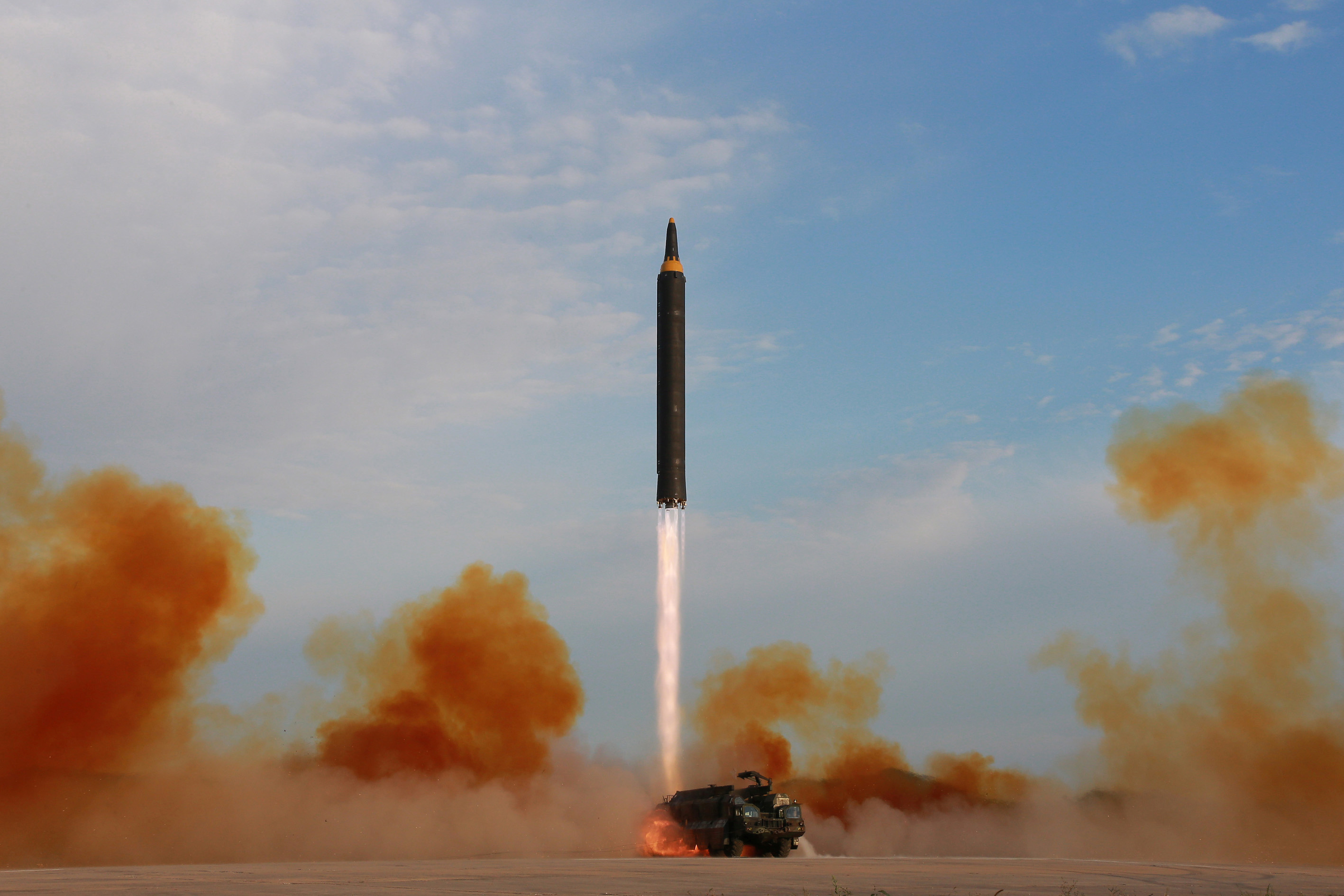
Korea’s KCNA (KCNA via REUTERS 2017)
Shield military exercise.20 In late February, North Korea fired multiple cruise missiles into the Yellow Sea several days before a nuclear-powered US aircraft carrier arrived in Busan.21
North Korea has continued to demonstrate little willingness to take steps towards denuclearisation. The North Korean foreign ministry vowed in a mid-March statement to “steadily update and strengthen” its nuclear capabilities.22 The statement appeared to be a response to a joint statement of the foreign ministers of the G7 (Canada, France, Germany, Italy, Japan, the United Kingdom (UK), and the US) on 14 March, which demanded “that the Democratic People’s Republic of Korea (DPRK) abandon all its nuclear weapons and any other weapons of mass destruction as well as ballistic missile programmes in accordance with all relevant [Security Council] resolutions.”23
On 8 May, Japan and South Korea reported that multiple ballistic missiles were fired from North Korea’s east coast in what was believed to be a performance test of short- range missiles that had already been deployed.24 According to the Korean Central News Agency (KCNA), the 600 mm multiple launch rocket systems and tactical ballistic missile Hwasong-11 were mobilised for the test.25
North Korea’s persistent pursuit of nuclear-weapons and ballistic-missile programmes, which violate Security Council resolutions, undermines the global nuclear disarmament and non-proliferation regime.26
Khaled Khiari, Assistant Secretary-General in the Departments of Political and Peacebuilding Affairs and PeaceOperations, reported that Pyongyang has continued to conduct ballistic- missile launches and express its intention to further develop its nuclear and ballistic- missile capabilities. “At this critical juncture, it remains as important as ever to continue to highlight the urgent need to reduce nuclear risk, prevent any use of a nuclear weapon and bring about their total elimination,” he contended.27
North Korea’s Support for Russia’s War in Ukraine
North Korea’s support for the Russian war effort started in late 2022 with the delivery of artillery shells. The list of armaments was later expanded to include ballistic missiles.28 Russia has been able to maintain themomentum of its invasion with these supplies despite the country’s significantly diminished stores of munitions.29 Moreover, the arrival of troops from North Korea reduced the domestic pressure to recruit more Russians for the war.
North Korea has reportedly deployed 11,000 troops to the Kursk region in late 2024. An additional 3,000 troops were sent in January and February 2025, according to South Korean military intelligence.30 It has also been reported that Kim has dispatched special operations forces from the Eleventh Army Corps known as the “Storm Corps.”31 These elite troops have been trained for infiltration and assassination missions, with more military training than the new Russian conscripts sent to the frontlines.32
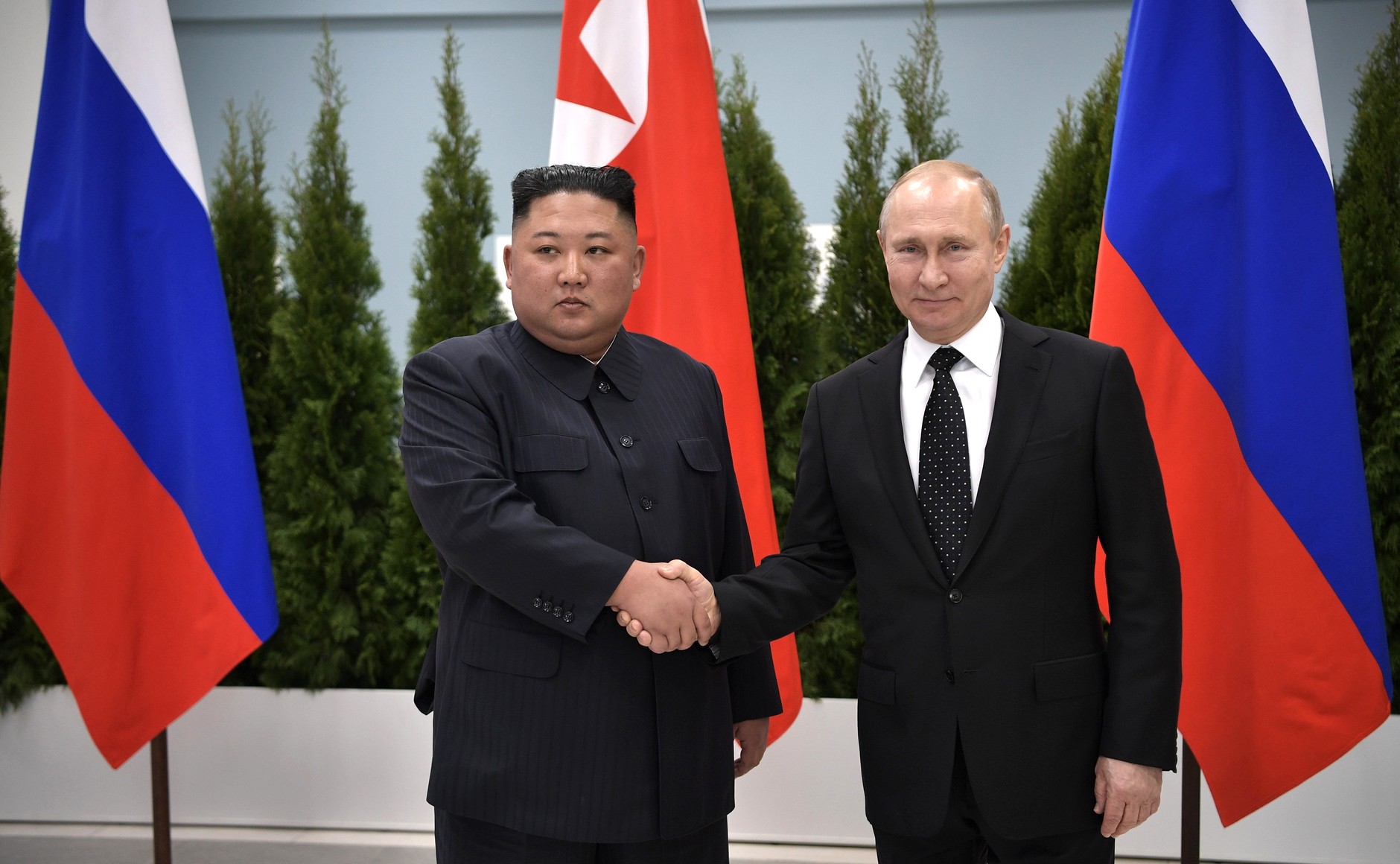
People’s Republic of Korea Kim Jong-unof the Democratic People’s Republic of Korea Kim Jong-un (Kremlin.ru 2019)
North Korea has a specific interest in sending troops to fight against Ukraine. The deployment allows the North Koreans to acquire valuable combat experience, test weapons systems, secure access to Russian military technologies, and obtain Moscow’s further assistance in countering United Nations (UN) sanctions.33 Despite North Korea currently boasting one of the world’s largest armies with around 1.3 million active soldiers, unlike Russia, the Korean People’s Army (KPA) has not been directly involved in any major wars for many years. North Korean dictator Kim Jong-un is reportedly concerned about this lack of battlefield experience and anxious to counter South Korea’s more technologically advanced military.34 Sending troops to fight in Ukraine provides the KPA with valuable insights into what is widely regarded as the most technologically advanced battlefield environment in the history of warfare.35 North Korean soldiers can now learn the realities of modern drone warfare first- hand. As a consequence, senior US officials have warned that North Korea will be “more capable of waging war against its neighbours.”36
North Korea’s Threat to Japan
Japan is facing its most severe security environment since World War II as North Korea, China, and Russia accelerate military activities in the region, the country’s defence minister said on 15 July 2025. Defence Minister Gen Nakatani said in an introduction to the ministry’s annual defence white paper, “The existing order of world peace is being seriously challenged, and Japan finds itself in the most severe and complex security environment of the post-war era.”37
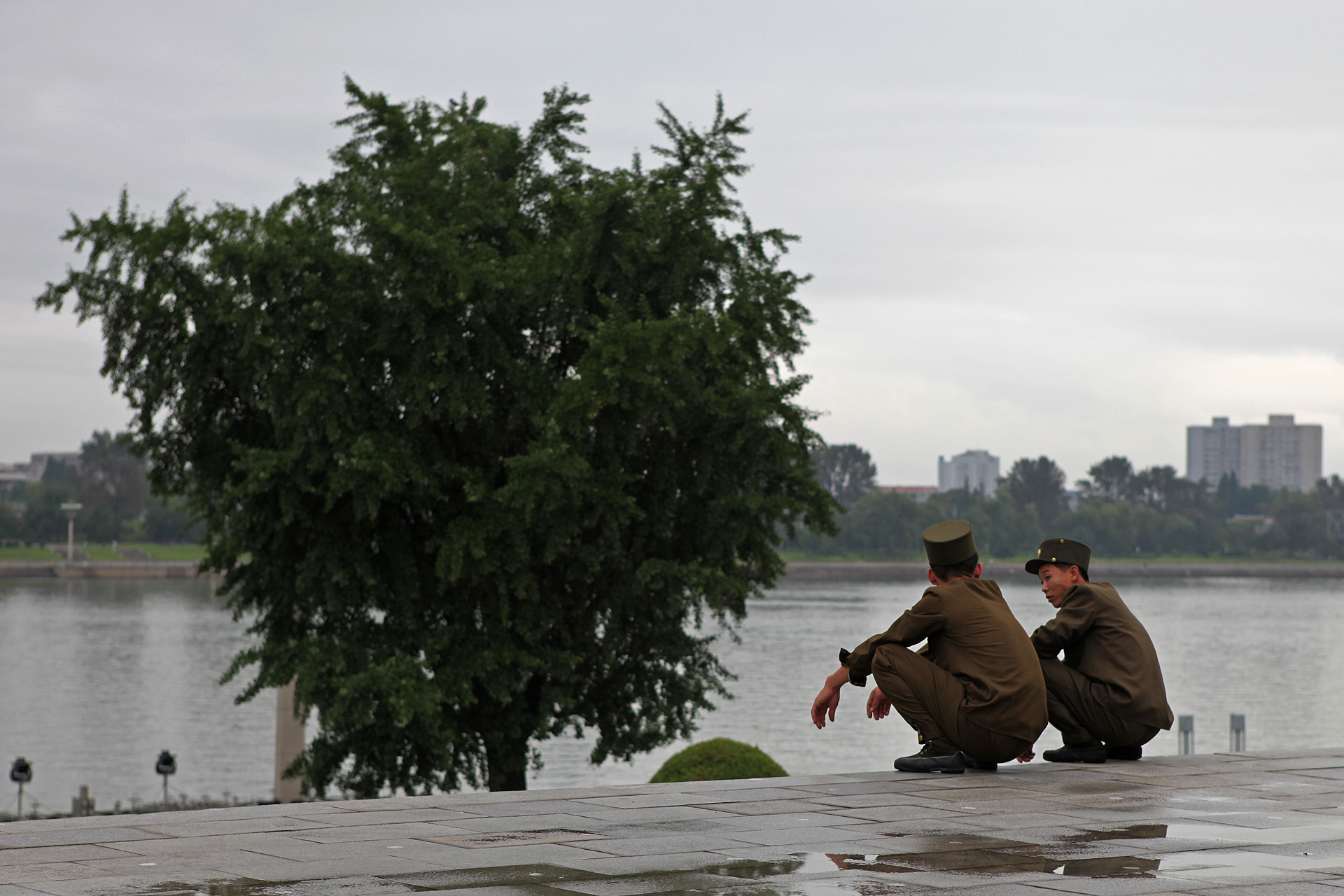
The report says that Russia’s invasion of Ukraine, along with the buildup in the Russian military, is a concern for Japan, especially because of its status as a key US ally.38 Moscow has added troops, warplanes, and missiles to islands north of Japan, which the Soviet Union took toward the end of World War II, but which Japan claims are sovereign Japanese territory illegally occupied now by Russia. Meanwhile, the report says that North Korea is further developing nuclear weapons and the ballistic missiles to deliver them. It also says that Pyongyang’s ballistic missiles, believed to be capable of carrying nuclear warheads, can cover the entirety of the Japanese archipelago. “North Korea’s military activities are posing an even more grave and imminent threat to Japan’s security than ever before,” the report says.39
North Korea has warned Japan against deploying long-range missiles in the Kyushu region in March 2026, contending that such attack capability will “bring about constant escalation of tension” in Northeast Asia, state media the Korean Central News Agency (KCNA) said on 20 March 2025.40 Japan’s Kyodo News reported in March, citing government sources, that Tokyo was considering deploying long-range missiles on Kyushu to acquire “counterstrike capabilities” to hit enemy targets if an emergency occurs.41
Two new developments could lead to North Korea adopting a new approach regarding its nuclear strategy: First, the miniaturisation of North Korea’s nuclear warheads along with its advanced missile capabilities, which may result in a nuclear decoupling between the US, Japan, and South Korea.42 Second, the deployment of North Korean special forces to Ukraine.43 These factors raise the possibility that North Koreamight consider sending special forces to Japan while negotiating a political agreement with the South Korean government after attempting a full-scale military invasion of South Korea.44 In Japan, these special forces could target US and Japanese bases, logistics hubs, and civilian infrastructure.45 To address these threats, theJapanese Self-Defence Forces have been preparing for irregular warfare scenarios in cooperation with the US.However, Japan should also collaborate with its South Korean counterparts to further strengthen the irreadiness against potential North Korean infiltration.46
How Have the US, Japan, and South Korea Responded to Emerging North Korean Threats?
The US has an “extended deterrence” policy which aims at preventing adversaries from attacking allies, including Japan and South Korea. According to the policy, Washington will come to their aid in the event of an attack, potentially including the use of American nuclear capabilities.47
In November 2024, the leaders from the US, Japan, and South Korea announced the establishment of a trilateral secretariat to “institutionalise” three-way cooperation that started as a series of leaders’ dialogues on economic security, intelligence sharing, and defence policy coordination.48 The trilateral leaders’ dialogues commenced in May 2023 on the sidelines of the G7 summit in Hiroshima, Japan, and then atCamp David in August 2023. The trilateral effort is a regional security initiative from Biden to encourage Tokyo and Seoul to work together to deter North Korea and China. On 14 November 2024, US, South Korean, and Japanese militaries launched joint exercises in waters west of Japan and south of the Korean Peninsula, marking the final drills under the Biden administration.49
Japan, South Korea, and the US have been reinvigorating their trilateral security architecture in 2025 due to increasing tensions on the Korean Peninsula and broader regional instability. In late April 2025, the three countries conducted a high-level exercise in Seoul followed by the Korea-US-Japan National DefenceUniversity Security Policy Forum. These engagements highlight the nations’ efforts to strengthen deterrence and operational coordination in the face of evolving strategic uncertainties.50 The exercise at South Korea’s National Defence Ministry was the first conducted outside the US since the series started in 2014. Thesimulation focused on North Korean nuclear and missile threats. It was conducted alongside a session of the Defence Trilateral Talks. The exercise’s resumption after a five- year break demonstrates the growing urgency to revitalise coordination.51
In early April 2025, the foreign ministers from the three countries met in Brussels and reaffirmed their commitment to strengthening deterrence. Japanese Foreign Minister Takeshi Iwaya, South Korean ForeignMinister Cho Tae-yul, and US Secretary of State Marco Rubio reiterated the critical role of US extended deterrence, condemned North Korea’s military ties with Russia, and called for a firm response toPyongyang’s missile threats and cyberattacks.52
North Korean leader Kim Jong-un said in February 2025 that trilateral military cooperation among the US, Japan, and South Korea was increasing tensions in the region and vowed countermeasures, including the further development of nuclear forces.53
International Law
In May 2025, a top UN official, Assistant Secretary-General Khaled Khiari, raised concerns that North Korea was ramping up its nuclear and missile programme in defiance of international law, while it moves into the final year of its military plan.54 He referred to a troubling pattern of weapons testing from North Korea and a growing nuclear ambition, including the launch of an intercontinental ballistic missile (ICBM)in October 2024 and an intermediate-range hypersonic missile in January 2025.55 He claimed that North Korea’s nuclear weapons and ballistic missile programmes violated relevant Security Council resolutions and called on North Korea to “fully comply with its international obligations, including the Non-Proliferation of Nuclear Weapons (NPT) and International Atomic Energy Agency (IAEA) safeguards, and to sign and ratify the Comprehensive Nuclear-Test-Ban Treaty.”56
Between October 2006 and December 2017, the UN Security Council adopted ten resolutions that imposed sanctions on North Korea responding to six nuclear tests and repeated launches of ballistic missiles, including ICBMs and space launches using ballistic missile technology.57 Relevant UN Security Council resolutions remain in place and are legally binding on all UN member states. North Korea breaches Security Council resolutions by continuing its nuclear programme and by developing its ballistic programme. Since2022, more than 100 ballistic missile launches have been conducted.58
According to a May 2025 report produced by the Multilateral Sanctions Monitoring Team comprising elevencountries, including the US, Japan, the UK, and several European member states, North Korea is supplying Russia with significant quantities of ballistic missiles. The report stated that “between January and December 2024 alone the DPRK transferred to Russia at least 100 ballistic missiles, which were subsequently launched into Ukraine to destroy civilian infrastructure and terrorise populated areas such as Kyivand Zaporizhzhia.”59 The monitoring team said that “at least for the foreseeable future, North Korea andRussia intend to continue and further deepen their military cooperation in contravention of relevant UN Security Council resolutions.” North Korea had also “contributed to Moscow’s ability to increase its missile attacks against Ukrainian cities, including targeted strikes against critical civilian infrastructure.”60
The implications of North Korea and Russia’s actions regarding international law are significant. Sending North Korean troops to fight in Ukraine is in violation of Article 2(4) of the United Nations Charter, which prohibits the use of force against the territorial integrity or political independence of any state.61 NorthKorea’s act of aggression violates Ukraine’s sovereignty and aligns with Russia’s own three-year-long act of aggression. In addition, North Korea’s actions also breach UN Security Council Resolutions 1718 and 2397, which impose military sanctions on North Korea that prohibit it from exporting arms or military personnel.62
Furthermore, international humanitarian law (IHL) provides specific rules for the protection of all civilianobjects and for the protection of civilian infrastructure that provides essential services. These legal provisions, which are designed to shield civilian infrastructure from harm during armed conflicts, are found in the Geneva Conventions of 1949 and their Additional Protocols of 1977.63
These rules have evolved as binding IHL customary norms to all parties to any armed conflict. The obligation to protect civilian infrastructure is enshrined in several customary rules including the obligationto distinguish civilian objects from military objectives, the prohibition of attacks against objects indispensable to the survival of the civilian population, proportionality and precautionary measures in attacks, and the prohibition of indiscriminatory attacks.64
Conclusion
Despite UN Security Council sanctions and diplomatic efforts, North Korea continues to pursue its nuclearweapons and missile programmes. The country’s ballistic missile testing, policy statements, and military parades indicate that North Korea is continuing to build a nuclear war fighting capability to evade regional ballistic missile defences.65 In addition, the modernisation of the North Korean army provides potential security challenges for South Korea and the wider region. North Korea’s participation in Russia’s war against Ukraine is also perceived by many as an escalation toward a more international confrontation.66 Although deterrence through regional alliances is critical, proactive diplomacy and coordinated international policy are required to alter Pyongyang’s strategy.67