
The Indo-Pacific region has witnessed a rise in refugees due to escalating conflicts, human rights abuses and climate disasters. International donors have provided humanitarian aid with the US historically funding a high proportion. In 2024, the US disbursed about US$7 billion in foreign aid to South Asia, Central Asia, East Asia and Oceania.1 With humanitarian crises in the region not stabilising, refugees being forcefully repatriated and the looming threat of US aid cuts under the Trump administration, many lives are under serious threat.
More than one million Rohingya refugees live in Cox’s Bazar, the world’s largest refugee settlement. Despite humanitarian assistance from the Government of Bangladesh and the international community, the complex needs are immense and durable solutions are uncertain. The Rohingya endure restrictions that limit their movement, access to housing and work outside the camps, making them dependent on aid. These restrictions also lead to vulnerabilities such as trafficking and irregular migration.2 The funding cuts from the US, which was previously the largest donor for the Rohingya refugee response, come at a time when the camps already need more funding and resources.
The US has also been the largest humanitarian aid donor to Afghanistan since 2013 and was committed to meeting life-sustaining and life-saving needs in the country. The US was the largest contributor to the Afghanistan Humanitarian Needs and Response Plan in 2024 by providing US$736.6 million which amounted to 45 per cent of total funding requested.3 Funding from the US and other donors enabled humanitarian responders in Afghanistan to reach 20.4 million people in 2024 with at least one form of humanitarian assistance. Humanitarian operations have already been significantly affected, and this is likely to worsen after the decision on 4 April 2025 to suspend all remaining US aid to Afghanistan (which totalled US$562 million). Without this funding from the US, several million less people will receive assistance in 2025. 7.3 million people received at least one type of humanitarian support as of the end of February 2025, compared to 8.6 million at the same time in 2024.4
Since September 2023, more than 3 million Afghans have returned from neighbouring countries.5 780,000 are estimated to have returned in 2025 alone, including 351,600 who were deported.6 The mass returns from Pakistan and Iran can be primarily attributed to policies and pressures from the host countries, such as Pakistan’s Illegal Foreigners Repatriation Plan (IFRP) to remove foreign nationals, including Afghans. Returnees face an uncertain future as half of the population in-country already requires humanitarian assistance for their basic needs. With high levels of food insecurity and poverty combined with human rights violations and overstretched services and infrastructure in Afghanistan, the mass returns and funding cuts risk further destabilising the country and leading to endless cycles of displacement.7 Therefore, this article will examine the impact of the US aid cuts and the international climate that is unfavourable towards Rohingya refugees in South and Southeast Asia and the displacement of Afghan refugees.
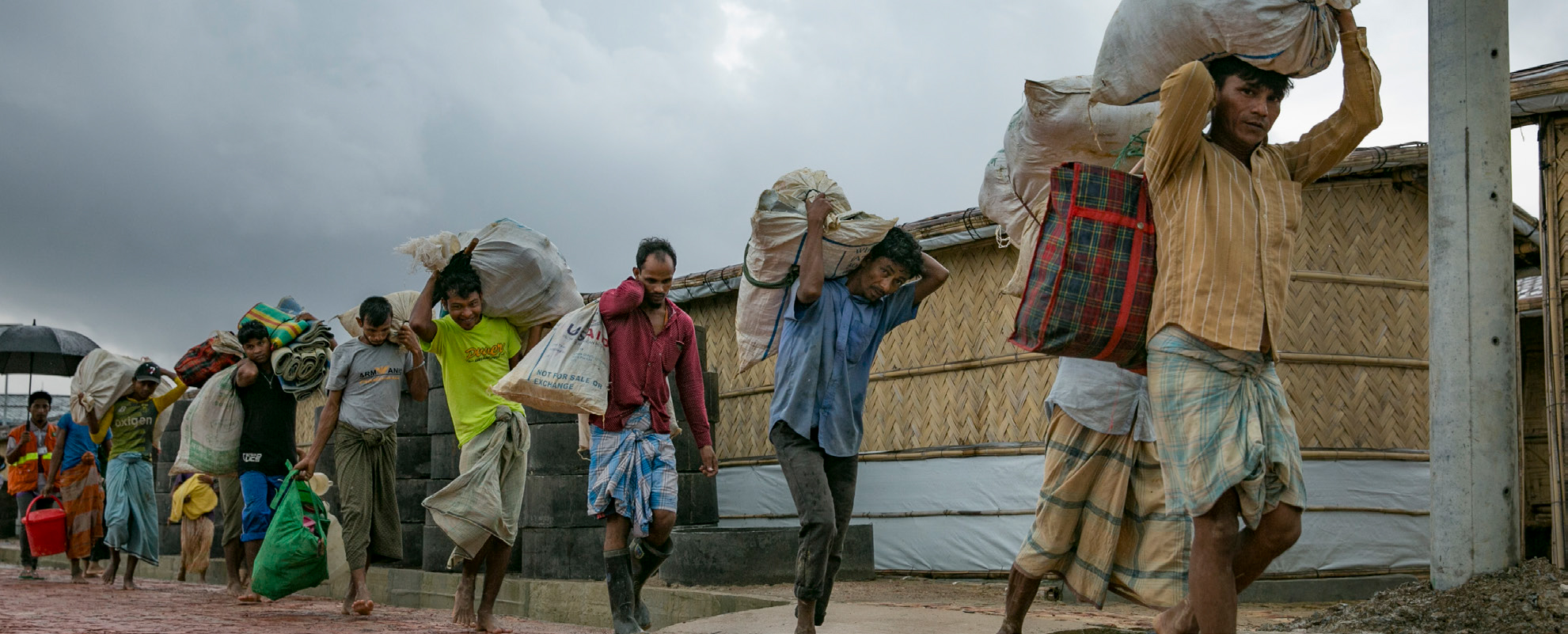
Families are relocated because of flooding and landslides in the Balukhali Rohingya refugee camp in Cox’s Bazar, Bangladesh (Allison Joyce for UN Women 2019)
Rohingya Refugees in South and Southeast Asia
In August 2017, massive scale violence, armed attacks, and serious human rights violations led to thousands of Rohingya fleeing their homes in Myanmar’s Rakhine State. Now, more than one million Rohingya refugees are living in the Cox’s Bazar region. The Rohingya have been described by the United Nations as “the most persecuted minority in the world.”8 Inside Myanmar, the humanitarian situation has deteriorated further since February 2021 due to political upheaval and increased conflict within the country. This has resulted in thousands of refugees seeking safety in neighbouring countries. The majority of the Rohingya are currently displaced in Bangladesh (1,133,981), with smaller numbers in Malaysia (111,700), India (23,300), Indonesia (2,600) and Thailand (500).9 These countries are struggling with the long-term impact of hosting Rohingya refugees including the strain on resources, social tensions and economic pressures.
The US has been the largest provider of aid to the Rohingya refugees, contributing more than US$2.5 billion since 2017, including more than US$2.1 billion in Bangladesh.10 According to the United Nations High Commissioner for Refugees (UNHCR), 95% of Rohingya households in Cox’s Bazar depend on humanitarian assistance.11 More than half of the refugees in the Cox’s Bazar camps are younger than 18 and have limited opportunities for skills-building, education, and livelihoods.12
The 1951 International Convention relating to the Status of Refugees (‘1951 Refugee Convention’) and its 1967 Protocol are the key legal documents that protect refugees. However, the countries hosting Rohingya refugees, including Bangladesh, India, Malaysia and Indonesia, have not ratified these agreements.13 Despite this, Bangladesh is party to other major international protection agreements such as the International Covenant of Civil and Political Rights (ICCPR), the International Covenant on Economic, Social and Cultural Rights, the Convention on the Rights of the Child (CRC), the Convention against Torture and Other Cruel, Inhuman or Degrading Treatment or Punishment (UNCAT), the Convention on the Elimination of Racial Discrimination (CERD), and the Convention on the Elimination of all Forms of Discrimination against Women (CEDAW).14 These other international human rights instruments contain many of the same rights that are enshrined in the 1951 Refugee Convention or its 1967 Protocol. For example, Article 3(1) of the UNCAT states that no State Party shall expel, return (“refouler”) or extradite a person to another State where there are substantial grounds for believing that he would be in danger of being subjected to torture. In addition, under Article 5(a) of the CERD, State parties are obligated to ensure equality before the law, including equal treatment before judicial organs.15
Afghan Returnees from Pakistan and Iran
The Taliban’s takeover of Kabul in 2021 triggered one of the largest refugee crises of the century. Millions of Afghans, fearing economic collapse and persecution, fled to neighbouring countries such as Iran and Pakistan. The situation has worsened over time due to political, economic, and environmental factors and a shortage of sufficient international support.16
UNHCR has reported that approximately 600,000 Afghans arrived in Pakistan since August 2021.17
UNHCR has maintained a non-return advisory for Afghanistan since August 2021, reaffirmed in February 2023 in the Guidance Note on International Protection Needs of People Fleeing Afghanistan; Update 1.18 This advisory calls for a halt on forced returns of Afghan nationals.19 However, forced returns continue under the current Taliban regime due to growing stigmatisation and tension in Pakistan.
Iran and Pakistan currently host 3.75 million and 1.75 million Afghans respectively, even though these countries face their own challenges.20 Since 2023, there has been a shift in displacement trends amid growing anti-Afghan sentiments in these host countries. On 26 September 2023, the Government of Pakistan announced an “Illegal Foreigners’ Repatriation Plan” to deport “illegal” foreigners residing in the country, most of whom are Afghans. The Plan imposed a 30-day deadline for “undocumented” Afghan nationals, including refugees and asylum seekers, to leave the country or be subjected to deportation, putting millions at risk.21 UNHCR estimates that since September 2023, more than 3 million Afghans have returned or been deported from the two countries, including over 1.5 million in 2024.22
The US has continued to be Afghanistan’s largest aid donor despite withdrawing troops and other officials from the country in August 2021.23 Between 2010 and 2020, Pakistan received approximately US$2.5 billion in US Agency for International Development (USAID) funding in healthcare, humanitarian assistance, infrastructure, economic growth and education programmes.24 Since 2002, the US has provided over US$273 million in humanitarian assistance for Afghan refugees in Pakistan and Pakistani host communities. In 2022 alone, the US provided nearly US$60 million to assist refugees in Pakistan.25

Afghanistan and Iran are signatories to the 1951 Refugee Convention and its 1967 Protocol, while Pakistan is a non-signatory. Afghanistan and Iran are signatories to the 1951 Refugee Convention and its 1967 Protocol, while Pakistan is a non-signatory. All three countries are parties to the Convention on the Rights of the Child (CRC) and are obligated under Article 22 to tailor their refugee and asylum policies to the unique needs of these children.26
Afghanistan, Iran and Pakistan are also signatories to the Universal Declaration of Human Rights (UDHR) of 1948, which grants people the right to seek refuge and asylum and outlines fundamental rights regardless of status. All three countries have ratified the ICCPR, which contains many of the fundamental rights which are outlined in the UDHR. As a signatory to the ICCPR, these countries are required to establish a mechanism ensuring the adequate provision of civil and political rights. This acts as a deterrent against any inhuman treatment of refugees in these countries. Furthermore, the UNCAT, which Pakistan and Afghanistan have ratified, mandates states to uphold non-refoulement and prevent inhuman abuse. In addition, all three countries ratified the International Covenant on Economic, Social, and Cultural Rights (ICESCR), which provides all citizens with inherent human rights such as work, health facilities, and social security.27
Security Concerns in Host Countries and of Forced Returns of Refugees
Refugees are perceived by host countries as posing a security danger by placing more demands on their limited resources or by merely being present.28 Host countries’ governments are justifying deportation by pushing a narrative that refugees are posing a security danger.
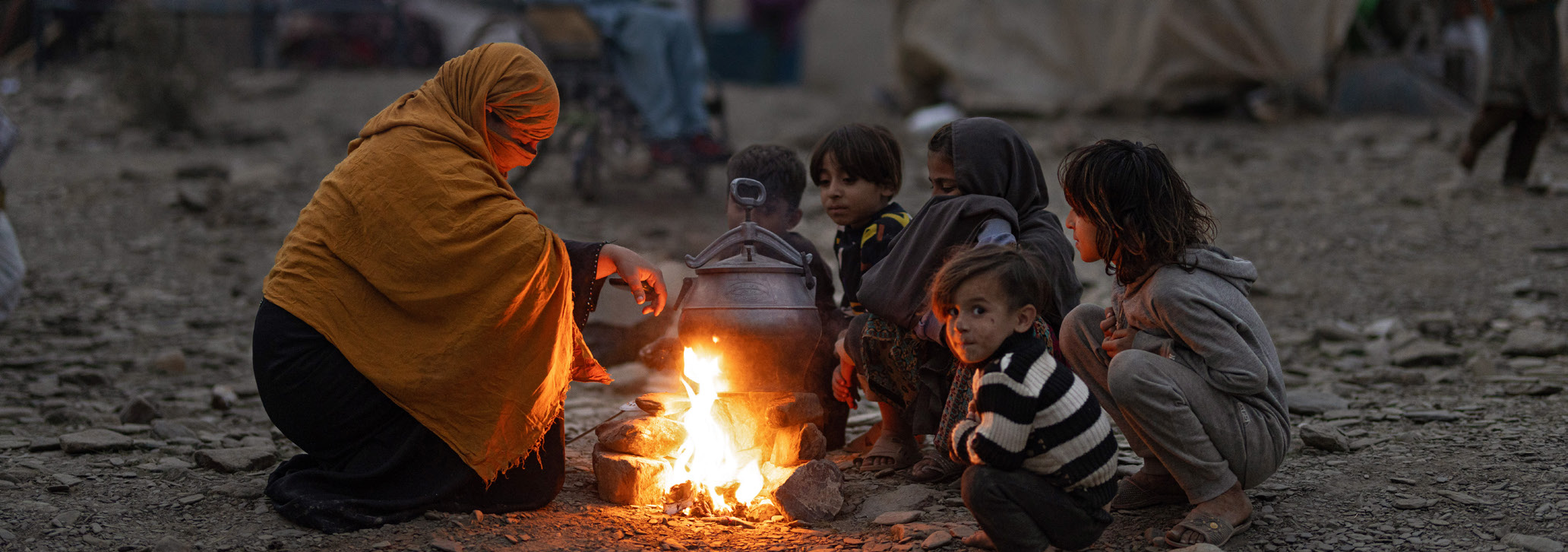
Violence and security incidents inside the Rohingya refugee camps in Cox’s Bazar have increased since the beginning of 2022, leading to protection concerns, such as exposure to insecurity, child-related protection concerns, and gender-based violence.29 The lack of educational and livelihood opportunities compound these protection issues along with funding cuts that worsen the food insecurity situation for the Rohingya refugees. Consequently, many refugees have undertaken dangerous maritime journeys to reach Malaysia or Indonesia.
In addition, the overcrowding in camps increases the likelihood of violence and crime.30In 2024 alone, approximately 80,000 Rohingya have fled to Bangladesh, joining more than a million others in the overcrowded camps in Cox’s Bazar.31 On 4 April 2025, Myanmar authorities announced that 180,000 Rohingya refugees in Bangladesh were “eligible” for repatriation. However, due to the ongoing instability, forced conscription, and fragmented governance in Myanmar, the prospect of a safe and voluntary return does not seem likely.32
Despite this, research by Fortify Rights found that Border Guard Bangladesh forces were
responsible for beating and pushing back over 300 Rohingya refugees to Myanmar in February and March 2024 in six incidents.33
In India, the arrival of Rohingya refugees is regarded as a threat to its national security. There are reports that Rohingya refugees are being used by different agencies and allegedly have connections with terrorist organisations based in Pakistan.34 In 2023, an Intel report indicated that the Rohingya community took part in anti-India activities and had connections with terrorist organisations such as ISIS and Pakistani Intelligence agency ISI.35
The Rohingya in India have faced increased harassment since February 2025 and have been detained across India in recent days, adding to the hundreds who are already held in detention. At least 40 Rohingya refugees have been deported from India to Myanmar and another 50 pushed into Bangladesh since early May.36 The United Nations has called for an investigation into credible reports that Rohingya refugees were forced off an Indian navy vessel and into the Andaman Sea in May 2025. Tom Andrews, the United Nations’ (UN) special rapporteur on the situation of human rights in Myanmar, has urged the Government of India to refrain from inhumane and life-threatening treatment of Rohingya refugees, including their repatriation into perilous conditions in Myanmar.37
Iran has long served as a host country for Afghans escaping conflict and instability. However, over time, Iran’s approach has grown more restrictive, driven by security concerns and economic strains.38 Although mechanisms, including the Amayesh card system and the Conditional Protection Preparation Process, provide documentation and limited legal protection to Afghans, they also limit refugees to certain occupations, ban them from no-go areas, and constrain their access to public services. Further, these systems have resulted in 500,000 Afghans not having legal status.39 By 2024, Iranian authorities deported 750,000 Afghans and announced millions of deportations for 2025, citing security and economic issues, such as scarcity of food rations and alleged records of murders and rapes committed by refugees.40
On 26 September 2023, the Government of Pakistan announced plans to repatriate illegal foreigners under its IFRP. The Pakistan government cited security concerns by claiming that Afghan nationals were involved in violent attacks on Pakistan that Tehreek-e-Taliban Pakistan (TTP) takes responsibility for.41 They revealed that 14 of 24 suicide bombings in the country in 2023 were carried out by Afghan nationals.42 Interior Minister Sarfraz Bugti announced a deadline of November 1 stating that all illegal immigrants should leave voluntarily or be subjected to forcible expulsion after that date.43 The IFRP has been implemented since 1 November 2023, with intermittent pauses. In March 2025, authorities issued a notification advising undocumented Afghan nationals and Afghan Citizen card holders to voluntarily leave the country by 31 March 2025, and deportations will start from 1 April 2025.44 In the aftermath of this decision, the UN has identified an incremental increase in spontaneous returns and deportations of Afghans.45

A total of 842,429 Afghan nationals returned to Afghanistan from Pakistan between November 2023 and March 2025. Of these, 40,677 individuals were deported, while 51,196 returned voluntarily.46 According to UNHCR, over 250,000 Afghans returned in April alone. This number included 96,000 who were forcibly deported.47 “Afghan nationals including refugees and asylum seekers in Pakistan have been living in a state of fear since the Pakistani authorities announced their phased deportation plans in October 2023,” said Babu Ram Pant from Amnesty International. “Their lives stand to be completely upended as a result of the Pakistan government’s insistence on violating their obligations under international human rights law, specifically the principle of non-refoulement.”48
Humanitarian Impacts of Diminished International Support
The potential impacts of diminished international support for the Afghan and Rohingya refugees and their host countries include exacerbating the vulnerability of refugees, such as their ability to meet basic needs and secure fundamental human rights. Other impacts include an escalation of tensions in the region, which would also lead to increased displacement, crime and violence due to vulnerabilities, and reduced resilience to the climate crisis.
The large-scale returns to Afghanistan, combined with the severe funding cuts, have put considerable pressure on Afghanistan’s overstretched resources and services and hampered reintegration efforts, resulting in risks of secondary and new displacement, including movements back into Iran and Pakistan.49 According to UNHCR spokesperson Babar Baloch, the arrival of more than a quarter of a million Afghans from Pakistan and Iran in one month alone threatened to push Afghanistan into “an even deeper humanitarian crisis” and that “forcing or putting pressure on Afghans to return is unsustainable and could destabilise the region.”50
The current humanitarian funding crisis, which is aggravated by declining health spending in host countries, adversely affects the scope and quality of public health and nutrition programmes for refugees and their host communities.51 Pio Smith from the United Nations Population Fund (UNFPA), raised concerns that millions of women and girls now faced life
threatening risks due to the lack of access to UNFPA’s crucial services across Afghanistan, Pakistan and Bangladesh.52 UNFPA requires over US$308 million in 2025 to sustain critical services in Afghanistan, Pakistan and Bangladesh.53 “In the Asia Pacific, UNFPA had suspended 53.7 million United States dollars’ worth of project funding that was due from the United States State Department and a further 24 million dollars that had been received from USAID. The United States was one of the largest contributors for UNFPA’s humanitarian aid across the world,” said UNFPA54
Table 1 – Impacts of suspension of aid funding from the US55
| Country | Number of people affected | Impact on health services |
| Afghanistan | More than 9 million people | Affected communities would lose access to health and protection services, and nearly 600 mobile health teams, family health centres and counselling centres would be suspended. |
| Pakistan | 1.7 million people, including 1.2 million Afghan refugees | The closure of health facilities would deprive people of access to lifesaving sexual and reproductive health services. |
| Bangladesh | Almost 600,000 people, including Rohingya refugees | Access to essential maternal and reproductive health services would be curtailed. |
In Bangladesh, the impact of the funding cuts on the health sector could lead to about one million Rohingya refugees facing a severe health crisis, threatening access to essential medical services.56 Unless immediate financial support is provided, thousands of lives are severely threatened by a collapse of healthcare systems in the refugee camps. Since the US has historically been one of the largest donors to the Rohingya response, the aid cuts have created a ripple effect. It has forced humanitarian organisations to scale back essential programmes and pursue alternative funding sources. Local Non-Governmental Organisations (NGOs) and implementing partners have been required to prioritise immediate survival needs, such as health or food programmes, instead of longer-term development and self-reliance initiatives.57 The funding cuts have affected both host communities and refugees by further complicating Bangladesh’s ability to manage the refugee situation. This has resulted in increased pressure on local resources and infrastructure, particularly in Cox’s Bazar. The refugee camps face significant challenges in sanitation, healthcare and emergency management. Bangladeshi officials and Rohingya refugees are concerned that aid cuts could worsen hunger, fuel crime and curtail critical healthcare, while increasing the risks of human trafficking and radicalisation. The Inter Sector Coordination Group said about 300,000 refugees have already faced disruptions in healthcare services.58
In Pakistan, 39 projects worth US$845 million across various sectors including agriculture, energy, economic development, education, governance, health, and humanitarian aid have been suspended.59 At the end of February 2025, Community World Service Asia reported the following impacts in Pakistan just one month after the USAID cuts: 22 organisations working on education, democracy, advocacy and minority rights were directly affected, resulting in project closures; US$845 million in aid projects were suspended; seven million people lost access to lifesaving sexual and reproductive health services; two million Afghan refugees were cut off from lifesaving health services; and 60 health facilities were closed.60
Role of Non-Western Donors
Before the aid cuts, the US alone funded 40% of global humanitarian aid.61 Together, the US, Germany, the European Union and the United Kingdom provide nearly 65% of global humanitarian assistance.62 The Trump administration’s decision to cut 83% of programmes run by USAID has further accelerated a broader decline in funding from traditional donors.63
In 2025, the UK, Germany, Belgium, France, Sweden and Switzerland have all announced cuts to international cooperation budgets.
According to experts interviewed by SWI swissinfo.ch, only China or some Gulf countries,

such as Saudi Arabia or the United Arab Emirates (UAE), could offset the loss of the funding from the US.64 Tammam Aloudat, CEO of The New Humanitarian, said, “BRICS countries are looking for recognition, they want to expand, and they are looking for independence.” Humanitarian aid can therefore act as a tool of soft power by enabling donor states to promote a positive image of themselves, increase geopolitical influence and win favour with recipient countries, especially in UN votes.65
Following the closure of thousands of USAID-funded projects, it has been reported by international media that China has stepped in to provide similar programmes in countries such as Nepal, Cambodia and Rwanda. However, China may be restricted by its own domestic economic challenges, particularly in the real estate sector. Also it is not yet clear whether China is interested in contributing significantly to the UN’s humanitarian aid system.66
Other non-Western countries seeking to increase their influence in Southeast Asia and support refugees would need to step up. This includes Japan, South Korea and India. In comparison with the US, Japan already provides more than three times the amount of development assistance to Southeast Asia.67 In February 2025, the Government of Japan announced that it has allocated US$3.2 million to support the World Health Organisation’s (WHO) efforts in Bangladesh to reduce morbidity and preventable mortality among the Rohingya refugees and host community in Cox’s Bazar and Bhasan Char.68 These aid cuts will prompt refugee host countries such as Bangladesh, Pakistan and Iran to turn to other funders. Before the fall of Sheikh Hasina, Bangladesh had developed very close economic and strategic relations with China and maintained generally friendly links with India.69 Therefore, these donors could collectively fill some of the funding gap for Rohingya and Afghan refugees in Asia.
Conclusion
Although the host countries for Rohingya and Afghan refugees should be acknowledged for their efforts to support both displaced populations for long periods of time, restrictive policies towards refugees and forced repatriation are alarming and could breach international law. The forced repatriation may violate the principle of non-refoulement, which is binding under customary international law if refugees are forcibly repatriated to countries where they face persecution or harm.70 In addition, the large-scale returns from Pakistan to Afghanistan could worsen an already dire humanitarian situation as the conditions in Afghanistan are not conducive for sustainable return and reintegration of large numbers of returnees, amid a struggling economy with high levels of malnutrition and millions of internally displaced people.71
Both populations are heavily dependent on humanitarian aid, especially from the US. The US aid cuts came at a time when humanitarian needs were immense in the region and have already significantly impacted refugees and their host communities. The suspension of many aid projects has led to the closure of health clinics and refugees losing access to life-saving health services. There are concerns that aid cuts could also lead to increased crime rates, worsen hunger, and heighten the risks of human trafficking and radicalisation in refugee camps and host communities.72 Therefore, the host countries for Rohingya and Afghan refugees urgently require humanitarian funding from the international community to support the refugees in their countries and to comply with their international obligations.
Uganda is an example of a country which has been described as being one of the friendliest countries in the world for refugees. The Norwegian Refugee Council (NRC) stated that Uganda, which hosts the highest number of refugees in Africa, is a “pioneer in integrating and giving them full rights”.73 In addition, UNHCR noted that Uganda’s Refugee Act 2006 “unquestionably constitutes the most progressive refugee law in Africa.”74 Thus, other countries could adopt less restrictive policies like Uganda that allow refugees to enjoy freedom of movement, access to health services and education, and perform livelihood activities such as doing business or farming.