
Introduction
The Belt and Road Initiative (BRI), embodying China’s colossal development and investment initiatives, was announced by President Xi Jinping back in 2013 at the Nazarbayev University in Kazakhstan.1 The BRI, also known as the New Silk Road, represents an immense network composed of maritime and land routes that resulted in the construction of physical infrastructures, such as hospitals and energy facilities, an emphasis on digitalization through internet connectivity projects, as well as trade programs, resulting in the reshaping of the regions and countries involved in the BRI.2
A central region for such an ambitious initiative is Central Asia which represents, historically and presently, a key region for the Silk Road. Kazakhstan, Kyrgyzstan, Tajikistan, Turkmenistan and Uzbekistan are vital stakeholders of the BRI, receiving huge amounts of funding and hosting essential infrastructures.
The Belt and Road Initiative offers potential benefits for the region’s economic development, including growth and job creation. However, its broader humanitarian impacts, particularly on local populations and the environment, must also be taken into account. As China has become the region’s leading trade partner, surpassing even Russia, it is essential to critically assess the full humanitarian footprint of the BRI in Central Asia.
A General Overview of the BRI in Central Asia
The BRI in Central Asia plays a fundamental role in the regional economy. It generates large-scale infrastructure, offers access to global trade systems, and improves regional networks.3

More than 100 projects have been launched in Central Asia to enhance connectivity, such as the China-Kyrgyz-Uzbek railway.4 China has granted significant non-repayable aid to countries like Kyrgyzstan and Tajikistan for road construction and access to clean water in remote areas.5
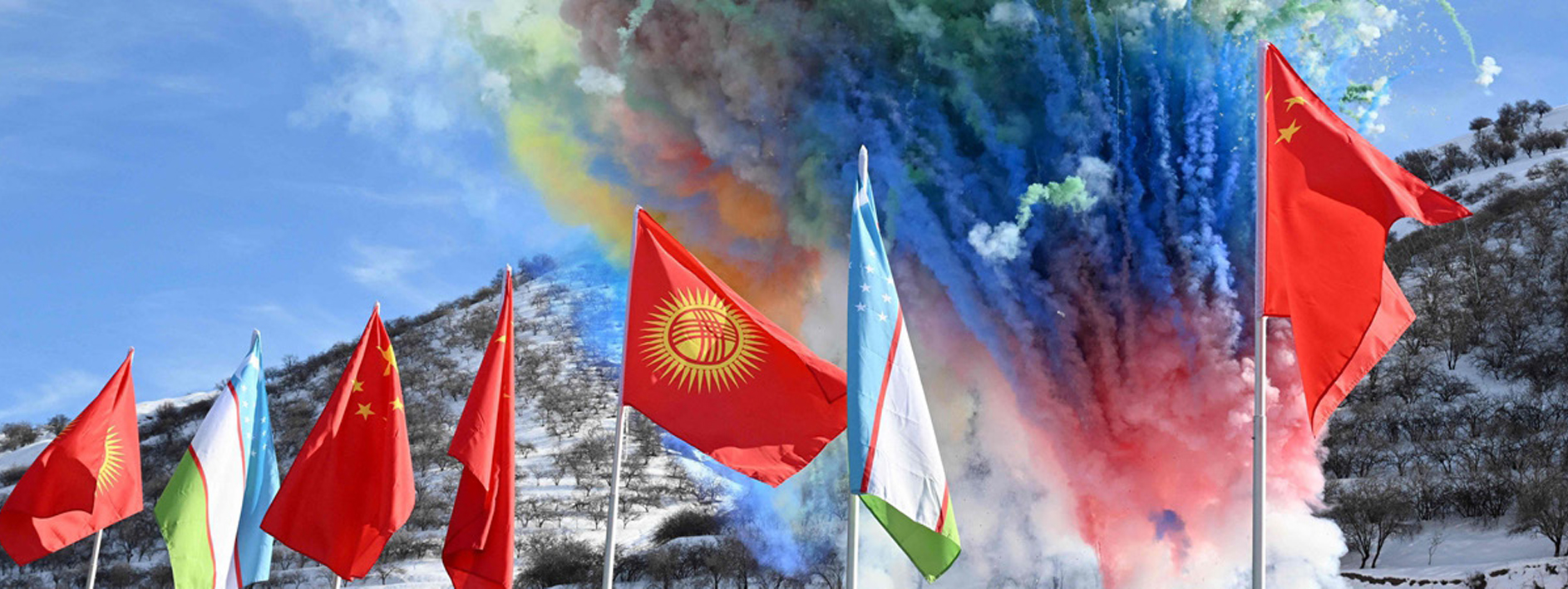
The increasing connectivity has cascading effects into the regional economy by promoting integration and cooperation.6 Moreover, the BRI fosters regional and international platforms integration for Central Asia countries, which bolstered their international participation.7
Additionally, the Digital Silk Road program offers Central Asian countries a new approach to regional security, notably through enhanced cybersecurity capabilities and reinforced resilience against digital threats.8 It also presents a significant opportunity to modernize the region.9
Education and cultural initiatives, such as the establishment of Confucius Institutes and scholarships to Chinese universities, offer new opportunities for engagement.10
Number of Confucius Institutes in Central Asia by Country
| Kazakhstan | 5 |
| Kyrgyzstan | 4 |
| Tajikistan | 2 |
| Uzbekistan | 2 |
| Turkmenistan | 0 |
| Total | 13 |
Total number of Confucius Institutes in Central Asia per country. Confucius Institute Website.
The BRI embodies a unique opportunity for the countries from Central Asia to tackle enduring challenges and to advance in the achievement of the Sustainable Development Goals, where core issues such as poverty and economic growth could be addressed. Nonetheless, the BRI also represents a potential threat to other regional challenges. Indeed, the countries participating in BRI projects often see a reduction in certain democratic freedoms and labour rights.11 Moreover, large-scale infrastructure initiatives are more easily planned and executed in environments where media scrutiny, civil society oversight, and labour protections are limited.12 This dynamic strengthens state control at the expense of public participation and individual rights, with direct consequences for local populations.
These developments have direct consequences for local populations, particularly for those already marginalized and vulnerable, as it shapes not only the distribution of economic benefits but also access to rights, services, and employment. Understanding these dynamics is key to assessing the humanitarian footprint of the BRI in Central Asia.
Reinforcing authoritarian regimes – undermining local populations
In this context, the region’s political landscape increasingly shapes the nature of its international partnerships and the models of development its leaders choose to embrace. Indeed, Western investors remain cautious about investing in Central Asian states due to weak governance and insufficient rule of law, with Kazakhstan being a notable exception, making the Chinese economic model very attractive to local elites, who would otherwise lack alternative sources of financing.13 Moreover, incumbent leaders prioritize economic development over political reform and align more closely with models of stability and state-led growth than with the market competition and democratic norms promoted by Europe.14
One of the major concerns is the lack of transparency, resulting in opaque projects that may foster the grabbing of resources by the elites. The widespread corruption diverts a portion of the potential benefits from the wider population.15 A large proportion of the People’s Republic of China’s funding goes to Chinese companies, which in turn bring Chinese equipment, resources, and workforce, further reducing local empowerment.16
As infrastructure projects remain opaque and centralized in the hands of elites, local populations often face limited access to the social and economic benefits promised by development initiatives. The lack of transparency and local participation undermines accountability. At the same time, relying on foreign companies and workers reduces opportunities for local jobs and skills development. In the end, this approach to development increases inequality and widens the gap between governments and their citizens.

Such trends are further reinforced by the risk of seeing several countries entangled by the debt trap. Beijing is the world’s largest debt collector.17 Kyrgyzstan, Uzbekistan and Tajikistan are among the most indebted recipients of China’s direct loans.18 While Uzbekistan is benefiting from economic growth, Kyrgyzstan and Tajikistan are especially at risk from China’s debt-trap diplomacy; a scenario in which they could not repay their large debts to China and may be forced to hand over strategic resources to China in a debt-for-equity swap.19
Tajikistan’s national debt to China has steadily increased, and Beijing has become its largest creditor.20 Meanwhile, in Kyrgyzstan, the public perception of Chinese investment is largely negative, driven by doubts over the country’s ability to repay the loans.21
These developments carry serious humanitarian implications. As governments become more indebted and increasingly dependent on Beijing, there is a risk that regimes will prioritize debt servicing and Chinese-backed projects over social spending and public welfare. In fragile states like Kyrgyzstan and Tajikistan, this dynamic may reinforce authoritarian practices, suppress dissent, and limit transparency. The burden of opaque deals and economic dependency often falls on local populations, who face worsening socio-economic conditions, reduced access to basic services, and heightened repression under the appearance of stability and development.
Security, Digitalization and Surveillance
This growing involvement also extends into the security sphere, where China’s presence is becoming increasingly visible.
In terms of security, the first Chinese military facility, formally designated as a border guard post for Tajik troops, was constructed with Chinese funding a few years ago in the south of Tajikistan, near the border with Afghanistan and China.22
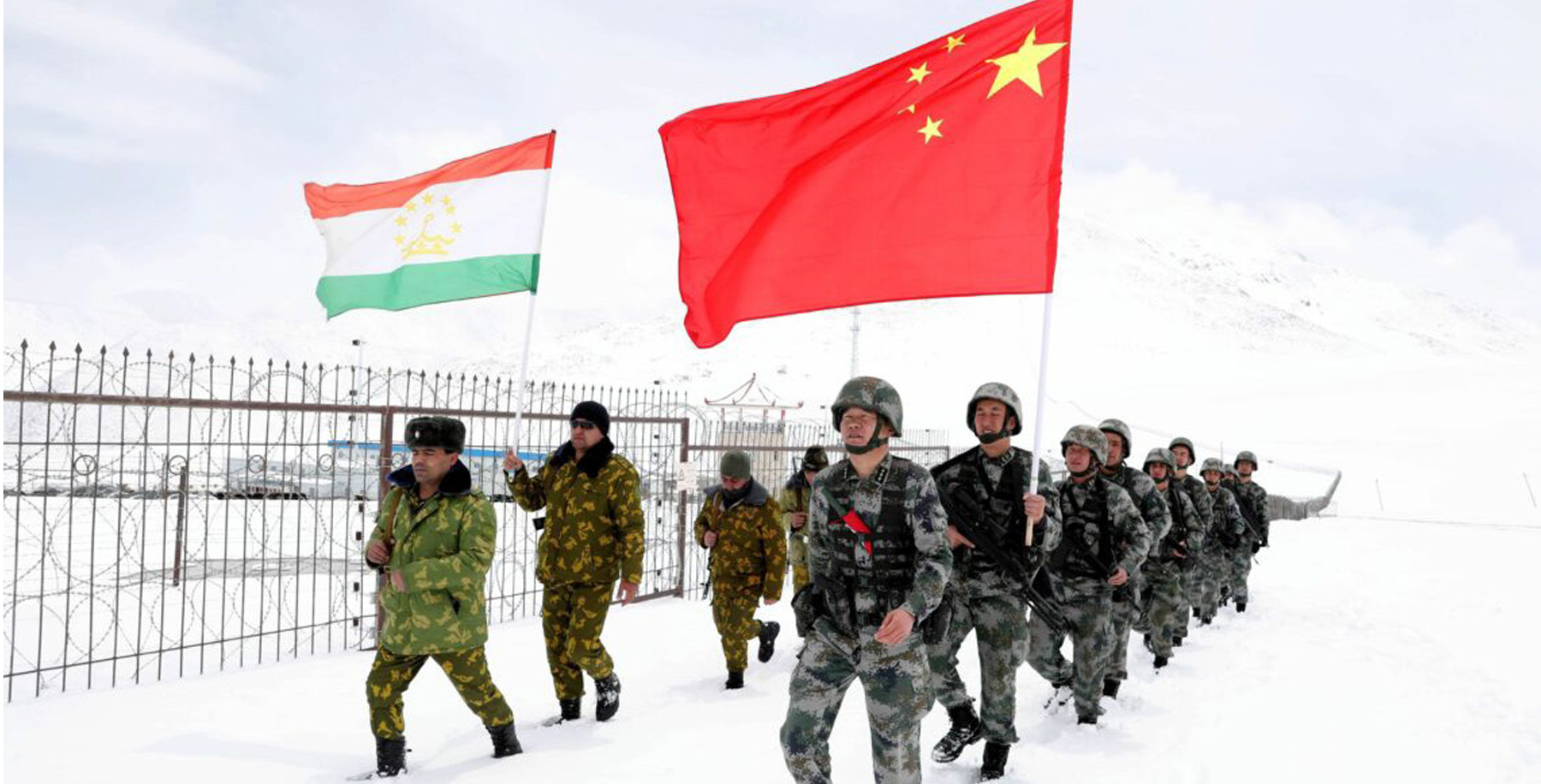
Moreover, China is steadily increasing its arms exports to Central Asia, accounting for more than 18% of the total arms imports in the region in 2019.23
Alongside official security cooperation and arms transfers, Beijing has also begun relying on non-state actors to safeguard its interests on the ground. Indeed, the presence of Chinese Private Military Companies (PMC) to guard Chinese infrastructures in the region 24 could arise as a humanitarian concern in the future. Although no major outbreaks of violence involving the PMCs have emerged yet, and they conform to local legal regulations, such developments raise critical questions concerning Beijing’s capacity to adopt a more assertive security stance in the region, particularly in regard to growing anti-China sentiments. The 2020 Global Security Initiative (GSI), which prioritizes security cooperation, provides Beijing with a strategic tool for becoming a major security stakeholder in Central Asia.
The growing presence of Chinese security actors not only raises concerns about accountability and the erosion of local sovereignty but also risks enabling repressive practices under the pretext of protecting infrastructure. In fragile political environments, this trend can contribute to the marginalization of communities and increased surveillance, particularly of vulnerable groups. The securitization of China’s investments in Central Asia is evident through the Shanghai Cooperation Organisation, where member states have committed to combating separatism, terrorism, and religious extremism. This resulted in the extradition of alleged Uyghur separatists to China.25 Notably, the Center for Uyghur Studies highlights how the Uyghur community in Kazakhstan is alarmed by China’s transnational repression, including surveillance by Chinese intelligence and local authorities acting on Beijing’s requests.26
A major humanitarian concern is that the connectivity created by the Belt and Road Initiative offers both the knowledge and means to pursue mass surveillance in Central Asia. The implications for human rights in the region are deep and worrying. China introduced the Digital Silk Road Program in 2015. Central Asia, a region in demand for increased connectivity, represents a crucial actor for such investment.27 Notably, Chinese technologies are central in the digital surveillance of Central Asia’s countries.28 This results in growing concerns regarding data privacy and misuse, as well as fears over digital sovereignty.29

Taken together, China’s support for political stability through alignment with Central Asian governments and the provision of surveillance technologies reflects a strategic partnership that prioritizes regime security over democratic reform.30 While framed as promoting order and development, these dynamics limit political freedoms and civic space, raising concerns about long-term impacts on governance and the well-being of local populations.
As the BRI continues to expand its footprint across Central Asia, its implications go far beyond economics and connectivity. While the initiative has reinforced security cooperation, often at the cost of democratic space and civil liberties, its impact on the region’s environment is no less significant.
Environmental and Sustainability Concerns
Chinese investments have also sparked widespread concern among local populations over their social and environmental impact. Public resistance to Chinese investments has been driven by fears of debt dependency, land appropriation, job losses, and environmental degradation.31 For example, mass protests erupted in 2016 in Kazakhstan over land reform plans that many feared would enable Chinese control of farmland, prompting the government to suspend the reforms amid sovereignty concerns. Land represents a key issue for the local population, which in turn fosters the rise of national and anti-Chinese sentiment. According to the 2020 Central Asia Barometer survey, 75% of Kazakhstanis expressed strong concern over Chinese land acquisitions, while 71% were worried about rising national debt linked to Chinese projects.32
Such reactions should not be neglected by Central Asian states, because they could spill over into widespread protests challenging state authority and governance. Given the violent responses to protests that occurred in 2022 33 in several Central Asia countries, such developments may have dramatic humanitarian outcomes. The attractiveness of Chinese investments for regional elites 34 may consequently undermine local populations’ claims.
In addition, the lack of transparency regarding the projects raises questions concerning the environmental impact of such massive infrastructures in a region already under huge climate pressure and where climate-induced problems are erupting. The potential outcomes are facilitated by flexible legislation with regard to environmental protection: Uzbekistan has eased investment approvals by sidelining environmental regulations, while in Tajikistan, policymakers see environmental concerns as barriers to market reforms.35
Polluting industries are also being moved from China to Central Asia, further worsening the environmental situation.36 Additionally, illegal pesticides and agrochemicals are being used by Chinese companies, without opposition from the Central Asian States.
The construction of these massive infrastructures often overlooks the environmental provisions such as Environmental Impact Assessments.37 Therefore, the BRI could face major environmental challenges, especially from poorly planned mountain roads that increase risks like landslides, rockfalls, and road closures. In Central Asia, new roads built on steep terrain for resource extraction, particularly in the Pamirs, Pamir-Alay, and Tien Shan, exacerbate these hazards, threatening infrastructure, communities, and ecosystems downstream.38 These road expansions also represent a risk for local and traditional cultivation practices that can be impacted by land exploitation, deforestation and new infrastructures.

New roads cutting through fragile mountain terrain threaten ecosystems, traditional livelihoods, and increase the risk of landslides and erosion. Pexels.
Central Asia is already under strong climate-induced stress, and further aggravation of the situation could have dramatic consequences on the water security, food production and local communities.
Conclusion
The BRI has significantly shaped Central Asia’s development trajectory, offering economic opportunities while simultaneously reinforcing authoritarian governance, limiting civic space, and raising serious environmental concerns. Without greater transparency, accountability, and sustainability, its long-term impact may deepen regional inequalities and vulnerabilities. Addressing these challenges requires coordinated action and forward
looking strategies that place human dignity, social equity, and environmental sustainability at the core of development efforts.