
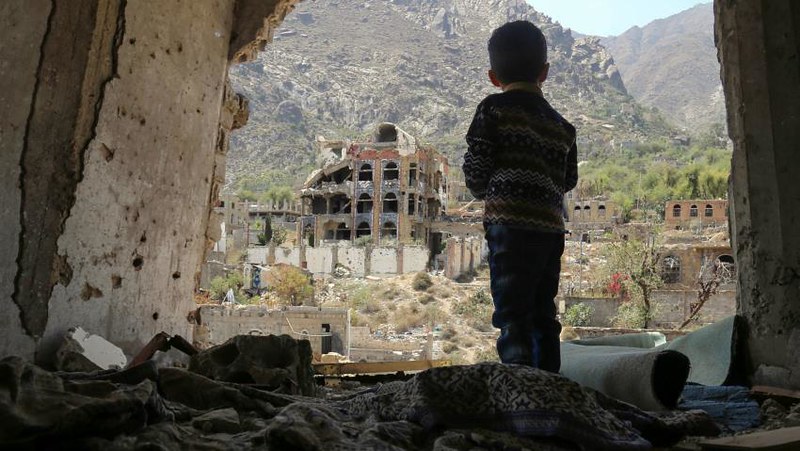
© Photo by Felton Davis via Flickr
- Switzerland: Former Gambian Interior Minister on Trial Over Alleged Crimes Against Humanity
- India: Court Restores Justice in Bilkis Bano Case by Ordering Return of Convicts to Jail
- Denmark: Court Affirms Terrorism Convictions of Three Iranians
- Serbia: Former Kosovo Guerrilla Detained as War Crimes Suspect
- Israel: Top Court Rejects Media Appeal for Independent Access to Gaza, Citing Security Concerns
- ECtHR: Court Finds Portugal in Violation of Human Rights in the Case of Rui Magro’s Detention
- ICJ: Conclusion of Hearing in South Africa’s Request for Preliminary Measures Against Israel in a Case Concerning the Genocide Allegations
- USA: Prosecutors Seek Death Penalty for Payton Gendron in Buffalo Supermarket Attack
INTERNATIONAL PEACE AND SECURITY SECTION
- Ukraine: Russian Missiles Hit Areas Across Ukraine
- Ecuador: State of Emergency Declared After Gunmen Stormed TV Studio Live on Air
- UN: General Assembly Discussed the Use of US Veto in the UNSC
- Sudan: Army Targeting Pro-Democracy Activists
- Somalia: Al-Shabaab Fighters Attack UN Helicopter, Killing One
- UK: Government Admits to Rwanda’s Issues with its Human Rights Record
- ICC: President Finalises Cooperation Agreement with ILANUD to Advance Human Rights and Strengthen Criminal Justice Systems in Latin America
- Yemen: US and UK Strike More than 60 Targets to Thwart Houthi Attacks on Ships at the Red Sea
- Rwanda and Burundi: Burundi Closes its Border with Rwanda and Deports Rwandans, Accusing the Country of Backing Rebels
- Myanmar: Armed Rebels and Military Junta Agree Upon Ceasefire Mediated by China
INTERNATIONAL JUSTICE SECTION
Switzerland: Former Gambian Interior Minister on Trial Over Alleged Crimes Against Humanity
On 8 January 2024, Gambia’s former interior minister went on trial in Switzerland, facing charges, including crimes against humanity, for his alleged involvement in the repression led by the country’s security forces during the regime of President Yahya Jammeh. The trial started in Bellinzona and was brought before the Federal Criminal Court under the principle of universal jurisdiction, with advocacy groups aiming for a conviction for crimes committed abroad. Sonko, who sought asylum in Switzerland in 2016 and was subsequently arrested, faces charges related to crimes committed during the 16 years of Jammeh’s rule, characterised by arbitrary detention, sexual abuse, and extrajudicial killings. The trial signals a pursuit of justice beyond national borders for serious human rights violations.
India: Court Restores Justice in Bilkis Bano Case by Ordering Return of Convicts to Jail
On 8 January 2024, in a significant ruling led by Justices B. V. Nagarathna and Ujjal Bhuyan, the Supreme Court of India ordered the return of 11 convicts from the Bilkis Yakub Rasool v. Union of India case to jail by 22 January. This decision corrected their premature release in August 2022, revealing fraudulent tactics and collusion between the convicts and the Gujarat government. The case originated when, at the age of 21, Bilkis and her family, fleeing violence, were attacked, resulting in her rape and the murder of seven family members. This prompted an inquiry directed by the Supreme Court in December of the following year. In January 2008, a special court sentenced 11 men to life imprisonment. After multiple appeals for early release, the convicts were granted freedom on Independence Day 2022 under the Gujarat government’s remission policy. Bilkis challenged this order, citing concerns about its societal impact. The judgment rectifies the premature release, emphasising adherence to proper legal procedures and addressing institutional errors, thereby shedding light on flaws in the justice-delivery system.
https://www.livelaw.in/top-stories/supreme-court-bilkis-bano-remission-11-convicts-246096
Denmark: Court Affirms Terrorism Convictions of Three Iranians
On 9 January 2024, three individuals affiliated with an Iranian separatist group had their guilty verdicts upheld by a Danish appeals court. The convictions were related to charges of promoting terrorism in Iran and gathering information for an undisclosed Saudi intelligence service. Arrested in 2020, the men were found to be part of the Arab Struggle Movement for the Liberation of Ahvaz, gathering data on individuals, organisations, and Iranian military affairs, and sharing it with Saudi intelligence. The court confirmed their 2022 convictions for financing terrorism and attempting to obtain funds, and highlighted the case’s significance in revealing foreign powers’ activities on Danish soil. The convictions stemmed from a 2018 attack on an Iranian military parade and were linked to a broader 2018 police operation in Denmark concerning an alleged Iranian plot to assassinate government opponents.
https://apnews.com/article/denmark-iranians-saudi-asmla-ahvaz-612dbce1e8972a168e6445e88d4f7889
Serbia: Former Kosovo Guerrilla Detained as War Crimes Suspect
On 9 January 2024, the Belgrade Higher Court informed BIRN that Hasan Dakaj had been placed in custody for a duration of 30 days following his arrest on charges of war crimes against civilians during the Kosovo war. The Serbian Prosecutor’s Office for War Crimes suspects Dakaj, a former Kosovo Liberation Army (KLA) member, of participating in the kidnapping and murder of civilians. Arrested at the Merdare border crossing, Dakaj denied guilt, claiming a case of mistaken identity. His family’s lawyer asserted the arrest was politically motivated, retaliatory against KLA members for Kosovo’s independence. Kosovo’s efforts to visit Dakaj in detention face challenges due to limited legal cooperation between Belgrade and Pristina, despite a 2013 European Union-brokered agreement. In the past, Kosovo sought the return of individuals charged with war crimes by Serbia, citing concerns about human rights violations in the legal processes.
https://balkaninsight.com/2024/01/09/serbia-detains-former-kosovo-guerrilla-as-war-crimes-suspect/
Israel: Top Court Rejects Media Appeal for Independent Access to Gaza, Citing Security Concerns
On 9 January 2024, Israel’s Supreme Court rejected an appeal from international media organisations, denying independent access for journalists to the Gaza Strip. Israel, citing security concerns, controls entry to the besieged territory and has prohibited independent journalist travel since the conflict began on October 7. The court justified these restrictions by claiming that independent journalist entry could endanger Israeli soldiers by revealing operational details. The Foreign Press Association expressed disappointment, stating that Israel’s 95-day ban on foreign press access to Gaza is unprecedented. The court argued it seeks a balance between journalist safety and military concerns, noting that limited access is permitted under military escort. However, the FPA criticised the controlled nature of these escorts, emphasising the importance of foreign press accessing Gaza areas without troop presence. The International Criminal Court is investigating potential crimes against journalists during the conflict, which has claimed the lives of at least 79 media professionals.
ECtHR: Court Finds Portugal in Violation of Human Rights in the Case of Rui Magro’s Detention
On 9 January 2024, the European Court of Human Rights (ECtHR) addressed the case of Rui Miguel Miranda Magro, a Portuguese national diagnosed with paranoid schizophrenia. In 2019, he was found guilty of, but not criminally responsible, criminal damage, threats, and sexual harassment, leading to a three-year preventative detention order in a psychiatric facility, suspended under the condition of undergoing necessary treatment. Subsequently, Magro’s confinement in Caxias Prison Hospital raised concerns about the adequacy of care and the appropriateness of the prison environment for someone with mental health issues. Highlighting reports from the Committee for the Prevention of Torture and the United Nations, the court underscored the challenges facing Portugal’s prison system regarding mental health issues. It emphasised Magro’s vulnerability due to his mental condition and criticised the authorities for failing to provide sufficient evidence of an individual treatment plan or refute his consistent allegations of inadequate care. The Court found violations of Article 3 (prohibition of inhuman and degrading treatment) due to Magro’s exposure to unnecessary health risks, stress, and anxiety. Additionally, Article 5 (right to liberty and security) was breached, as the prison environment aggravated Magro’s mental state. The ruling acknowledged recent legal changes in Portugal but called for urgent enforcement to ensure appropriate conditions and individualised treatment for mentally ill individuals, awarding Magro €34 000 for non-pecuniary damages.
https://hudoc.echr.coe.int/fre-press?i=003-7841561-10889581
ICJ: Conclusion of Hearing in South Africa’s Request for Preliminary Measures Against Israel in a Case Concerning the Genocide Allegations
On 11 January 2024, in a two-day public hearing, South Africa urged the International Court of Justice (ICJ) to implement provisional measures in relation to the Palestinian people under the Genocide Convention. The legal team argued that even in response to provocations, genocide is never a permissible reaction. Israel denied the genocide allegations, asserting its military actions target Hamas after an October assault on southern Israel. South Africa called for provisional measures, including the suspension of military operations, protection of Palestinian lives, prevention of forced displacement, and preservation of evidence related to the Genocide Convention. They claimed an average of 247 Palestinians are at risk of being killed daily. The South African delegation accused Israel of having genocidal intent against Palestinians in Gaza. Israel is expected to respond to the allegations at the ICJ. The Court is yet to deliver its decision.
https://www.icj-cij.org/sites/default/files/case-related/192/192-20240112-pre-01-00-en.pdf
https://balkaninsight.com/2024/01/11/at-hague-court-israel-accused-of-genocidal-intent-in-gaza/
USA: Prosecutors Seek Death Penalty for Payton Gendron in Buffalo Supermarket Attack
On 12 January 2024, federal prosecutors in the US declared their intention to seek the death penalty for Payton Gendron, a 20-year-old white supremacist who perpetrated a heinous attack in Buffalo, New York, in 2022. Gendron, already serving a life sentence for state charges related to the assault, targeted a supermarket during a live-streamed rampage with the explicit aim of maximising harm to Black individuals. The decision to pursue the death penalty was based on several factors, including the meticulous planning involved, the deliberate targeting of a particularly vulnerable victim due to old age, and Gendron’s use of heavy body armour and an AR-15 assault rifle. The attack, which occurred on 14 May 2022, resulted in the tragic deaths of ten individuals, ranging in age from 32 to 86, including customers, a store security guard, and a church deacon. Gendron had live-streamed the two-minute assault on the Twitch platform, wearing a helmet equipped with a video camera. Family members of the victims expressed mixed feelings about the death penalty decision, with some expressing a preference for Gendron to spend his life in prison, surrounded by those he had targeted.
INTERNATIONAL PEACE AND SECURITY SECTION
Ukraine: Russian Missiles Hit Areas Across Ukraine
On 8 January 2024, Russia launched a new round of missile strikes against Ukraine, targeting areas near the front lines of the conflict in the east, as well as central and western regions. At least four civilians were reported killed, and over 30 were injured. The attacks included hypersonic and cruise missiles, with a total of 51 missiles fired by Russia, along with eight Shahed drones. Ukraine’s Air Force intercepted 18 cruise missiles and all the drones. The strikes hit urban areas, including housing and a shopping mall, across Ukraine. Russia claimed to target “facilities of Ukraine’s military-industrial complex.” The attacks on civilian areas have escalated concerns, with Russia now focusing on Kyiv’s defence industry. The almost daily barrages have impacted civilian areas, causing significant damage and casualties. Ukrainian forces reported unsuccessful Russian efforts to advance along the front lines in various areas. Additionally, in an incident in Russia-occupied Luhansk region, a Russian warplane accidentally released a bomb on the town of Rubizhne, causing no injuries. The recent strikes indicate a continuation of the conflict’s intensity, with heightened risks for civilians and ongoing military engagements along the front lines.
https://apnews.com/article/ukraine-russia-missiles-kharkiv-1a36d45089e6014e07af69ca9f88b63f
Ecuador: State of Emergency Declared After Gunmen Stormed TV Studio Live on Air
On 9 January 2024, gunmen, masked and armed, attacked a television station in Guayaquil, Ecuador, taking anchors and staff hostage. The incident, broadcast live, unfolded amid escalating chaos in the country, with a prominent gang leader, Adolfo Macías, disappearing from prison and multiple prison uprisings. The armed assailants, before being subdued and arrested by the police, attempted to send a message on live television about the consequences of “messing with the mafias.” The attackers also forced hostages to appeal to the president not to interfere. In the aftermath, 13 individuals were arrested, and weapons, explosives, and other evidence were recovered. Violent incidents in Guayaquil resulted in at least eight deaths and two injuries. The city’s mayor reported that five hospitals were overtaken, and explosions, burning vehicles, looting, and gunfire were reported nationwide. President Daniel Noboa declared an internal armed conflict, ordering the armed forces to neutralise gangs, described as “terrorist organisations.” The chaos prompted the shutdown of shops, schools, government offices, and buildings, with a nationwide overnight curfew imposed. The unrest follows Macías’ escape, the head of the Los Choneros gang, highlighting Ecuador’s struggle with gang violence and drug trade. President Noboa, who declared a state of emergency, seeks to address prison control and security measures through a proposed referendum.
https://www.nytimes.com/2024/01/09/world/americas/ecuador-gang-prison-emergency.html
UN: General Assembly Discussed the Use of US Veto in the UNSC
On 9 January 2024, the President of the UN General Assembly emphasised the immediate priority of saving civilian lives in Gaza during a debate on the US veto in the UN Security Council (UNSC). He welcomed the recent resolution calling for humanitarian access and a cessation of hostilities, urging full implementation. The General Assembly’s resolution triggers a debate whenever the UNSC faces a veto, allowing member states to scrutinise the decision. The US has used the veto on two resolutions calling for a ceasefire, and while abstaining on this resolution, they expressed commitment to humanitarian aid and hostage release efforts. The State of Palestine called for an immediate ceasefire, highlighting the war’s atrocities and supporting the suspension of the veto in mass atrocity cases. Israel criticised calls for a ceasefire and accused the UN of bias. Russia criticised the US for protecting Israel through the veto, suggesting it undermined multilateral efforts. The debate reflects the ongoing conflict’s complexities, with different perspectives on responsibilities, actions, and potential solutions.
https://news.un.org/en/story/2024/01/1145352
Sudan: Army Targeting Pro-Democracy Activists
On 9 January 2024, Al Jazeera reported that amidst the civil unrest in Sudan, members of resistance committees, key players in the pro-democracy movement, are being targeted by the military. Following the capture of Sudan’s second largest city, Wad Madani, by the Rapid Support Forces (RSF), individuals associated with resistance committees fled to army-controlled areas, led by army chief Abdel Fattah al-Burhan, and were subsequently arrested by the army and tortured in secret detention centres known as “ghost houses.” These committees played a crucial role in the mass pro-democracy protests that led to the downfall of former President Omar al-Bashir in 2019. The current conflict in Sudan emerged as the RSF and the army turned against each other, sparking a devastating civil war. The RSF is accused of grave crimes, while the army, suspected of harbouring Bashir-era loyalists, is accused of failing to protect civilians and settling scores against pro-democracy activists. The military frequently accuses resistance committee members of being RSF sleeper cells, but activists believe it is a pretext to punish them for their role in toppling al-Bashir. As the conflict intensifies, the military’s crackdown on activists is perceived to outweigh its efforts against the RSF. Resistance committees, which have been instrumental in evacuating civilians and providing essential services, are now pausing their initiatives due to fear of arrest. The military’s restrictions on movement and heavy security measures hinder aid delivery and contribute to the worsening humanitarian situation in Sudan. The army’s efforts to silence resistance committees are viewed as a threat to legitimacy, with concerns that vulnerable communities will face increased hardship if local relief is stamped out or scaled back.
Somalia: Al-Shabaab Fighters Attack UN Helicopter, Killing One
On 10 January 2024, the Guardian reported that Al-Shabaab fighters in Somalia attacked a United Nations helicopter which made an emergency landing in the rebel-controlled territory. The attack killed one passenger while five others were abducted. Mohamed Abdi Aden Gaboobe, minister of internal security of Galmudug state in Somalia, stated that the helicopter had landed in the Xindheere village on 10 January after an engine failure. Stephane Dujarric, UN Spokesperson, confirmed the incident and stated that response efforts were underway. According to an aviation official, the helicopter was carrying medical professionals and soldiers headed to Wisil town for medical evacuation.
UK: Government Admits to Rwanda’s Issues with its Human Rights Record
On 11 January 2024, the United Kingdom government admitted to the fact that Rwanda continues to have “issues with its human rights record” despite Rishi Sunak, UK Prime minister, claiming that it is a safe country. The documents released by the UK government have highlighted that even though Rwanda is “relatively a peaceful country with respect for the rule of law,” there continue to be issues with its human rights record. The released document has come in a government “policy statement” sent by James Cleverly, the home secretary to MPs and lords to get backing for the Rwanda bill. The documents have been released to support the claim of the UK government that Rwanda is a safe country for the sending back of Rwandan asylum seekers. The policy statement also admits that it could take months for Rwandan authorities to issue a new asylum, which is needed for implementing the new treaty with the UK. Liz Truss, former prime minister, has joined 30 right-wing MPs who wish to make the bill more hardline. She urged that it was essential that the legislation passed is “watertight” and closes any “possible loopholes”. Sir Robert Buckland, former justice secretary, has also tabled numerous amendments to the Safety of Rwanda bill, including removing clauses declaring the East African nation as a safe country.
ICC: President Finalises Cooperation Agreement with ILANUD to Advance Human Rights and Strengthen Criminal Justice Systems in Latin America
On 11 January 2024, the President of the International Criminal Court (ICC), Judge Piotr Hofmański, signed a cooperation agreement with the United Nations Latin American Institute for the Prevention of Crime and the Treatment of Offenders (ILANUD). The agreement aims to facilitate cooperation, knowledge exchange, and expertise between the ICC and ILANUD, fostering shared goals such as the rule of law and criminal justice. President Hofmański highlighted the importance of collaboration in achieving the ICC’s objectives. ILANUD’s Director, Douglas Durán Chavarría, emphasised the significance of the agreement for advancing a human rights approach and strengthening criminal justice systems in Latin America and the Caribbean. The agreement outlines close cooperation, mutual consultation, and joint training initiatives on topics within their mandates, including evidence, judicial proceedings, victim and witness protection, and prison management.
https://www.icc-cpi.int/news/icc-president-concludes-cooperation-agreement-ilanud
Yemen: US and UK Strike More than 60 Targets to Thwart Houthi Attacks on Ships at the Red Sea
On 12 January 2024, the United States and the United Kingdom launched air and missile strikes on Houthi-controlled areas of Yemen in retaliation to the Houthi attacks on ships in the Red Sea. According to Joe Biden, the US President, American and British forces, with support from Australia, Bahrain, Canada and the Netherlands, launched attacks in 28 locations, striking at least 60 targets with more than 150 munitions. He further suggested that targeted strikes are “a clear message” that the US and its partners would not tolerate attacks on their personnel or threaten their freedom of navigation. The decision to launch attacks against Houthis came after the Houthis had launched a drone and missile attack aimed at a fleet of American and British warships in the southern Red Sea. The explosions were confirmed to have occurred at military bases near airports in the capital, Sanaa and Yemen’s third city, Taiz, a naval base at Yemen’s Red Sea port, Hoddeidah and military sites in the coastal Hajjah governorate. The strikes launched are designed to prevent Houthis from launching further fresh attacks on international shipping in the Red Sea. Mohammed Abdulsalam, the Houthi spokesperson, stated that there was no justification for the strokes and pledged that they would continue to strike ships heading for Israel, claiming that the navigation was “safe and normal for all ships except for Israeli ships or those heading to the ports of the Israeli entity.”
https://www.theguardian.com/world/2024/jan/12/us-uk-air-strikes-yemen-houthi-rebels-red-sea-crisis
Rwanda and Burundi: Burundi Closes its Border with Rwanda and Deports Rwandans, Accusing the Country of Backing Rebels
On 12 January 2024, Burundi’s Internal Affairs Minister announced the suspension of diplomatic ties with Rwanda, border closure, and deportation of Rwandan citizens, accusing Rwanda of supporting a rebel group attacking Burundi. President Évariste Ndayishimiye accused Rwanda of backing the rebels known as RED-Tabara, considered a terror group by Burundi. The move follows a 22 December attack claimed by the rebels, resulting in the death of 20 civilians. Rwanda denies supporting the rebels. Burundi’s decision violates regional cooperation principles, according to Rwanda’s government spokeswoman. Reports indicate border closures and disruptions affecting transportation and citizens on both sides.
Myanmar: Armed Rebels and Military Junta Agree Upon Ceasefire Mediated by China
On 13 January 2024, it was reported that China mediated a truce between the military junta and armed rebels to end the conflict. Zaw Min Tun told AFP that a meeting was held in Kinming with China’s mediation, and they have reached a “ceasefire agreement”. Tar Bhone Kyaw of the Ta’ang National Liberation Army (TNLA), a member of the alliance, highlighted that they had agreed to “reopen border trade with China”. Mao Ning, the foreign ministry spokesperson, stated that the mediation took place on 11 and 12 January with the “mediation and facilitation of the Chinese side”, also highlighting that an immediate ceasefire was agreed to with both parties agreeing to “disengage military personnel and resolve relevant disputes and demands through peaceful negotiations”. She also highlighted that maintaining the “momentum of ceasefire and peace talks in northern Myanmar” aligns with the interests of all parties in Myanmar and also helps to maintain “peace and stability at the border.” According to Beijing, it had mediated talks between the Myanmar military and the allied ethnic armed groups last month and reached an agreement for a “temporary ceasefire”.
https://www.theguardian.com/world/2024/jan/12/myanmar-junta-and-armed-rebels-agree-ceasefire