Ukraine Programme
engages in efforts to bring responsible perpetrators to justice
by litigation based on universal jurisdiction and
provides analyses of allegations of international crimes.
Programme’s Work
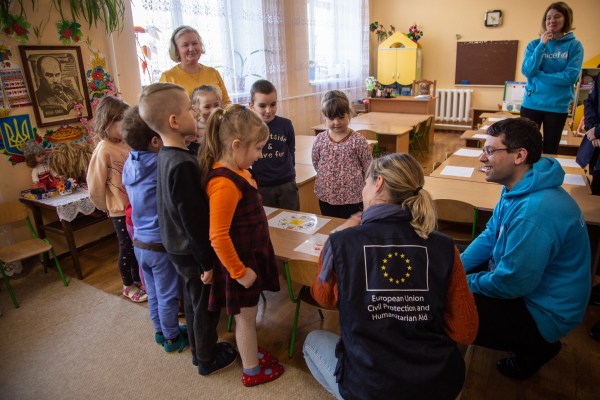
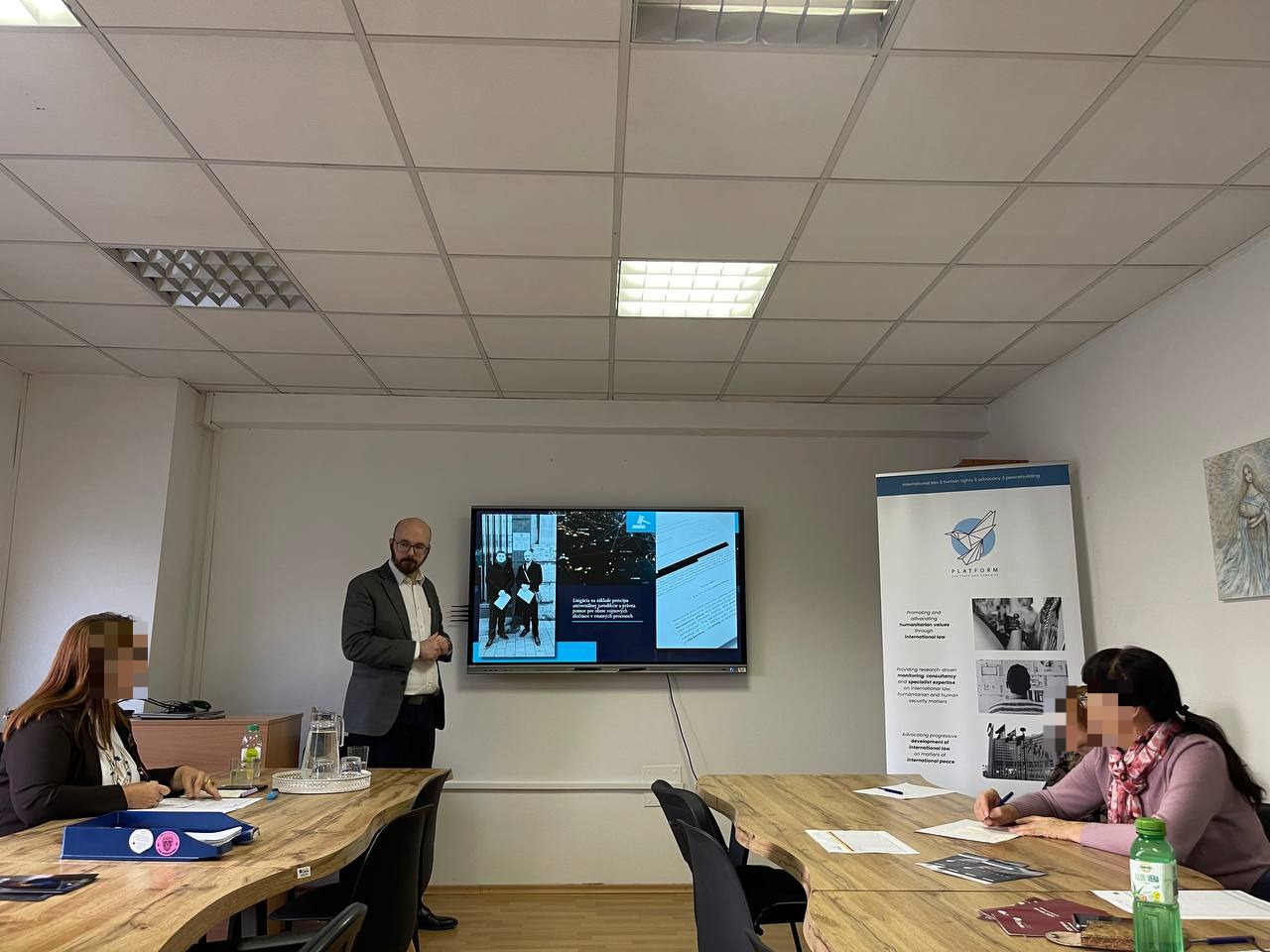
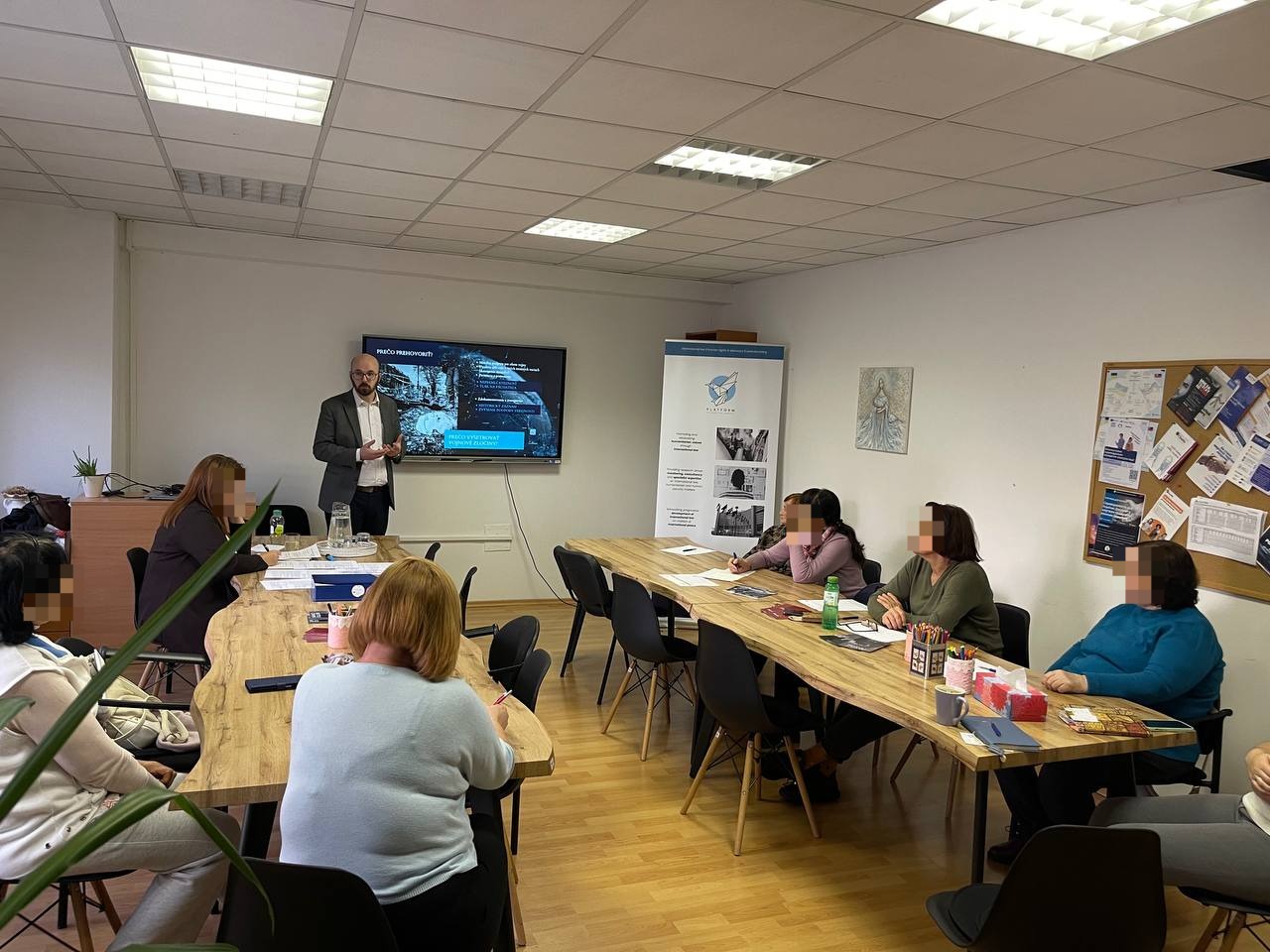
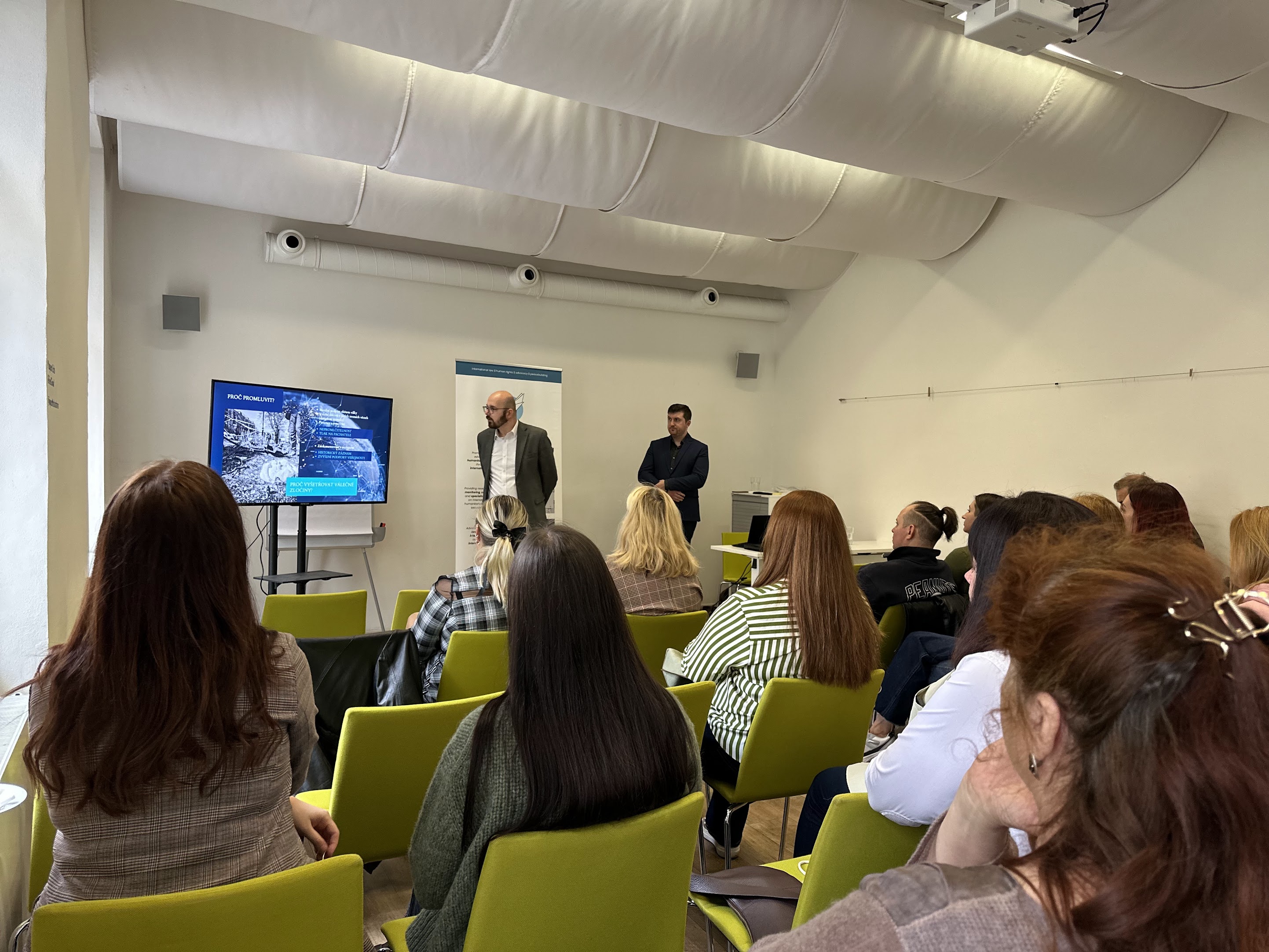
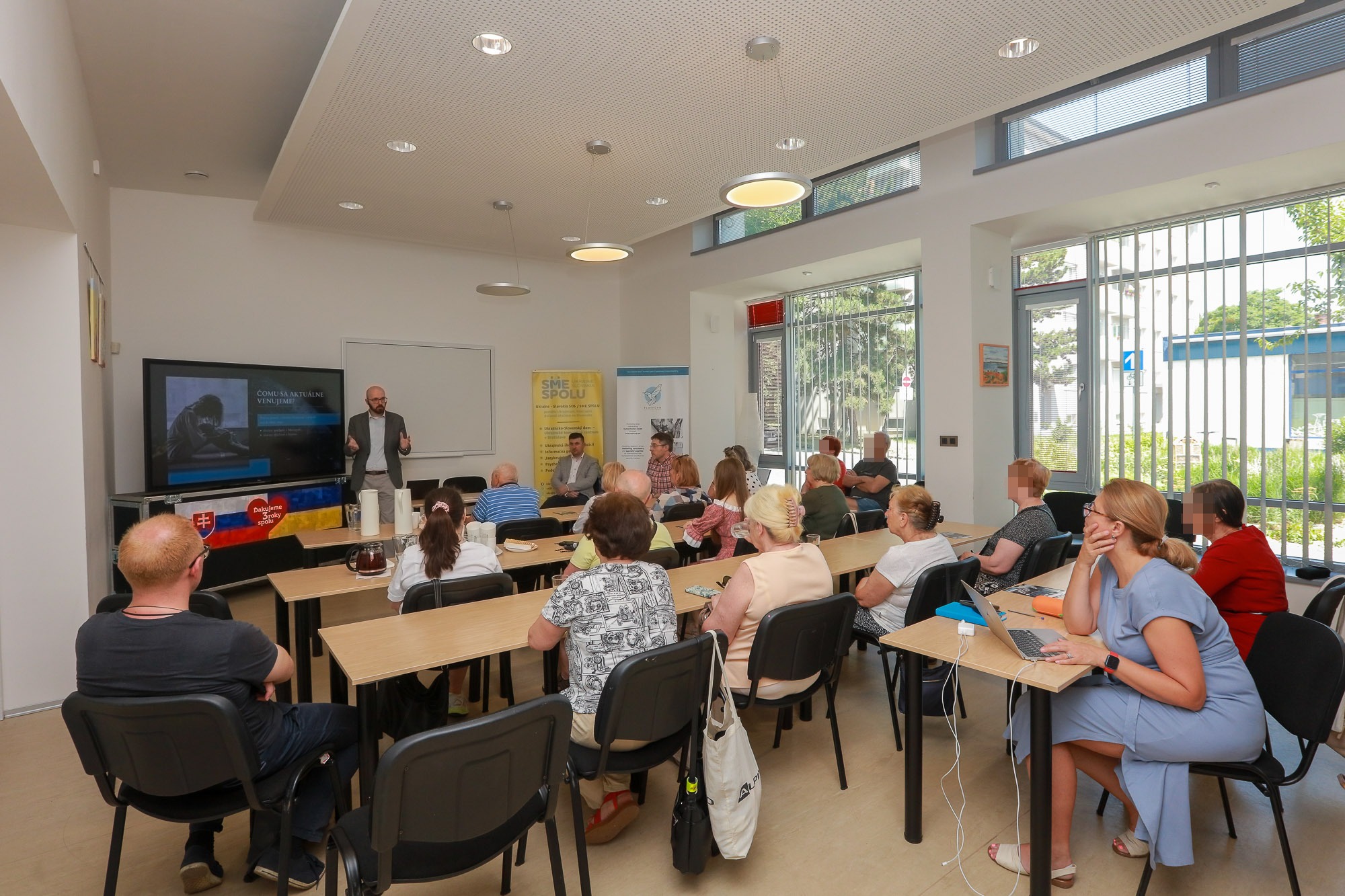
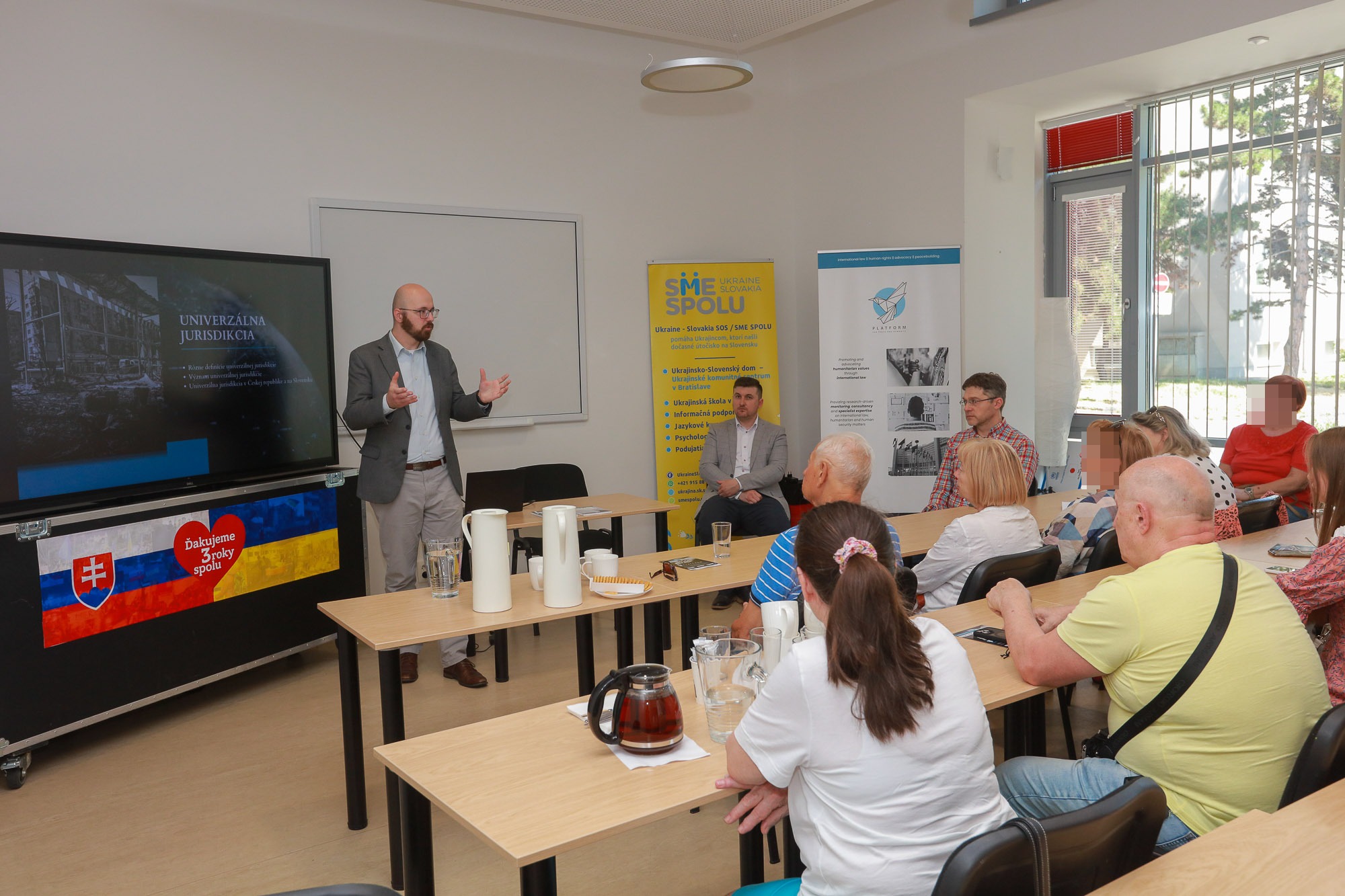
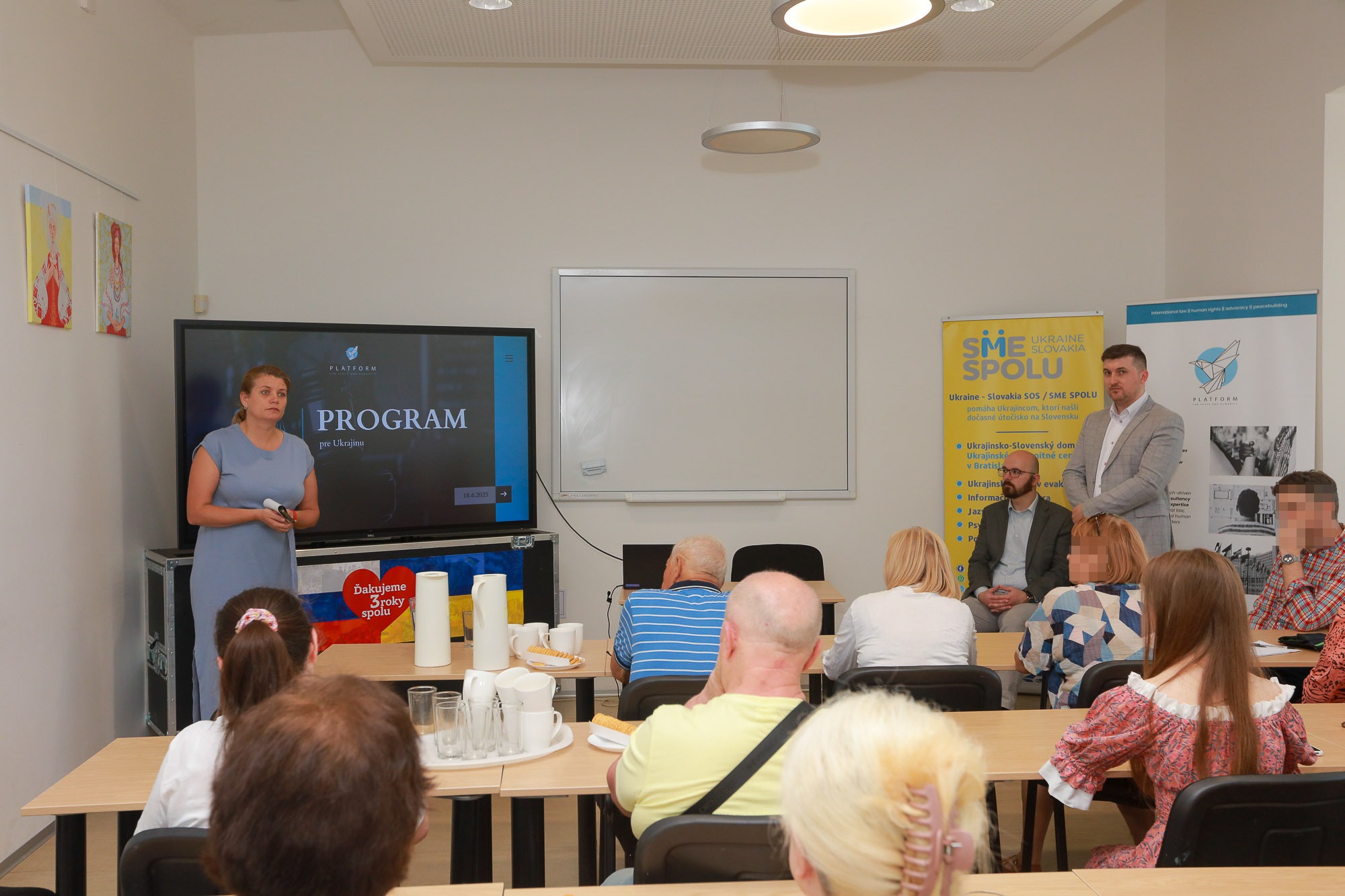
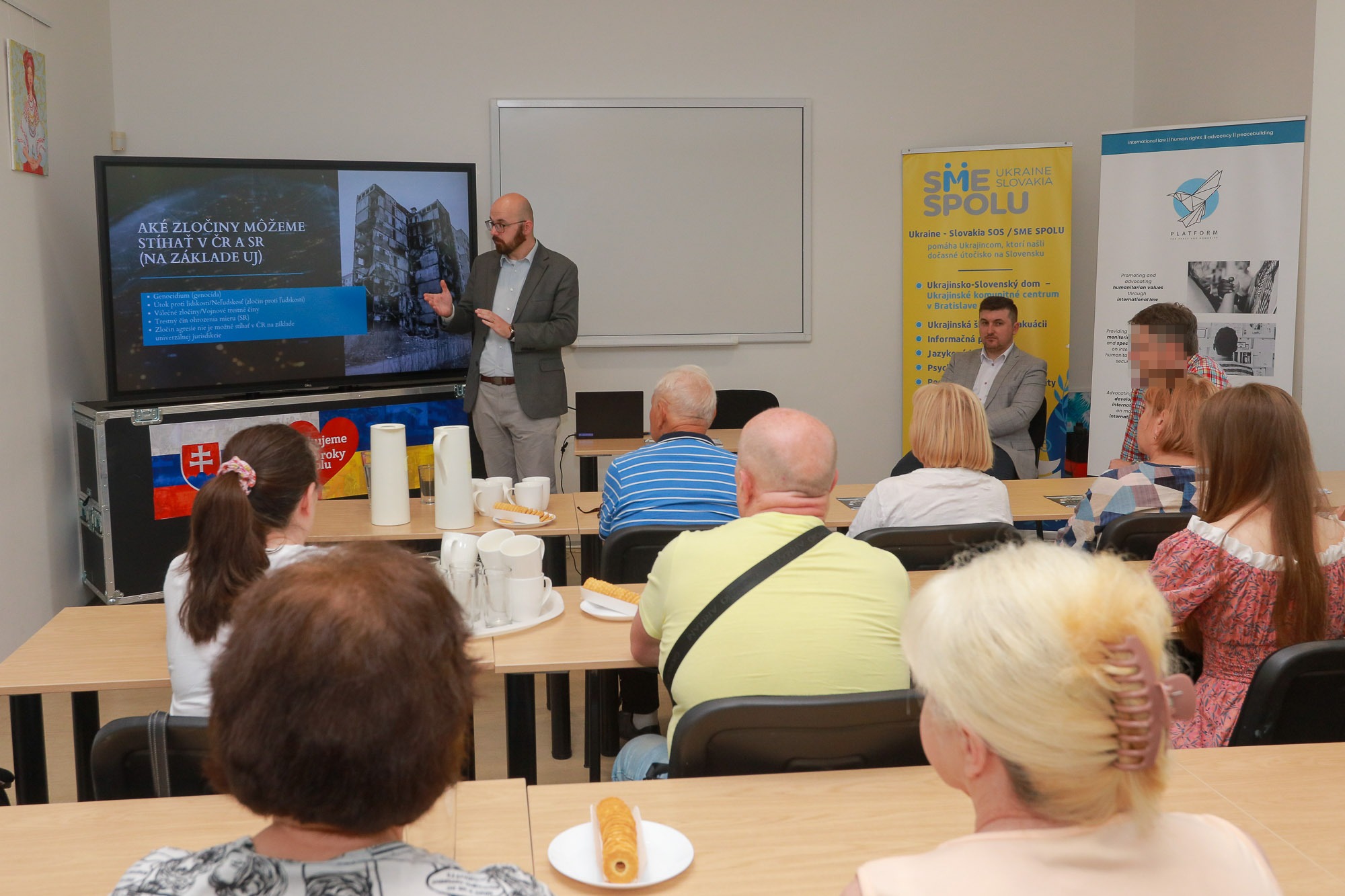
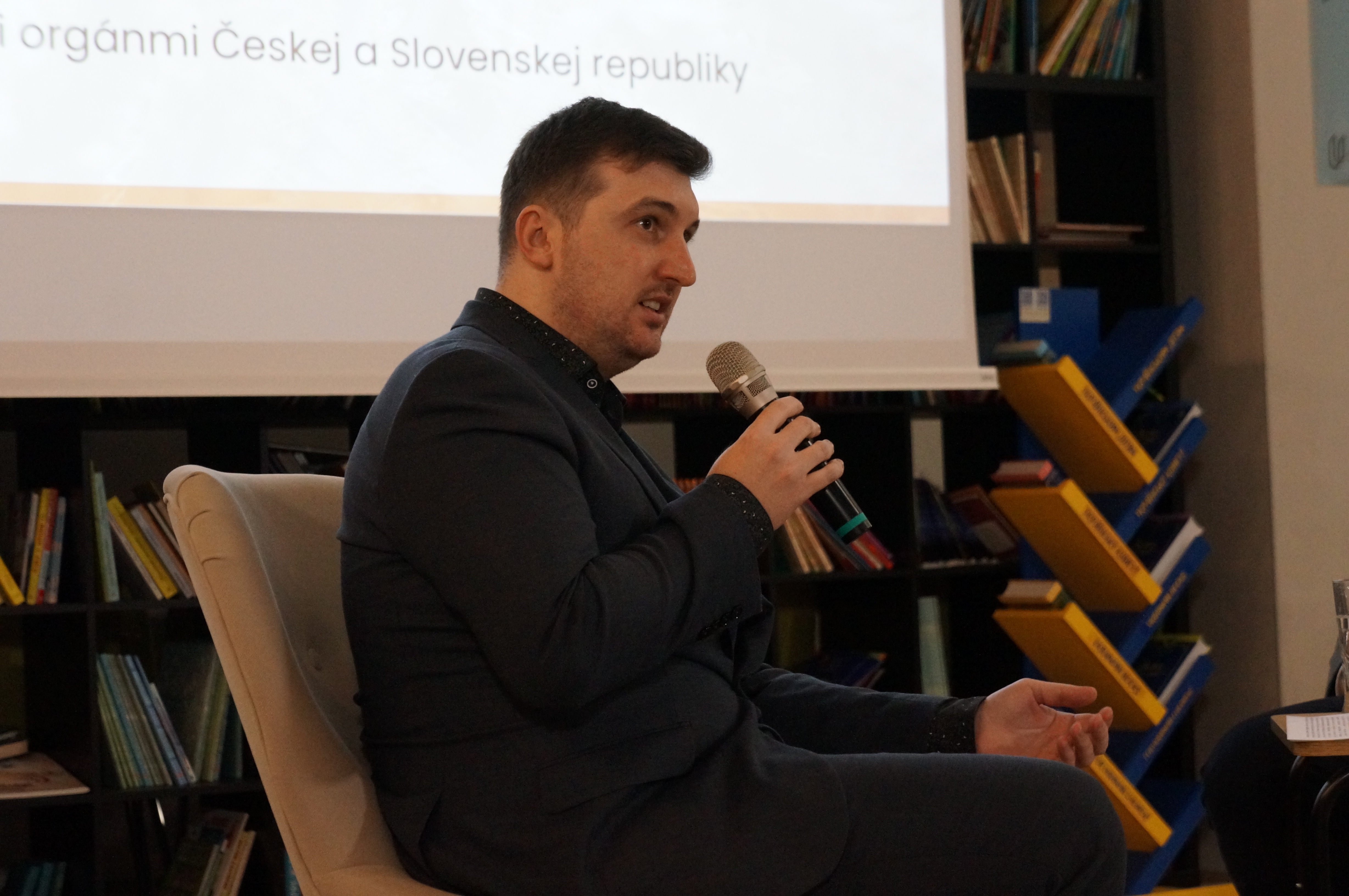
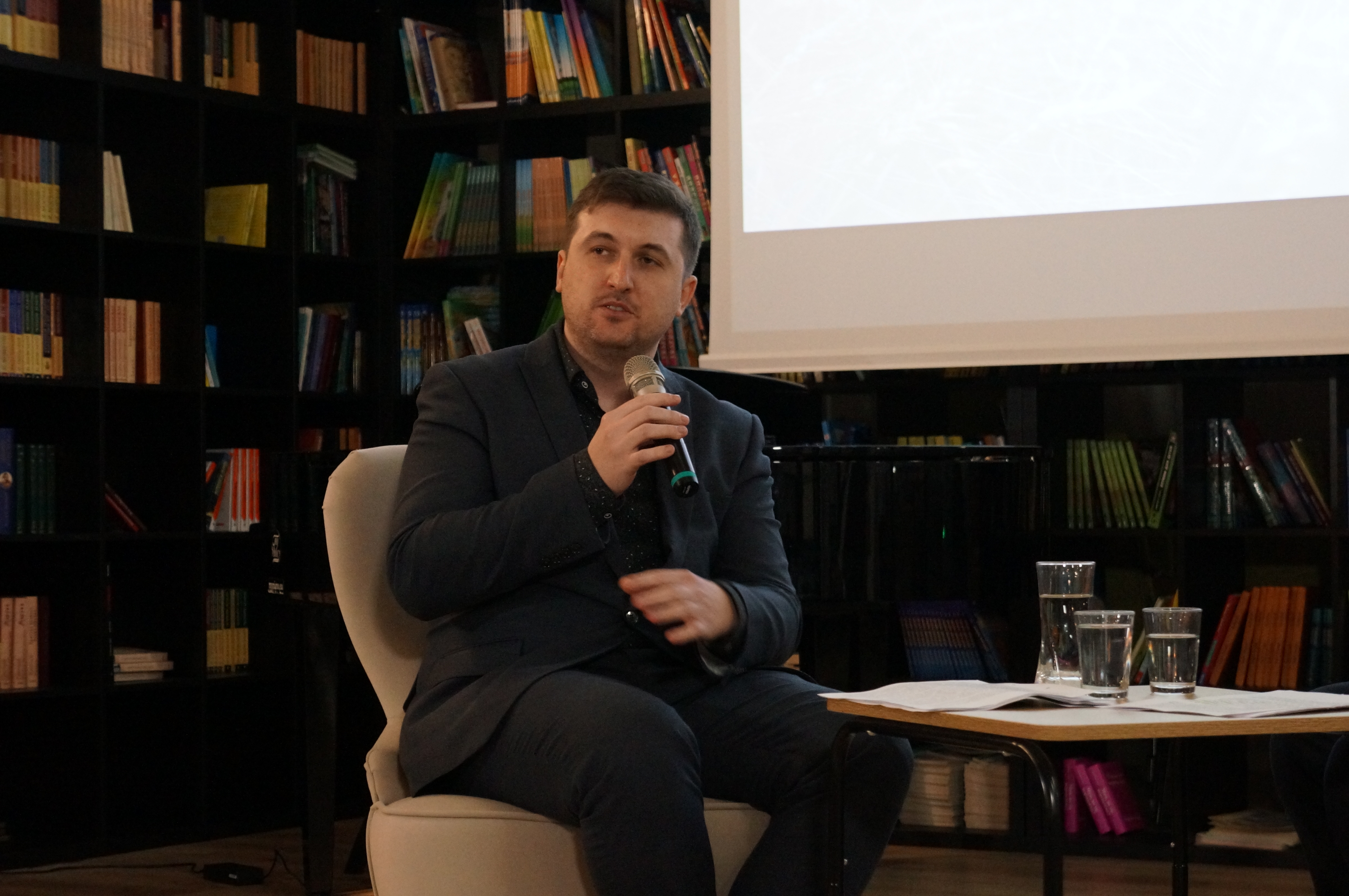
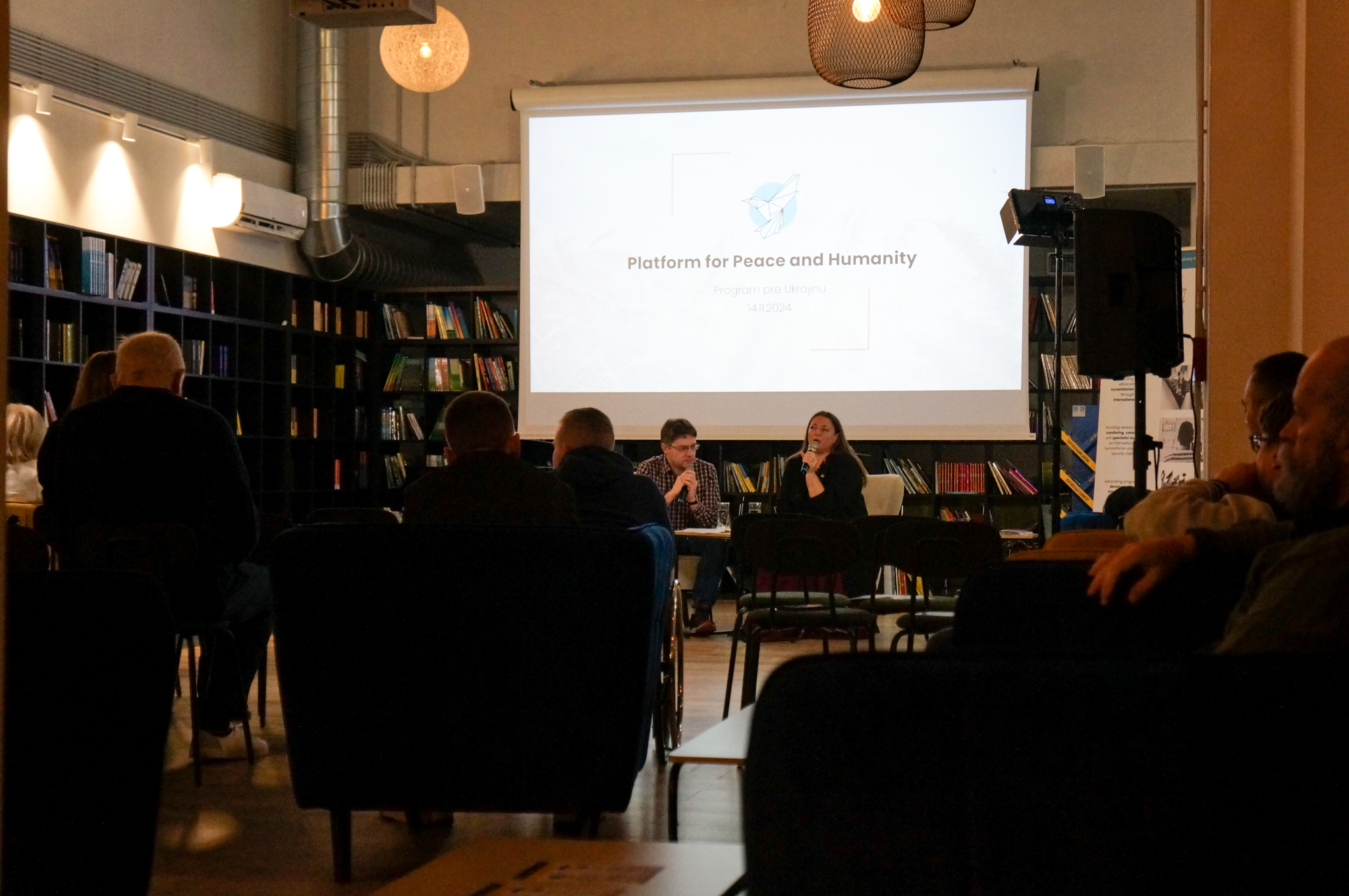
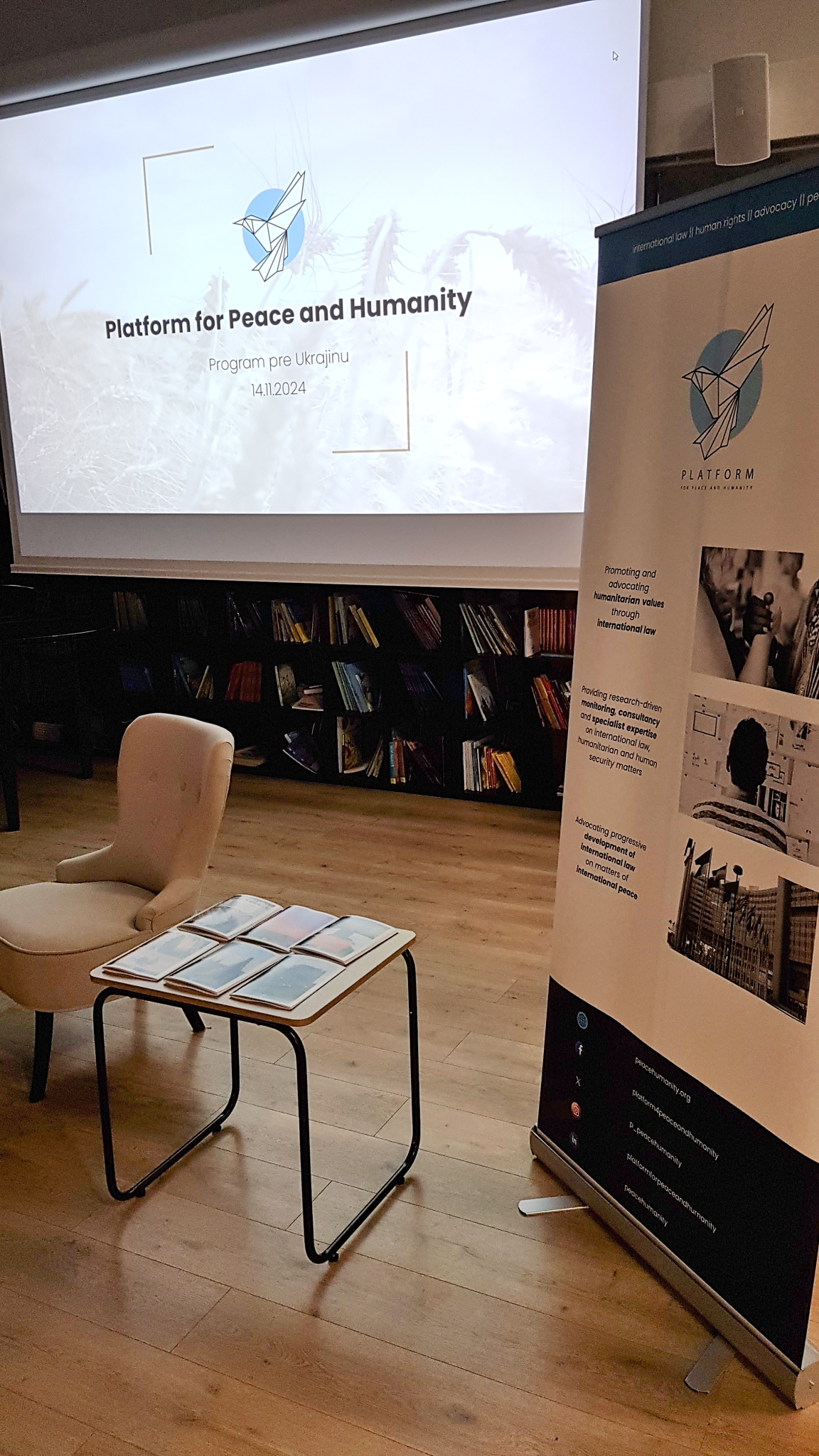
Outreach in the Ukrainian community in Czechia and Slovakia
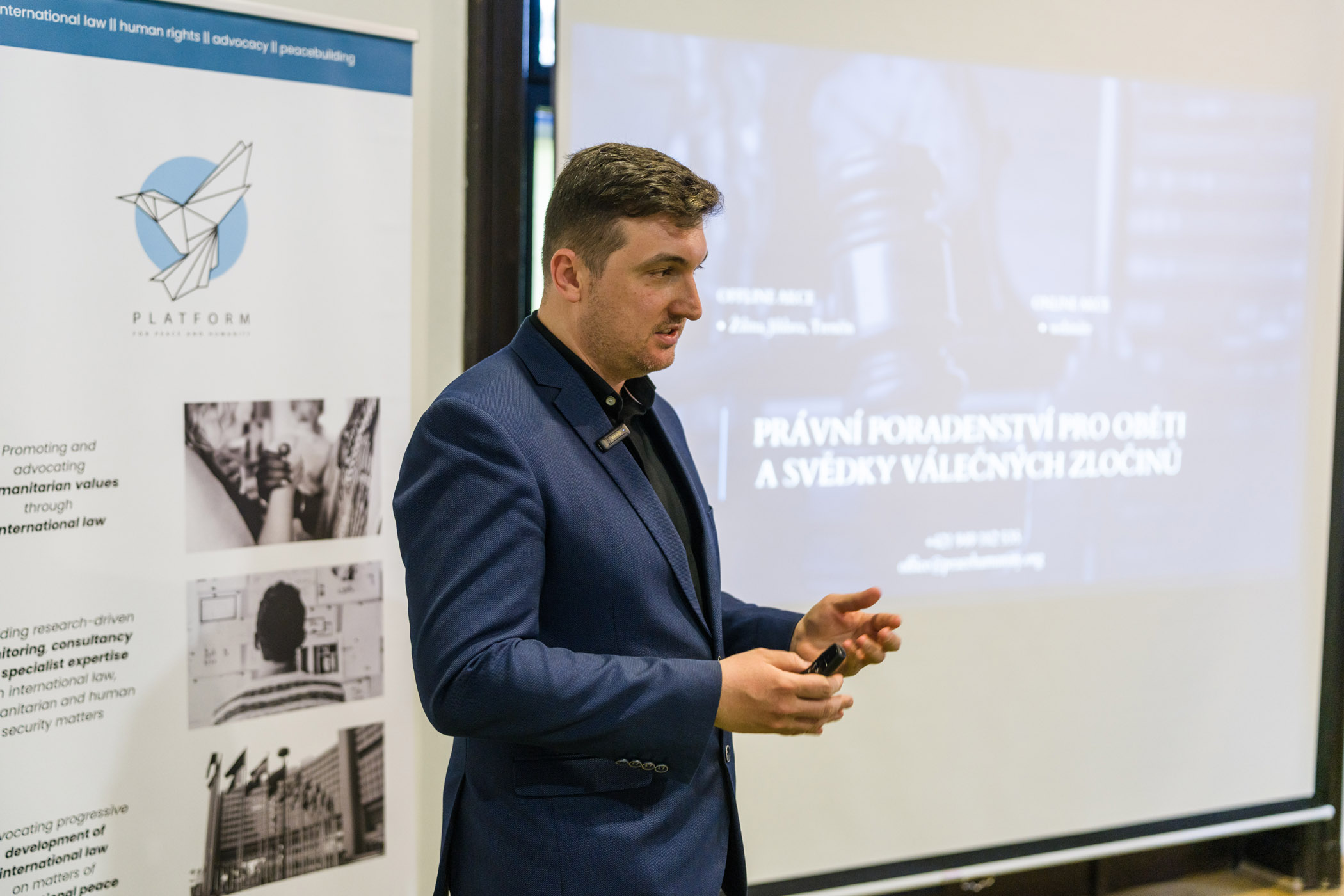
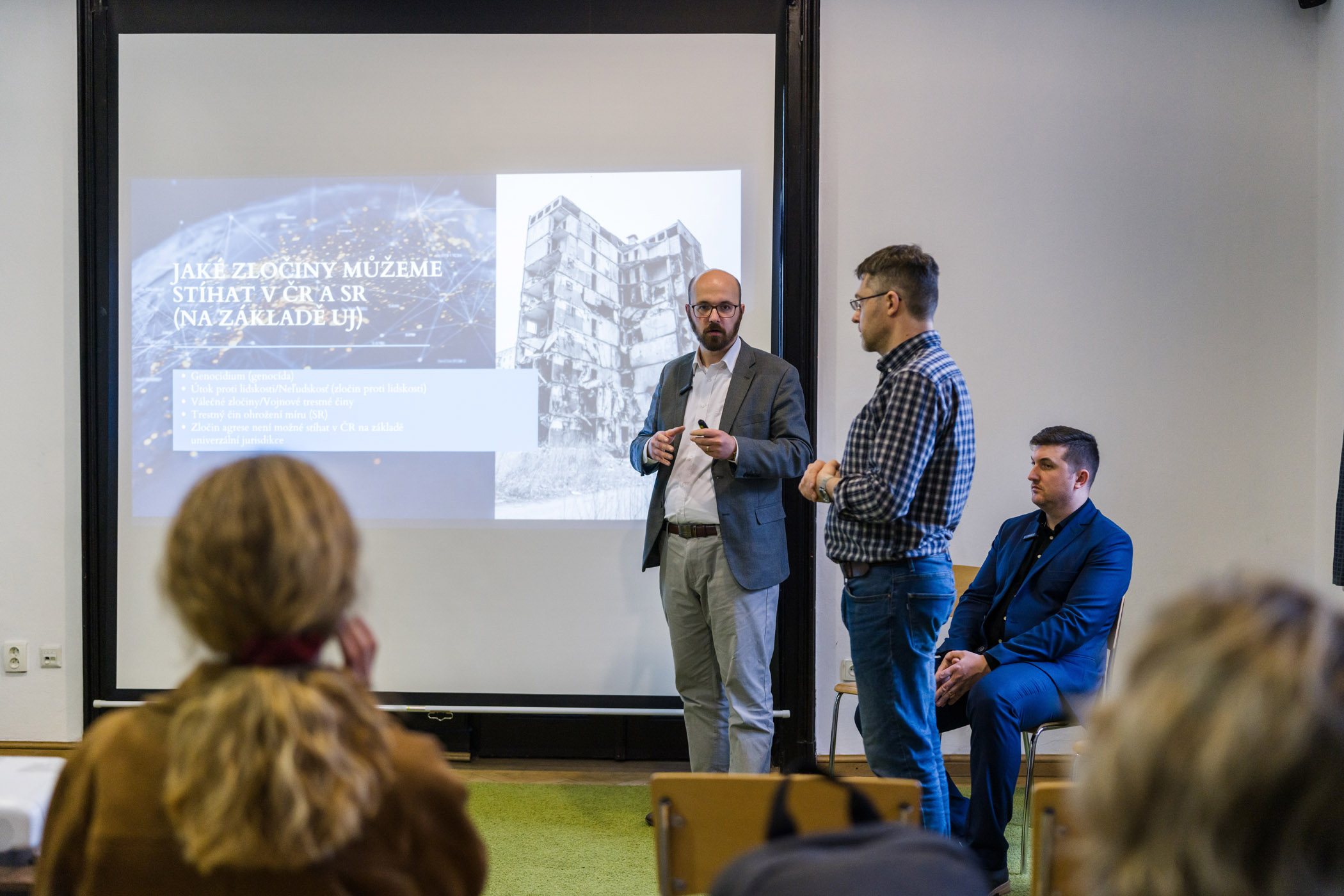
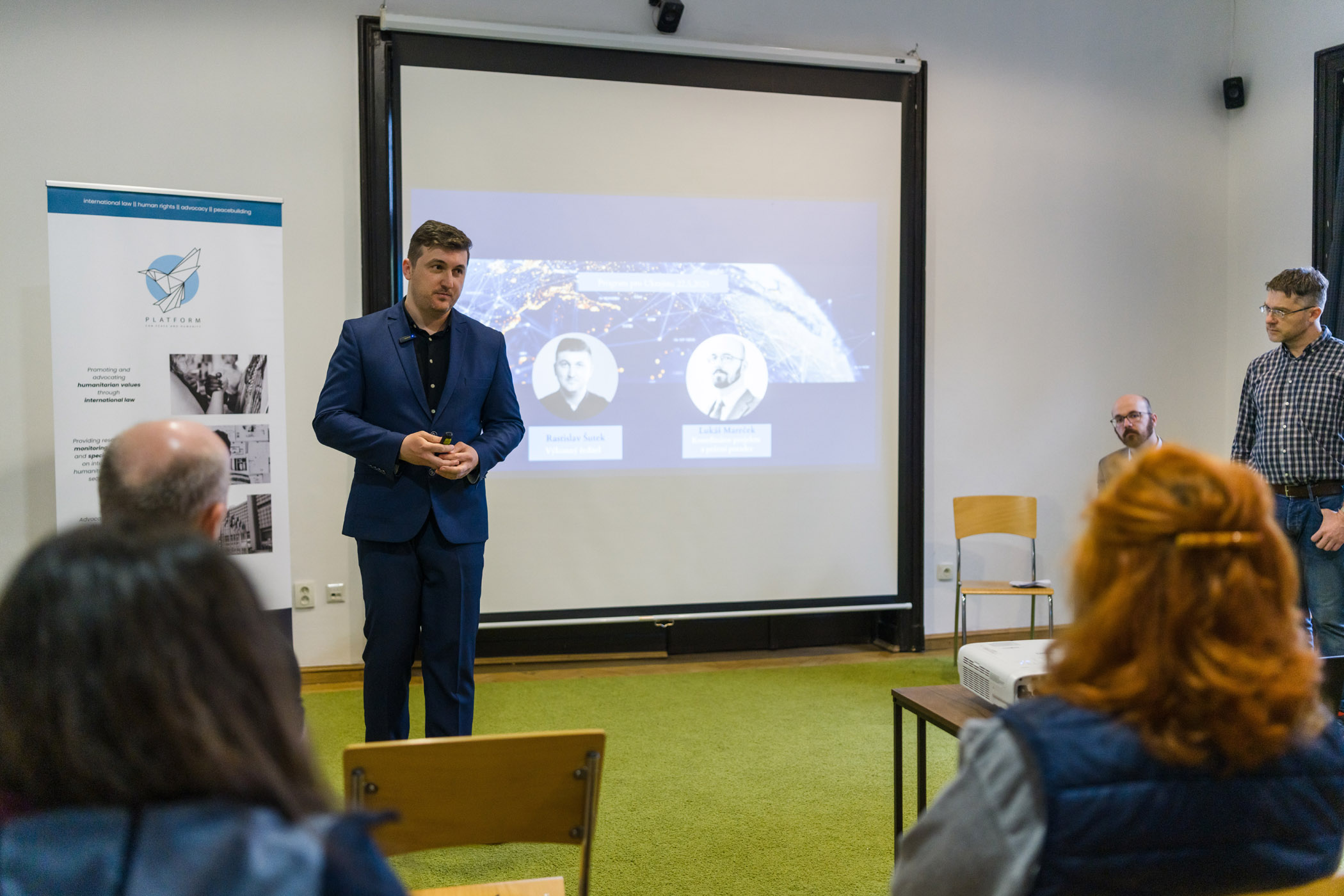
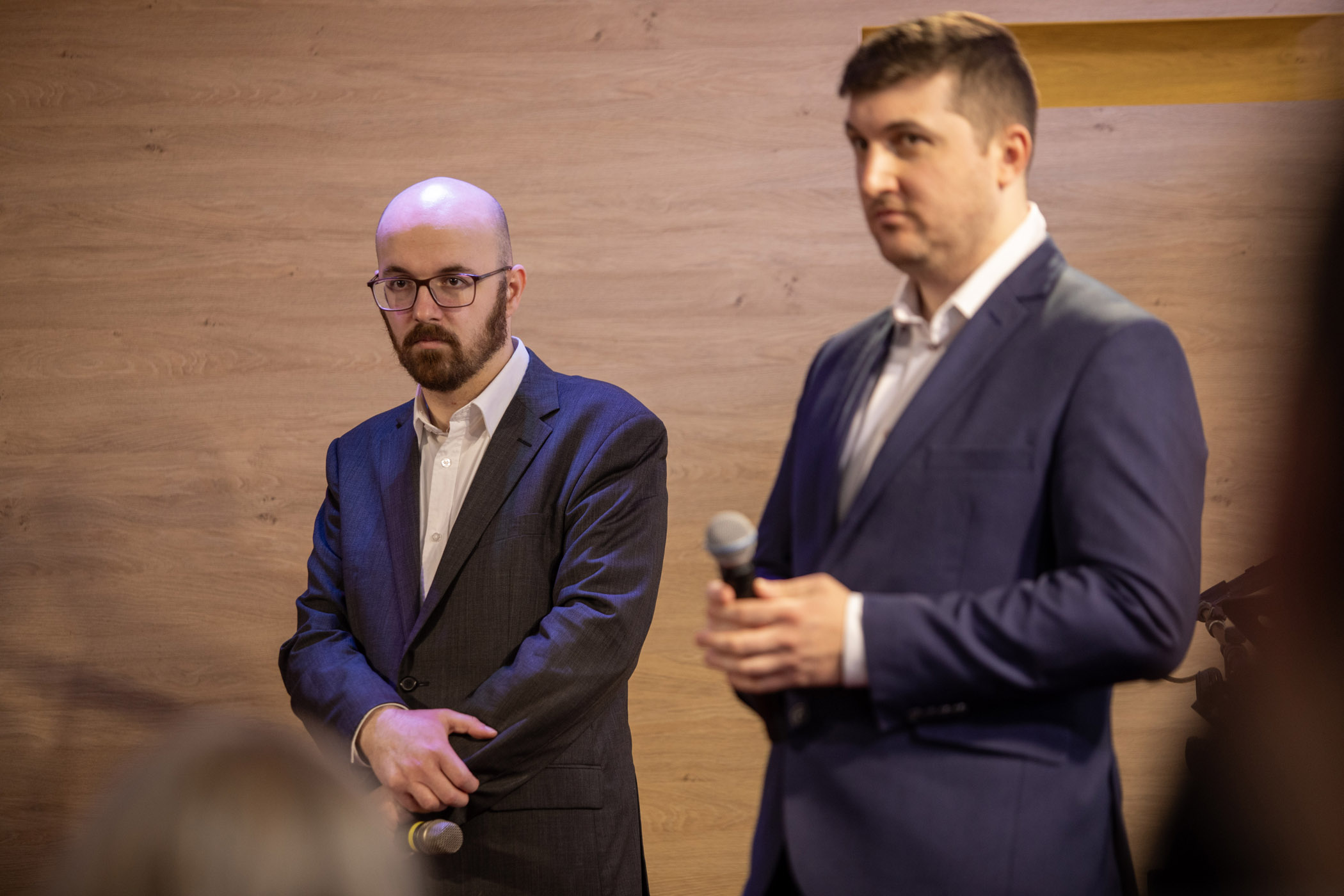
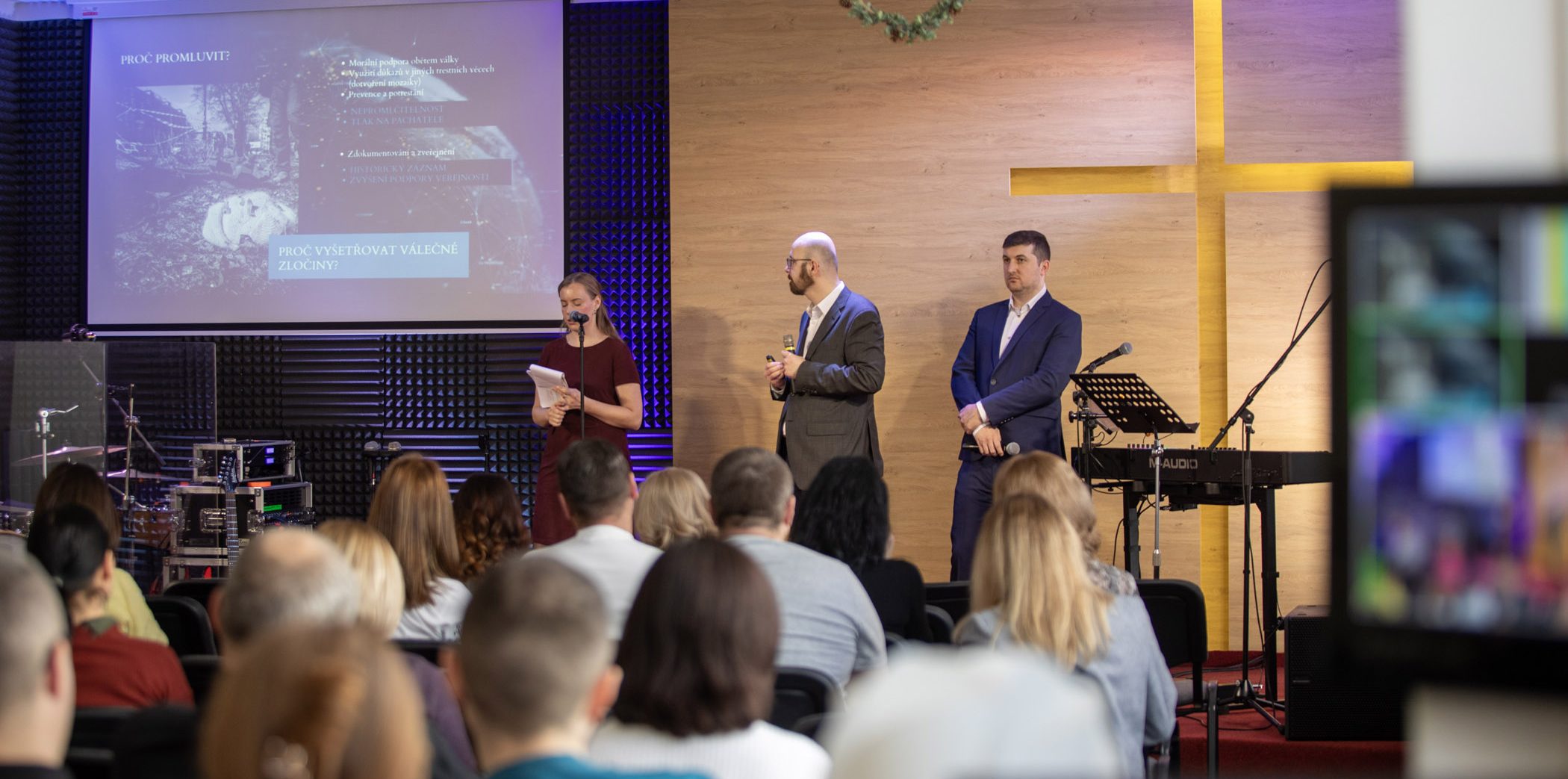
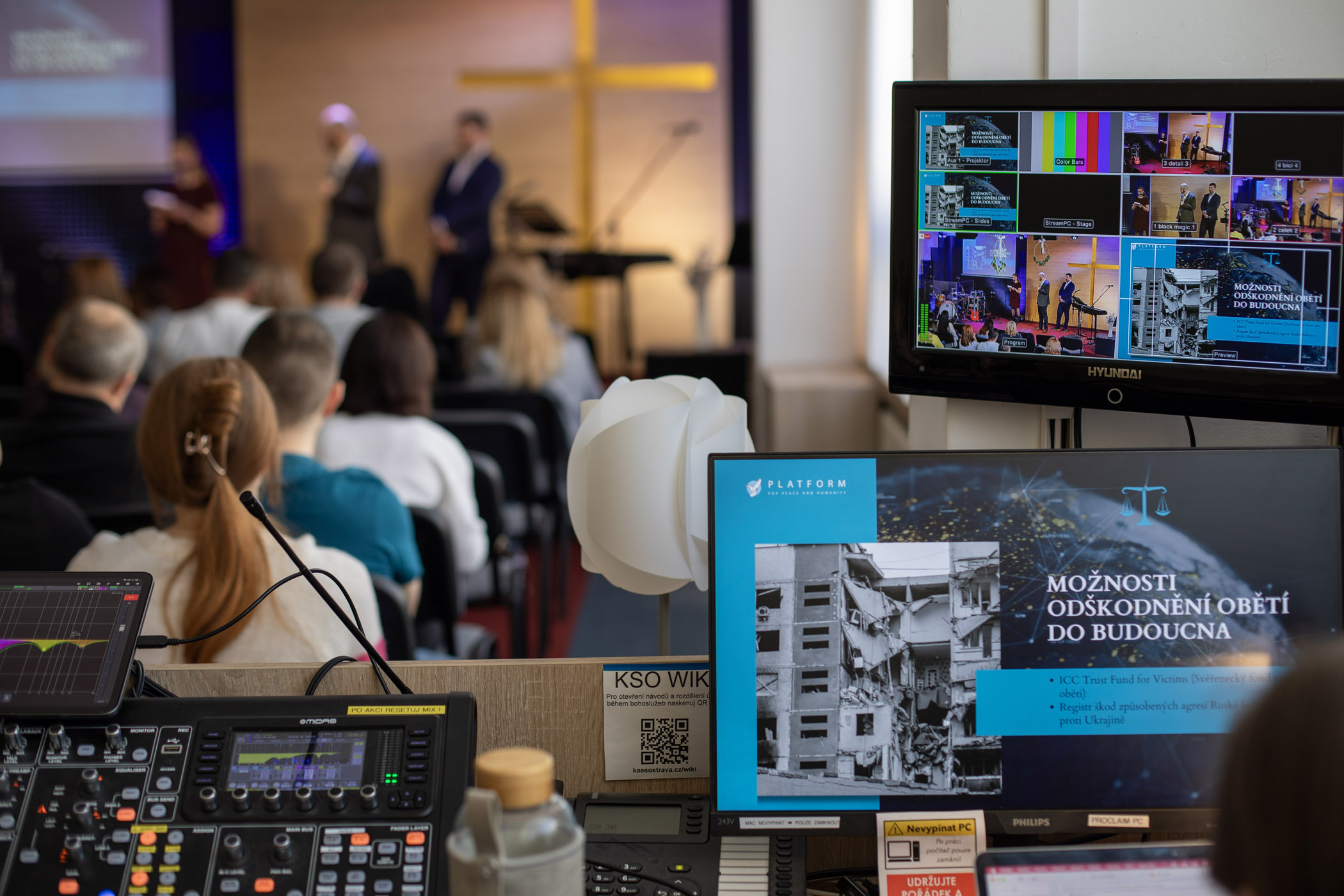
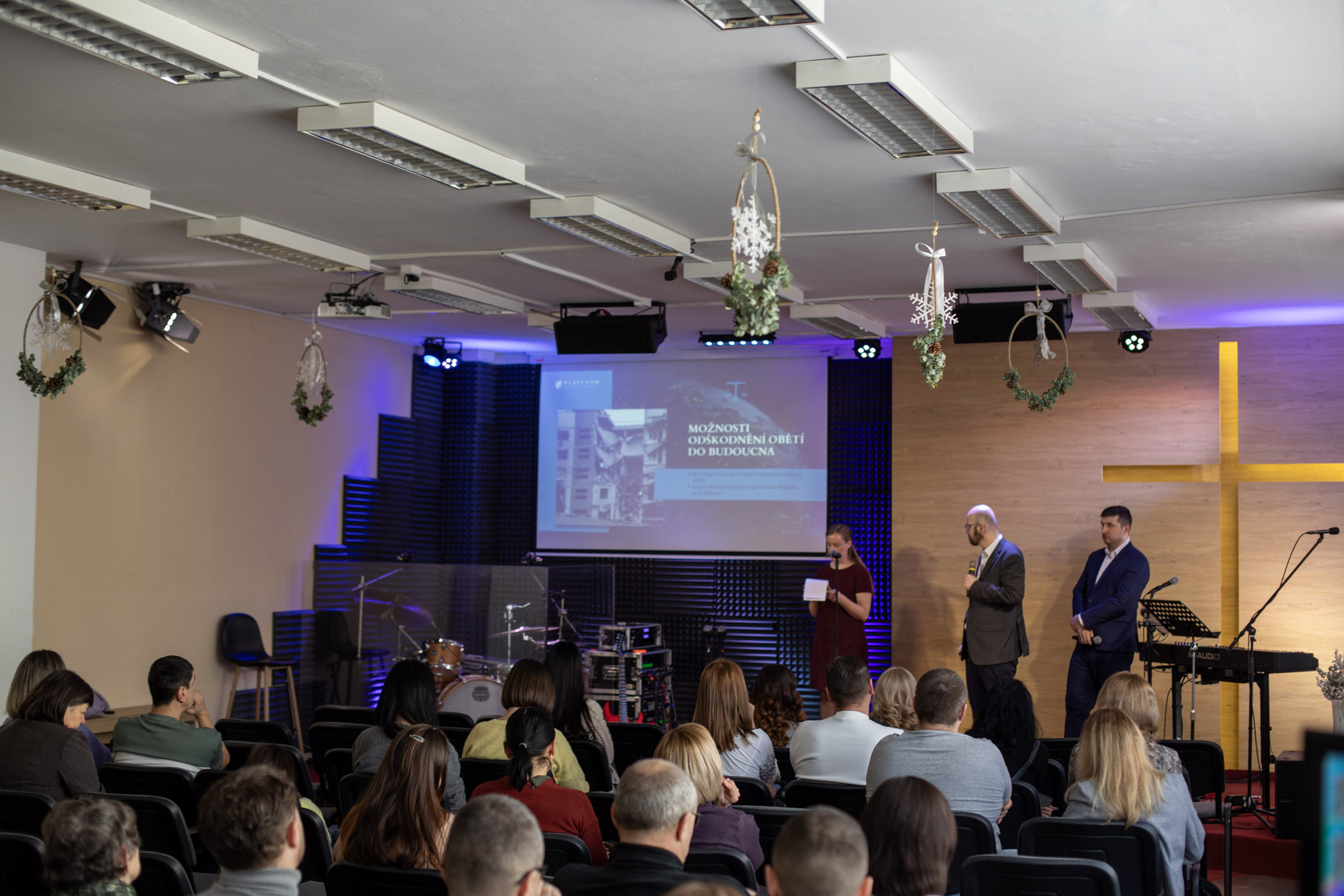
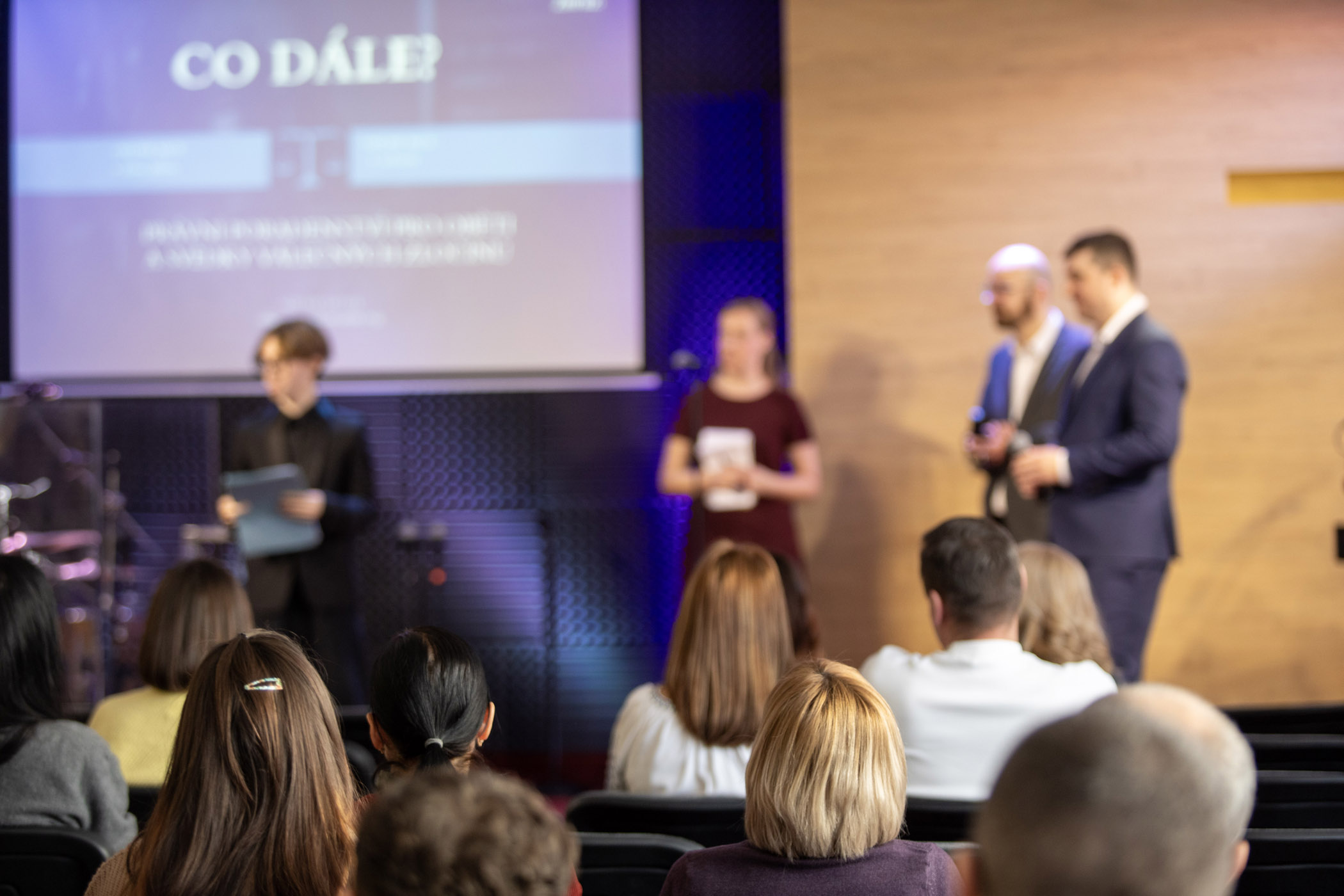
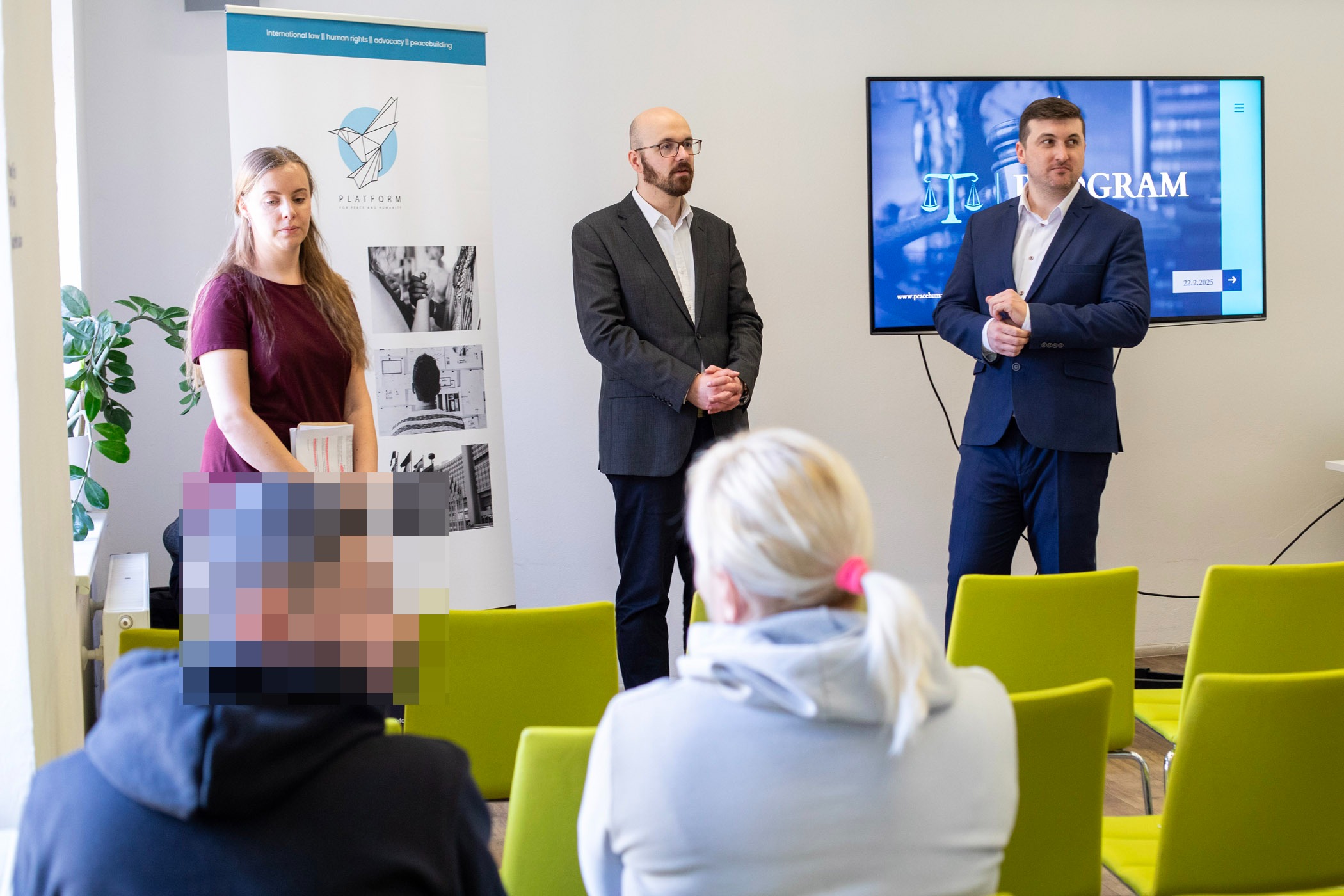
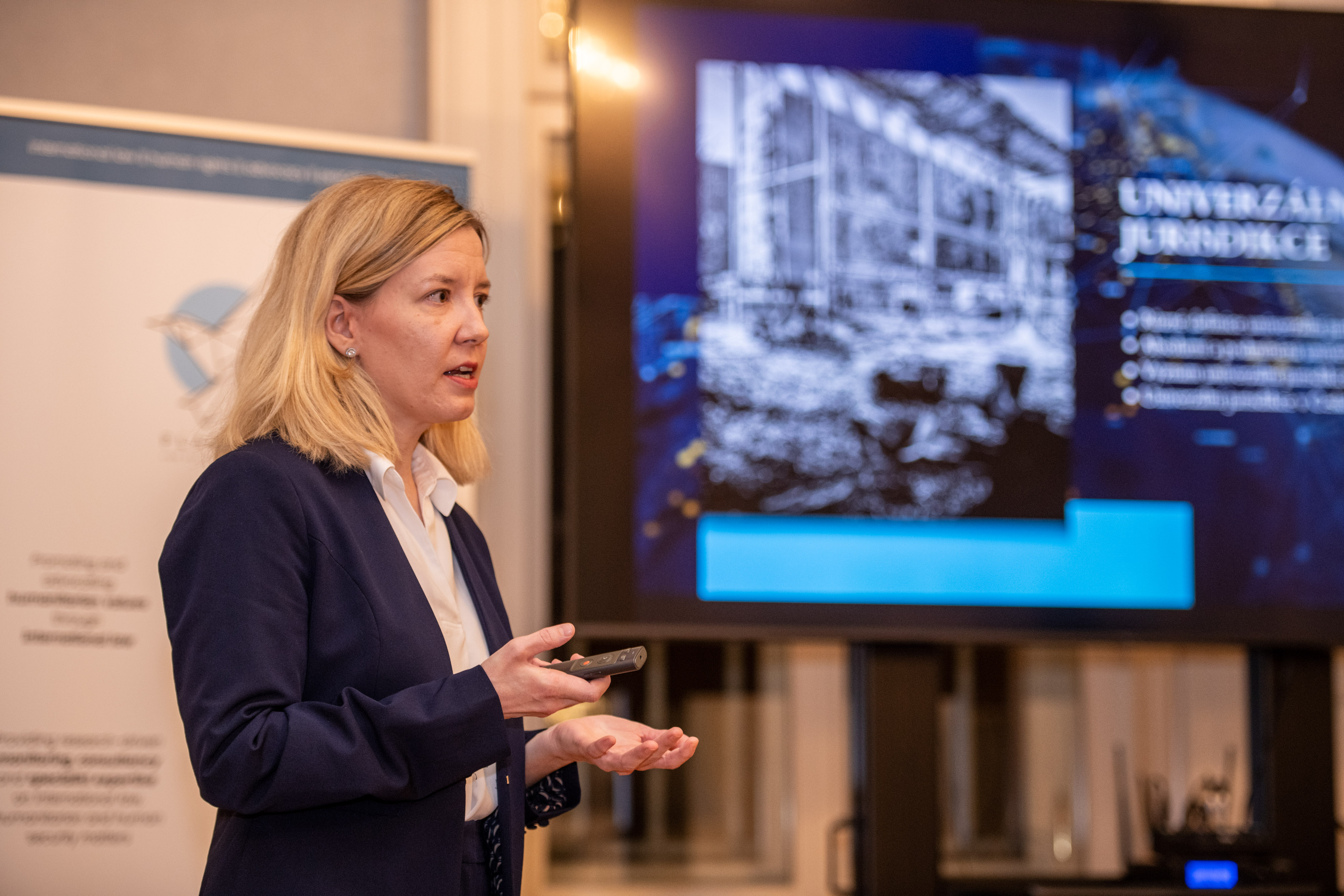
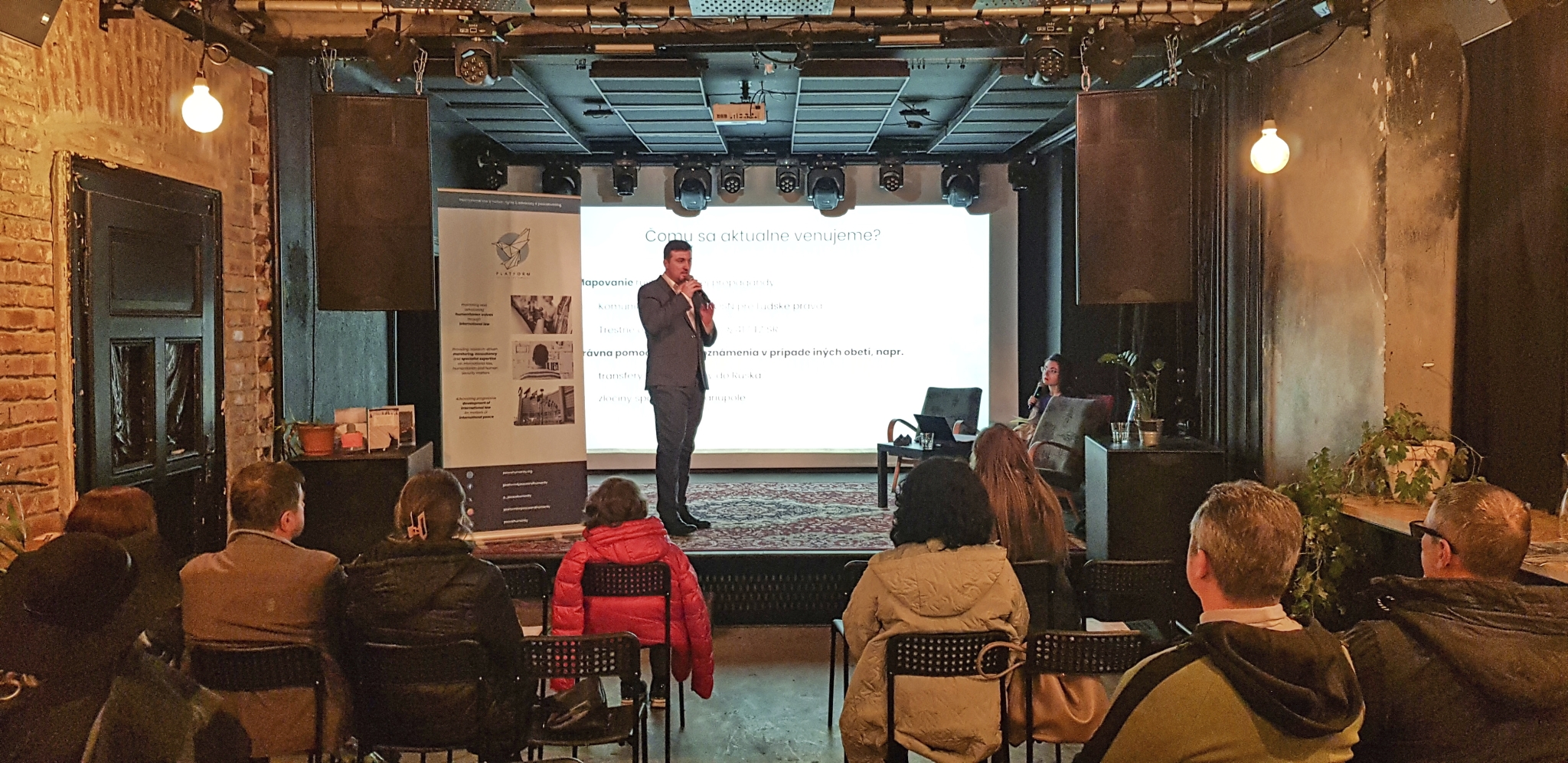
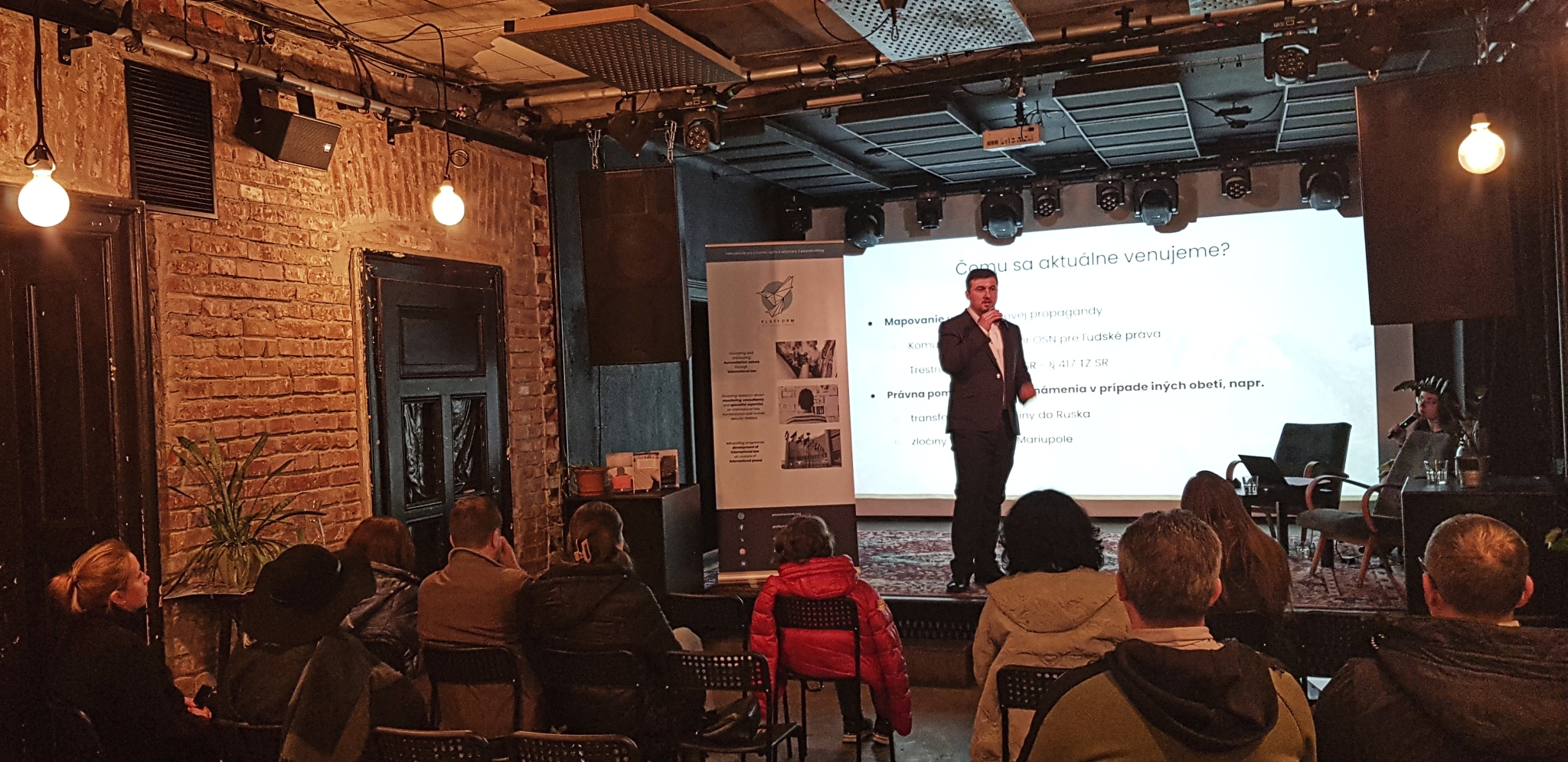
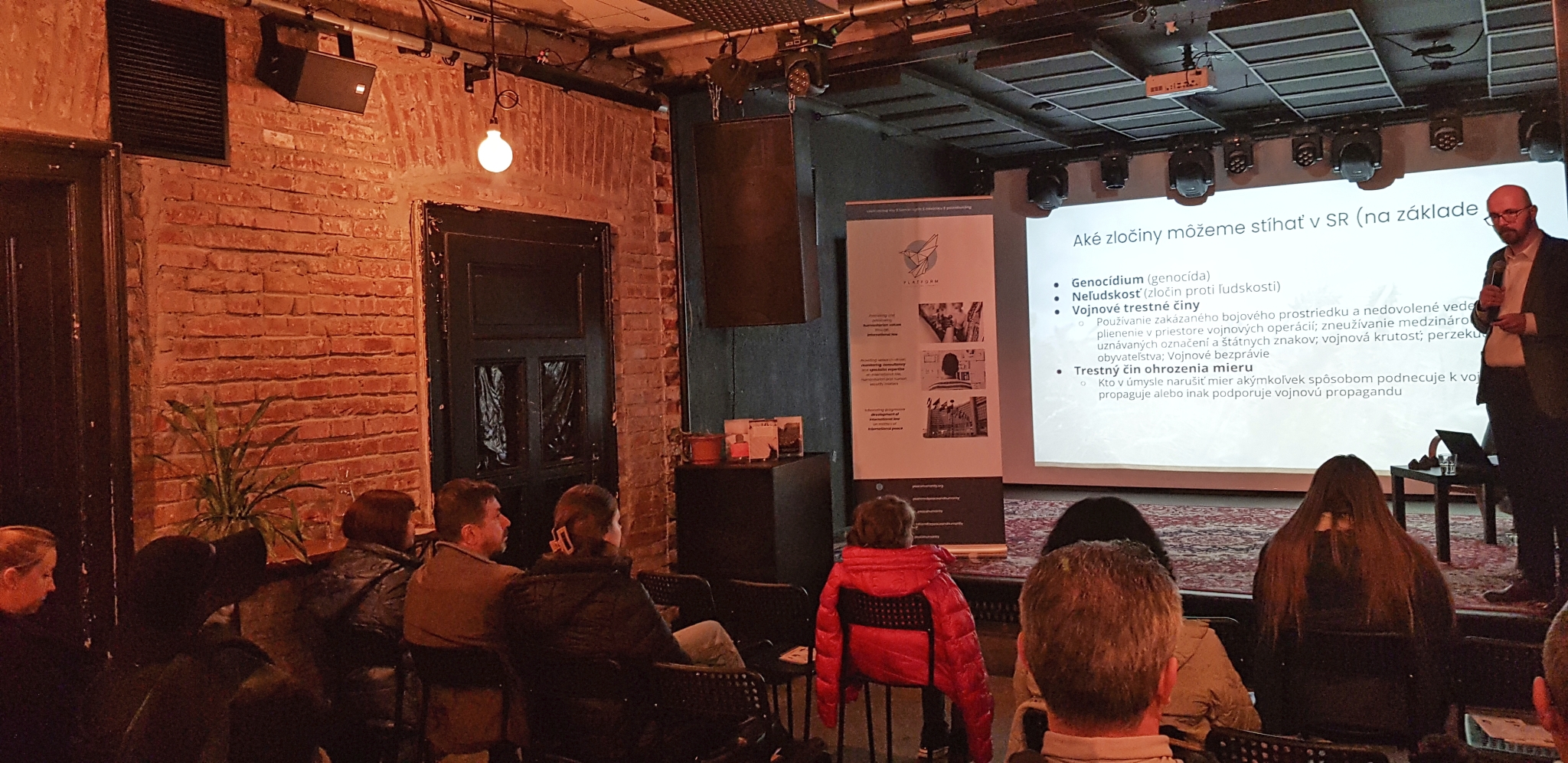
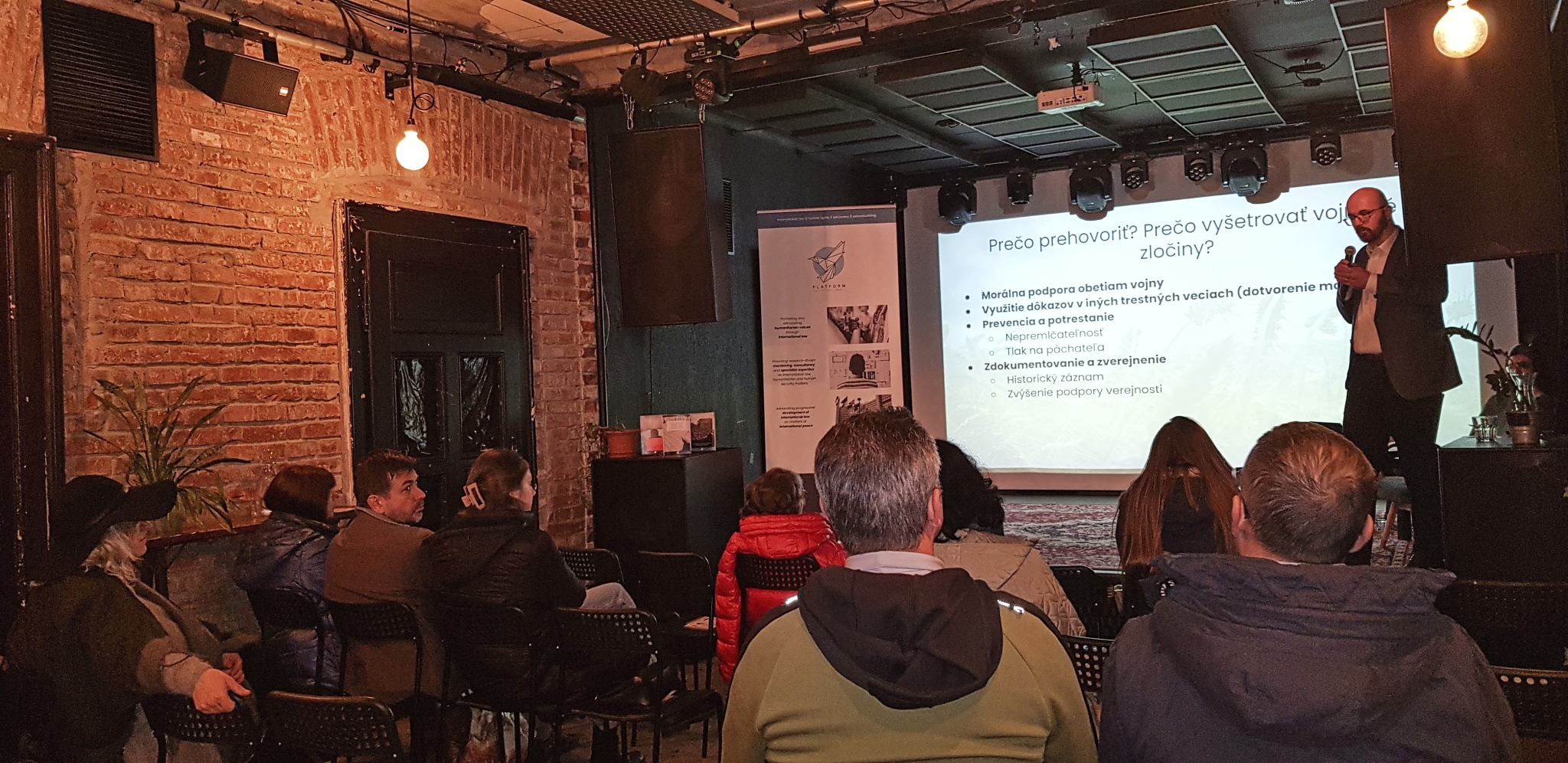
Our outreach events are designed for the Ukrainian community to understand legal avenues for seeking justice on a national level (in Czechia and Slovakia) and international level for crimes committed in Ukraine.
Collection of information from victims and survivors of atrocities in Ukraine
The programme collects and preserves information from victims and witnesses for future domestic and international proceedings.
Universal jurisdiction criminal complaints in Czechia and Slovakia concerning crimes committed in Ukraine
The programme submits dossiers concerning the crimes committed in Ukraine to law enforcement authorities in Czechia and Slovakia.
Legal assistance for victims and survivors of atrocities
The programme provides legal representation for victims and survivors who decide to submit criminal complaints to national law enforcement authorities and represents victims and survivors in international bodies and mechanisms.
Expertise building in Czechia and Slovakia
The programme released comprehensive handbooks for Czech and Slovak law enforcement authorities, which serve as a toolkit for interpreting core international crimes implemented in both States.
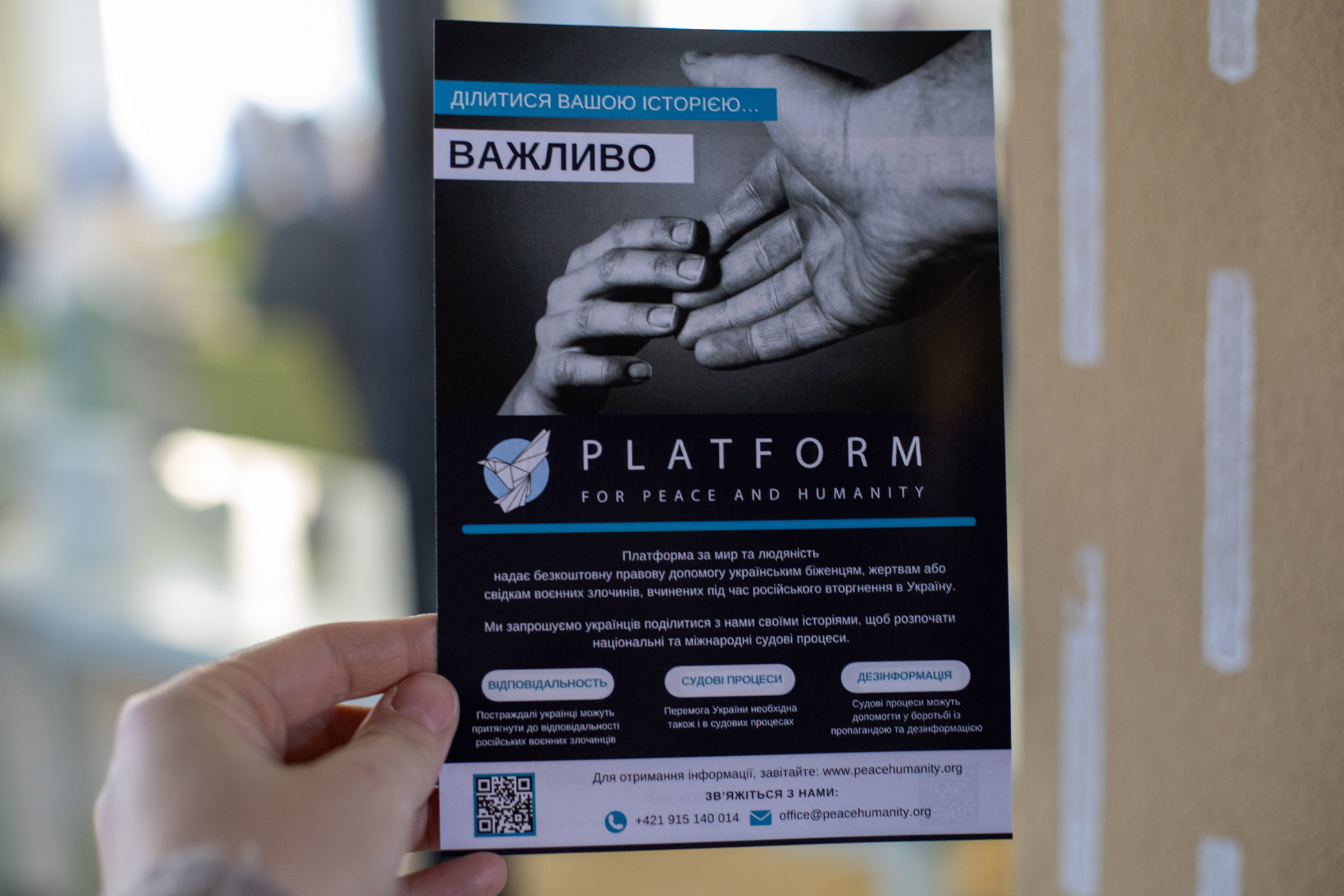
Free legal assistance
in Czechia and Slovakia
for Ukrainian victims
or witnesses of war crimes
Share your testimony
Platform for Peace and Humanity provides free legal assistance to Ukrainian refugees residing in Czechia and Slovakia who are victims or witnesses of atrocities committed in Ukraine.
The testimony and any audio-visual material shared with us will be kept strictly confidential and will be used in national or international proceedings with the consent of the victims and witnesses.

Latest Activities
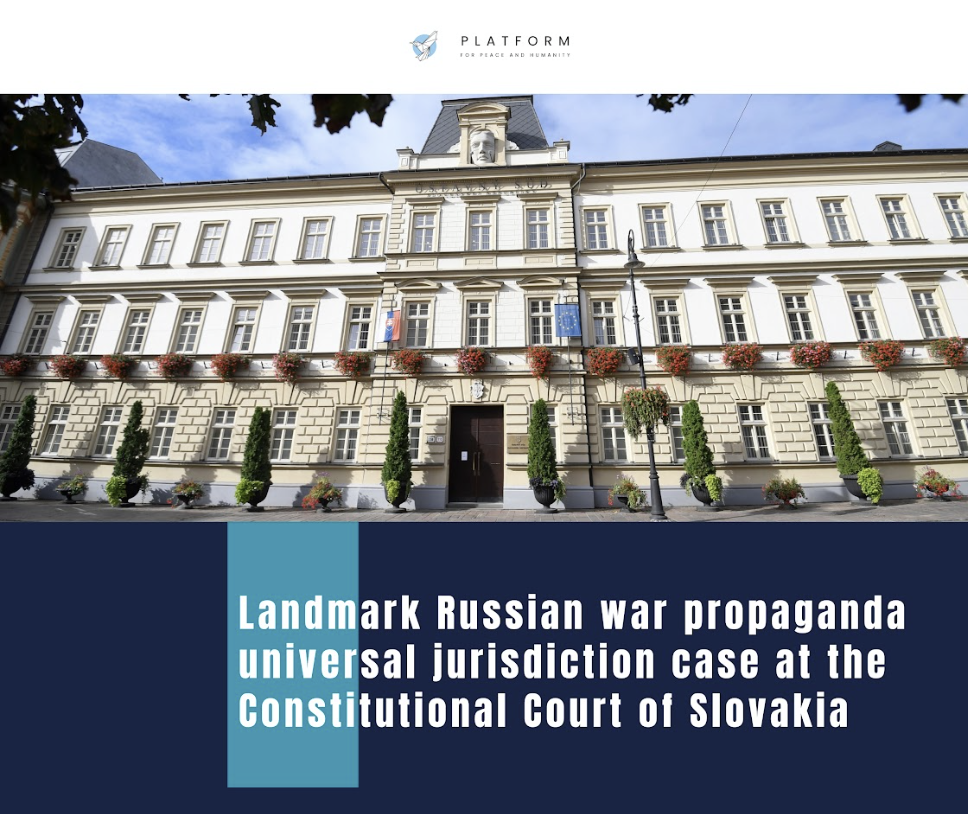
On 24 September 2025, Platform for Peace and Humanity’s Ukraine programme filed a constitutional complaint challenging the decisions of Slovak law enforcement not to open an investigation into a case concerning Russian war propaganda based on universal jurisdiction.
These decisions are, in our view, arbitrary, without basis in international law and Slovak constitutional law, and contrary to the jurisprudence of the Court of Justice of the EU and European Court of Human Rights. We request that the Constitutional Court of Slovakia annul these decisions and rule that the rights of a victim from Ukraine, on whose behalf the case is submitted, have been violated.
The Constitutional Court’s ruling will historically be the first court decision in Slovakia that will analyse universal jurisdiction and war propaganda prosecutable under universal jurisdiction under the Slovak Criminal Code.
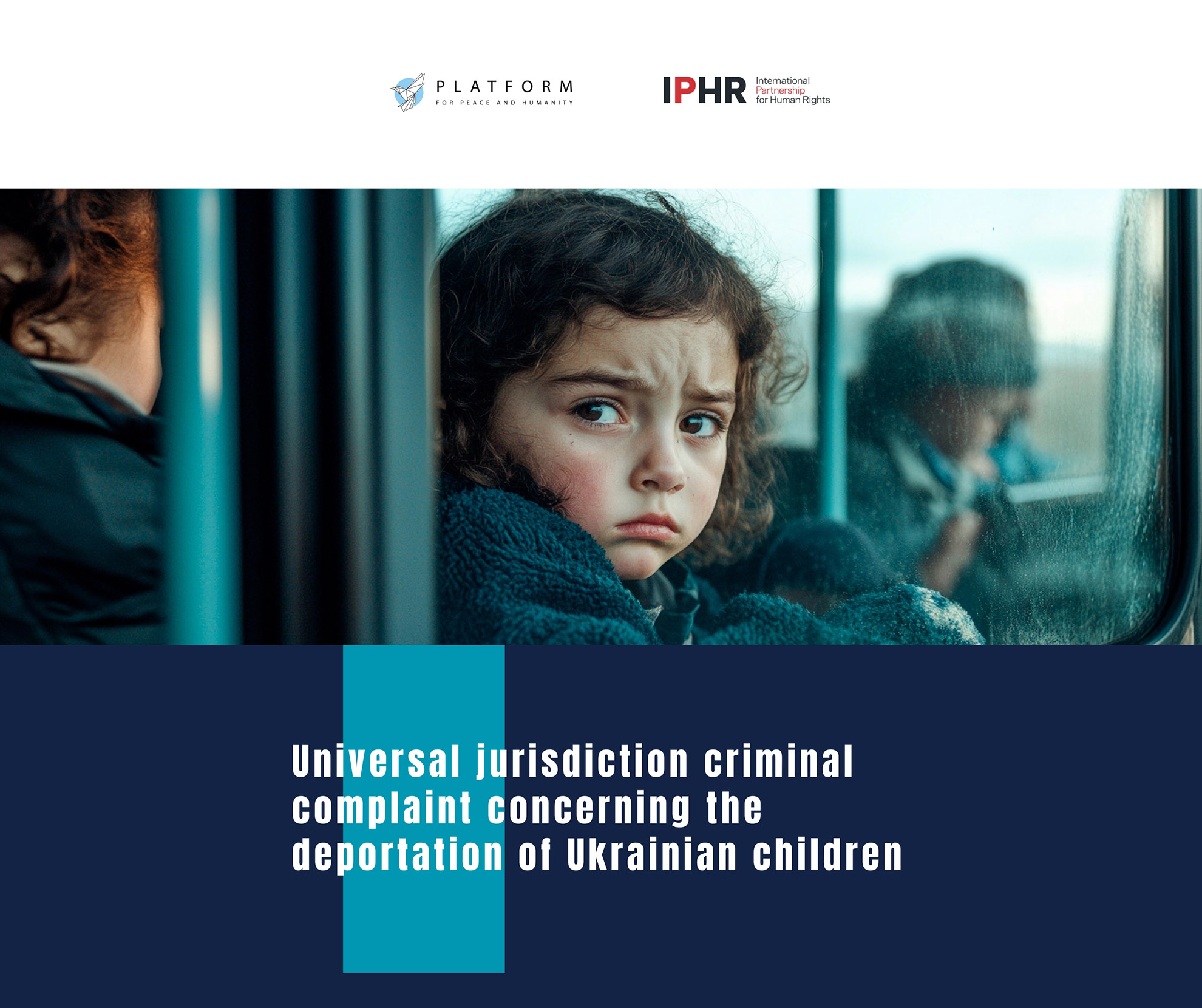
On 26 March 2025, Platform for Peace and Humanity and the International Partnership for Human Rights (IPHR) filed a criminal complaint with Czech law enforcement authorities in a case concerning the deportation of Ukrainian children.
Czech law enforcement authorities have repeatedly declared their public commitment to investigating and prosecuting core international crimes committed in Ukraine. We remind them of this commitment and remain available to Czech law enforcement authorities.
Against whom is the criminal complaint addressed?
On 14th November, our organisation filed a criminal complaint against Russian TV moderator Vladimir Solovyov.
The open-source material we scrutinized proves that Vladimir Solovyov has been spreading war propaganda and advocating for the war. His rhetoric involves, for example, statements that Ukrainians do not form an independent nation separate from Russians, implying that they do now have the right to self-determination and that the war against Ukraine should be interpreted as a war of unification rather than a war of aggression.
Other statements promote the war effort as a fight against “Satanism”, “Nazism,” or against the decadent “West” threatening Russia. By doing so, Solovyov attempts to legitimise the war as a necessary means for defending orthodox Christianity and alleged true values, or frames it as a continuation of the Great patriotic war against the Nazis.
Such statements warrant criminalisation because, as a high-profile public figure, Solovyov helps the Russian government to get support for the continuation and prolonging of the war.
Is war propaganda prohibited under Slovak law?
Whoever incites war, promotes war, or otherwise supports war propaganda commits a crime of a threat to peace as defined in Article 417 of the Slovak Criminal Code. In addition to actus reus, it is necessary to prove that the perpetrator acted with the intent to disrupt peace.
How is it possible that Slovak courts have jurisdiction over the actions and statements of a Russian national?
Certain crimes, such as war crimes, genocide, or crimes against humanity, fall under universal jurisdiction, allowing courts in Slovakia to establish jurisdiction even without links to the nationality of the perpetrator or the victim. This principle is reflected in Article 5a of the Slovak Criminal Code, which states that some crimes may be prosecuted under this law even if committed outside the Slovak Republic by a foreigner without permanent residence in Slovakia.
One of the enumerated crimes is the crime of a threat to peace. No other condition is set in the Slovak Criminal Code or any other Slovak legislation. The Slovak Republic thus adopted the model of absolute universal jurisdiction. Therefore, Slovak courts can exercise universal jurisdiction over Vladimir Solovyov in the case concerning his war propaganda.
What sentence may be imposed?
The court can impose a sentence of imprisonment from one to ten years for the crime of a threat to peace. This sentence may rise to twenty-five years or even life imprisonment, depending on the circumstances of the case. These circumstances involve the perpetration of the crime in connection with a foreign power or foreign agent, as a member of a dangerous group, or during a crisis situation.
In general, Solovyov may be sentenced even to life imprisonment, as we hold the view that he did not act individually but as a member of a dangerous group that provides him material, personal, or financial support.
Is there a victim identified in this case?
The crime of a threat to peace does not require a specific victim as it is aimed against the international community’s interests. However, to strengthen our position, we filed the criminal complaint on behalf of an individual who had to flee Ukraine because of the war and was morally and materially affected by the war, which has been actively supported and prolonged by war propaganda.
What further developments in the case do we expect?
Slovak law does not allow trial in absentia, but it enables, under certain conditions, a trial against a fugitive. Criminal proceedings can, therefore, commence, and law enforcement authorities may conduct further investigations in the pre-trial phase. During this phase, the Slovak authorities can issue a warrant of arrest, which may be enforced internationally. We do not expect Russia to extradite him.
However, if he travels to a country that enforces the warrant or if the political situation in Russia changes, he could be brought to trial. Irrespective of the outcome in the future, issuing an arrest warrant sends a significant message to the international community and other potential perpetrators that war propaganda will not be tolerated.
What is the submission about?
On 12 August 2024, the Platform submitted an individual communication to the UN Human Rights Committee on behalf of a Ukrainian victim, alleging that the Russian Federation is in breach of Art. 20(1) of the International Covenant on Civil and Political Rights.
As a result of war propaganda resulting in and accompanying an act of aggression, the victim we represent suffered material and immaterial harm and was forced to flee Ukraine.
How international law responds to war propaganda?
War propaganda is prohibited under Article 20(1) of the International Covenant on Civil and Political Rights (ICCPR), an international treaty prohibiting hate speech as well. Interestingly, contrary to the remaining provisions of the ICCPR, Article 20 sets obligatory limitations for the freedom of speech. However, ICCPR or other international law sources do not define what war propaganda is.
What amounts to war propaganda?
Not all speeches advocating for war amount to war propaganda. Such speeches must be public, capable of shaping public opinion, and must relate to unlawful war.
Advocating for the resort to armed force in accordance with international law, that is, when authorised by the UN Security Council resolution or exercised within self-defence, does not amount to war propaganda.
Academic discussion on the legality of armed conflicts should not be treated as war propaganda either.
Preparatory works on the ICCPR indicate that war propaganda refers to statements and expressions used by Nazi and fascist regimes in the 1930s and 1940s. According to the judgement of the International Military Tribunal in Nuremberg: “in the Germany of Hitler, propaganda was invariably a factor in preparing and conducting acts of aggression and in training the German populace to accept obediently the criminal enterprises of German fascism…Without propaganda, founded on the total eclipse of the freedom of press and of speech, it would not have been possible for German fascism to realize its aggressive intentions, to lay the groundwork and then to put to practice the War Crimes and the Crimes against Humanity.”
Hence, propaganda can predate aggression as a form of preparation and accompany the conduct of war of aggression itself. A similar situation is being repeated in the Russian Federation’s aggression into Ukraine.
What is the situation with war propaganda in the Russian Federation?
The war propaganda in the Russian Federation has been a long-standing issue, but it became particularly prominent leading up to and during the invasion of Ukraine in February 2022.
This propaganda campaign has been used to shape public opinion in favour of the war, preparing the Russian population to support military actions under the guise of protecting national security and responding to alleged external threats. It is still spreading to fuel up the war effort and to gain public support for the war.
Who are the key figures responsible for disseminating this propaganda?
The dissemination of war propaganda in Russia is primarily driven by State officials, politicians, and influential public figures.
Among the most notable are President Vladimir Putin, Speaker of the State Duma Vyacheslav Volodin, State Duma deputies such as Andrei Gurulyov, Alexei Zhuravlev, and Yevgeny Fedorov, as well as Dmitry Peskov, the Kremlin’s Press Secretary, and Foreign Minister Sergey Lavrov.
These individuals have consistently promoted narratives that justify the war, often framing it as a defensive measure against Western aggression.
Can you provide an example of how Russian officials present these narratives?
A prime example is a speech by President Vladimir Putin, where he invoked historical references, comparing the current situation to the invasion of Nazi Germany during World War II.
He emphasized the supposed threats posed by NATO’s eastward expansion and the militarization of Ukraine, arguing that Russia had no choice but to launch what he termed a “special military operation” to protect its people and secure its borders.
This narrative has been pivotal in justifying the invasion to the Russian public.
How about other public figures? How are they contributing to this propaganda effort?
Public figures such as Vladimir Solovyov, a prominent TV presenter, and Margarita Simonyan, the editor-in-chief of RT, have played significant roles in spreading war propaganda.
For instance, Solovyov has made inflammatory statements on state television, labelling Kyiv as a “Nazi city” and framing the conflict as a sacred war against Satanists. Similarly, Dmitry Kiselyov, another TV presenter, has described the conflict as a battle to cleanse Ukraine of a “Nazi disease.”
Through their extensive media reach, these figures amplify the government’s war narratives, ensuring they resonate with the broader population.
What are the legal implications of Russian war propaganda under international law?
War propaganda is prohibited under international law, particularly Article 20(1) of the ICCPR.
The Russian Federation, as a signatory to the ICCPR, is legally obligated to prevent the spreading of such propaganda. However, in practice, the Russian government has not only tolerated and encouraged these narratives, as none of the individuals spreading war propaganda have faced any legal repercussions, but the government itself was one of its main authors.
This highlights a significant gap between Russia’s international obligations and its domestic actions. In fact, persons who are talking openly against the war are criminally prosecuted for “spreading of false information.”
What actions can be taken to address this issue?
The international bodies, like the UN Human Rights Committee, have a critical role in investigating these issues further.
Statements by Russian State officials and public figures provide a foundation for a more comprehensive investigation. If it is determined that Russia violates its international obligations, this may lead to intensifying diplomatic pressure, imposing sanctions, or taking other measures to hold Russia accountable for its actions.
This may include domestic criminal proceedings for war propaganda against particular individuals.
Certain States, like Slovakia, extend the application of universal jurisdiction to the propagation of war.
Determination of the Human Rights Committee that war propaganda is occurring in the Russian Federation may be crucial for domestic authorities to proceed with the investigation on their own, with the possibility of issuance of arrest warrants.
How does the UN Human Rights Committee get involved in such an effort?
The UN Human Rights Committee is a body dedicated to providing an overview of the implementation of the ICCPR.
This oversight includes general monitoring through periodic reports submitted by States and by handling interstate and individual communications (complaints).
The UN Human Rights Committee may receive communications (complaints) from individuals only if the State in question has ratified the Optional Protocol No. 1 to the ICCPR, which grants the Committee such competence. The Russian Federation accepted the competence of the UN Human Rights Committee in 1991.
How can the UN Human Rights Committee respond to individual communication?
Firstly, the UN Human Rights Committee considers the admissibility of the communication. The UN Human Rights Committee declares inadmissible, among others, anonymous communications, communications currently under review by another international body, or complaints that were not preceded by recourse to domestic remedies.
However, the requirement to use domestic remedies is not absolute, and the complainant does not have to resort to domestic remedies if these remedies are unreasonably prolonged, unavailable, or otherwise ineffective.
After assessing admissibility, the Committee proceeds to examine the merits of the communication. This involves communicating with the State concerned, which is given the opportunity to respond to the allegations. The Committee may also request additional information or evidence from the complainant.
As a result, based on the facts presented, the Committee may find a violation of the ICCPR. However, determinations of the UN Human Rights Committee are not legally binding, just like court judgments, as the UN Human Rights Committee is not a judicial body. However, the Committee’s findings carry significant moral and political weight and may lead to domestic or international actions
Events
 Bratislava
 Brno
Brno Online
Czechia and Slovakia as a new frontline for universal jurisdiction litigation of crimes committed in Ukraine
What is the principle
of universal jurisdiction?
The model of absolute universal jurisdiction applicable in Czechia and Slovakia allows the prosecution of Russian war criminals without their presence on the territory of Czechia or Slovakia and regardless of the nationality or residence of the victim and the perpetrator. Learn More
Why the Czech Republic?
According to UNHCR data, as of January 2024, more than 500 000 Ukrainian refugees applied for a national protection scheme, many of these refugees presumably being victims and witnesses of crimes committed in Ukraine. Czech Criminal Law enables the prosecution of genocide, war crimes and crimes against humanity under the principle of universal jurisdiction. Learn More
Why Slovakia?
According to UNHCR data, as of February 2024, more than 130 000 Ukrainian refugees applied for a national protection scheme, many of these refugees presumably being victims and witnesses of crimes committed in Ukraine. Slovak Criminal Law enables the prosecution of genocide, war crimes, crimes against humanity and war propaganda under the principle of universal jurisdiction.
Learn More
Outreach
Why is outreach in our Ukraine
programme important?
It builds dialogues with people whose lives were affected by the conflict and war crimes committed in it
It enables victims and survivors to learn about the programme's work and methodology of building cases for national and international accountability mechanisms
It promotes access to justice for victims and survivors of atrocities committed in Ukraine.
It establishes the first contact between the programme's team and victims and survivors
It enables victims and survivors to share a solidarity bond with others who underwent a traumatic experience